Define Cozy as a Felt Condition, Not a Look
Name what currently feels uncomfortable. The problem may be a cold floor, hard echo, exposed window, glaring ceiling light, distant towel, cluttered vanity or shower draft. Cozy is the result of removing those frictions and adding warmth at the body scale; it is not a shopping list of beige accessories. A bright modern bathroom can become cozy through temperature and light, while a dark traditional room can remain unpleasant if it is damp, noisy or difficult to use. Let the sensory diagnosis lead the design language.
Plan Comfortable Reach Before Decorative Layers
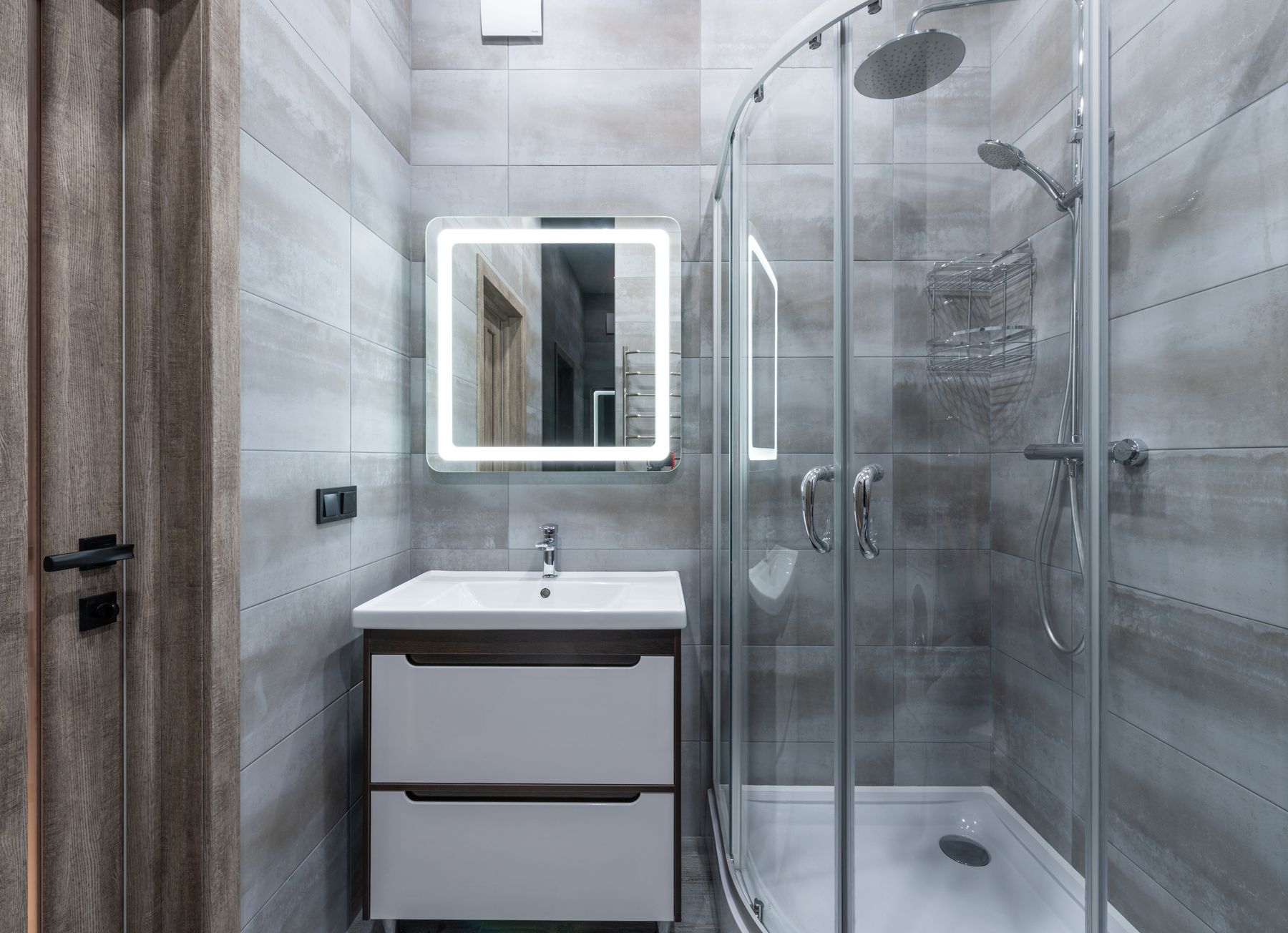
Map the sequence from door to basin, toilet, shower or bath, towel and storage. Keep the dry towel reachable before stepping onto the floor and place everyday products where they can be found without opening several wet-handed drawers. Check door and screen swings, standing zones and night access. Cozy rooms often look close and layered, but that intimacy should not reduce circulation or cleaning clearance. A compact arrangement feels supportive when each action follows the next without a cold or slippery detour.
Solve Real Thermal Comfort Before Adding Warm Color
Measure the room at the times it is used and identify cold glazing, uninsulated walls, air leaks or an undersized heat source. A terracotta paint cannot correct a floor that remains painfully cold or a window that creates a downdraft beside the bath. Improve the building envelope and controls where feasible, then use color and material to reinforce the physical result. Keep ventilation effective rather than sealing the room indiscriminately. Thermal comfort should be predictable, controllable and proportionate to the short periods when the bathroom is occupied.
Use a Heated Floor or Towel Warmer Where It Earns the Energy
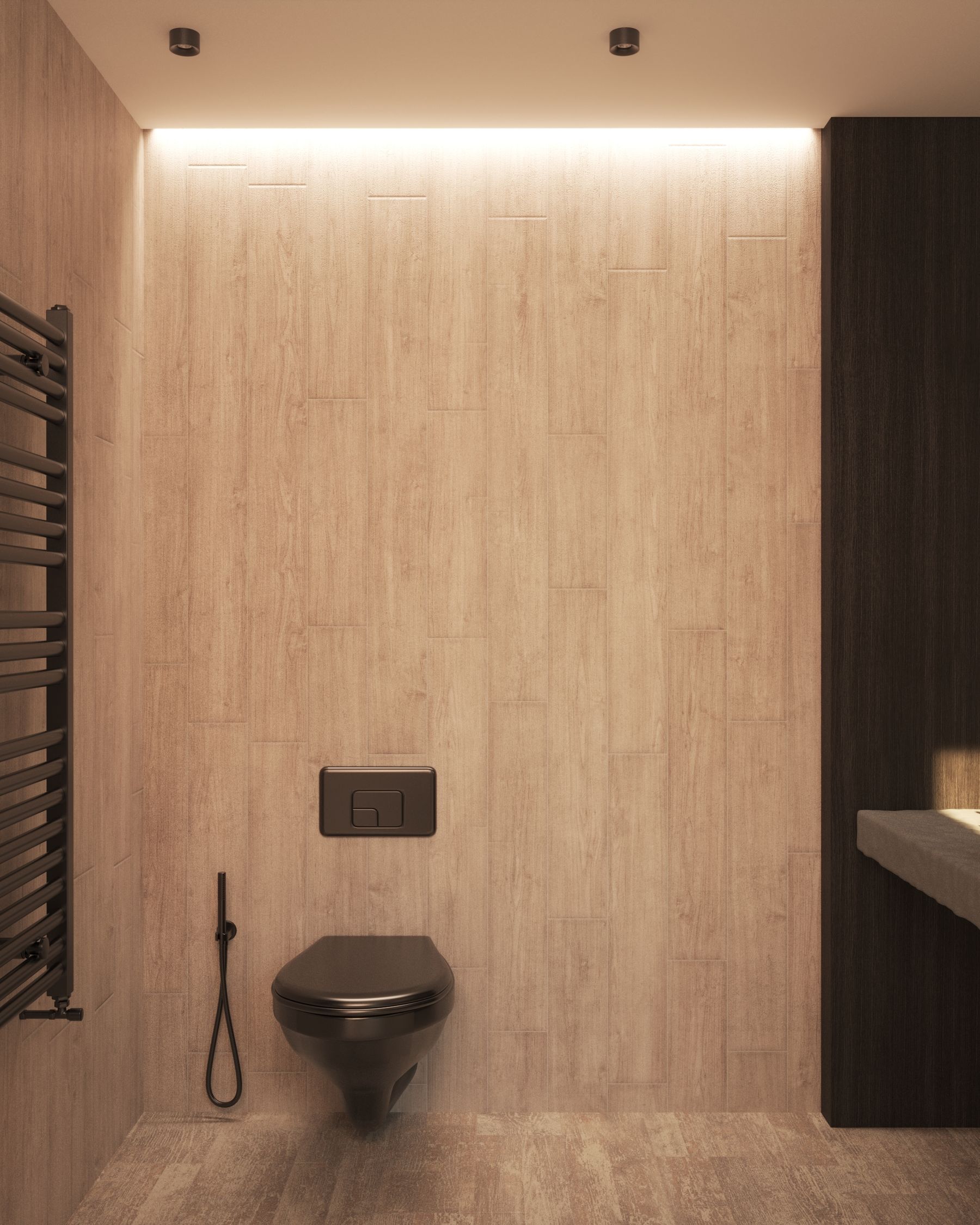
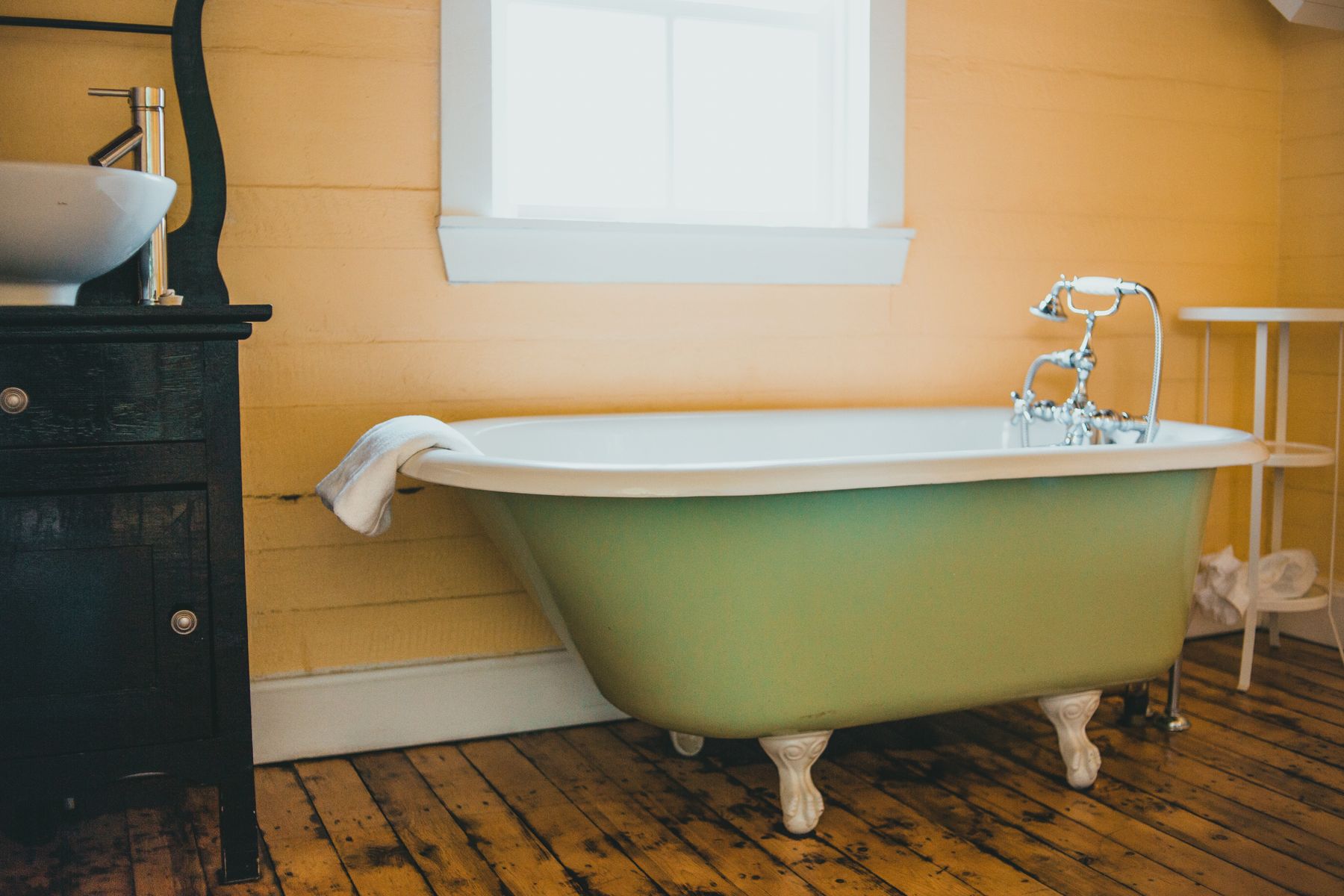
Radiant floor heat is most practical when tile is already being replaced and the system, insulation, controls and energy source are designed together. A timed towel warmer can deliver a smaller comfort gain with less construction, but it still needs correct electrical or hydronic planning and usable hanging space. Do not cover heating zones with thick mats or cabinetry contrary to the system guidance. Schedule warmth around occupancy rather than running it continuously, and retain independent ventilation because heat does not remove moisture.
Shorten the Cold Gap Between Water and Towel
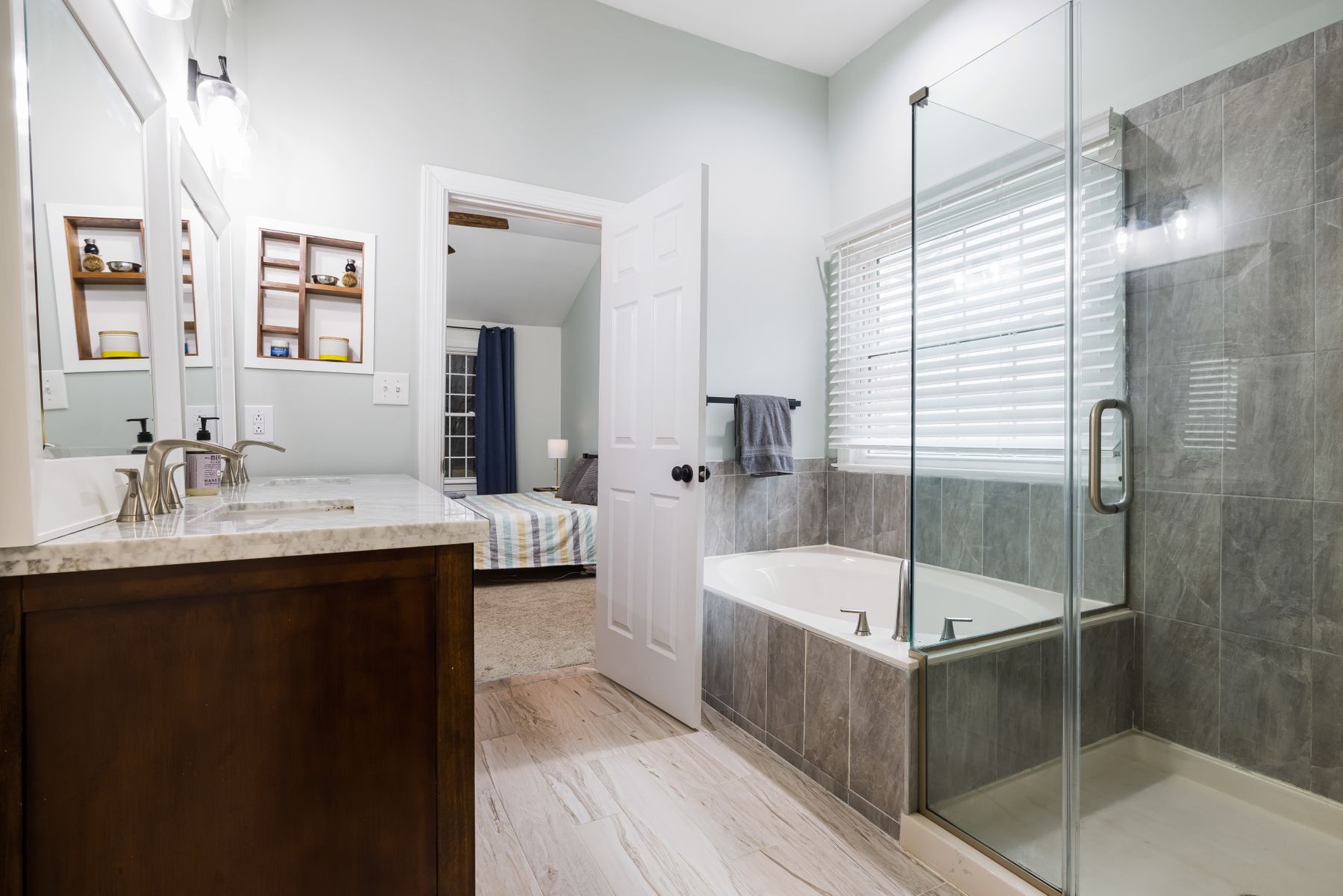
The few seconds after bathing often determine whether a bathroom feels indulgent or exposed. Place a hook, rail or shelf where a dry towel and robe can be reached without crossing the wet floor, but far enough from spray to remain dry. Provide a stable mat at the actual exit and a ledge for glasses or a phone outside splash. In a shared room, ensure a second user's towel does not occupy the only warm, dry position. Comfort comes from this sequence more reliably than staged spa props.
Build Warmth From Undertone, Not Beige Alone
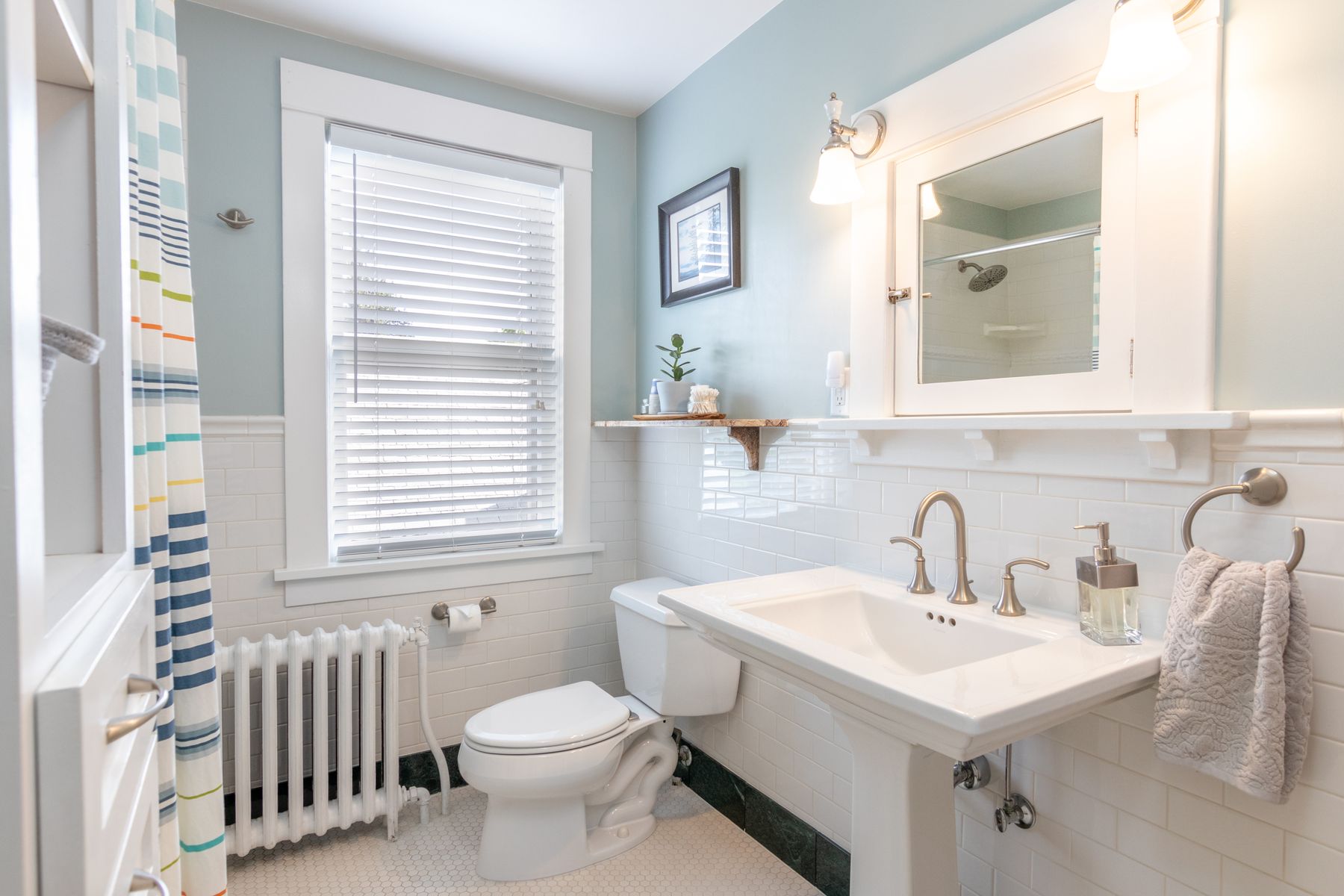
Cream, oat, mushroom, clay, putty, soft peach and warm grey are useful, but coziness depends on relationships between fixed tile, sanitaryware, timber and light. A yellow white beside cool marble can look dirty; a sharp white can make warm plaster feel dull. Build a value ladder from pale ceramic through mid-tone wall or wood to one deeper accent. Test the samples wet and after dark. Beige is not mandatory: muted blue, green or burgundy can feel equally enveloping when the undertones and light agree.
Use Darker Color to Create Enclosure Without Losing Legibility
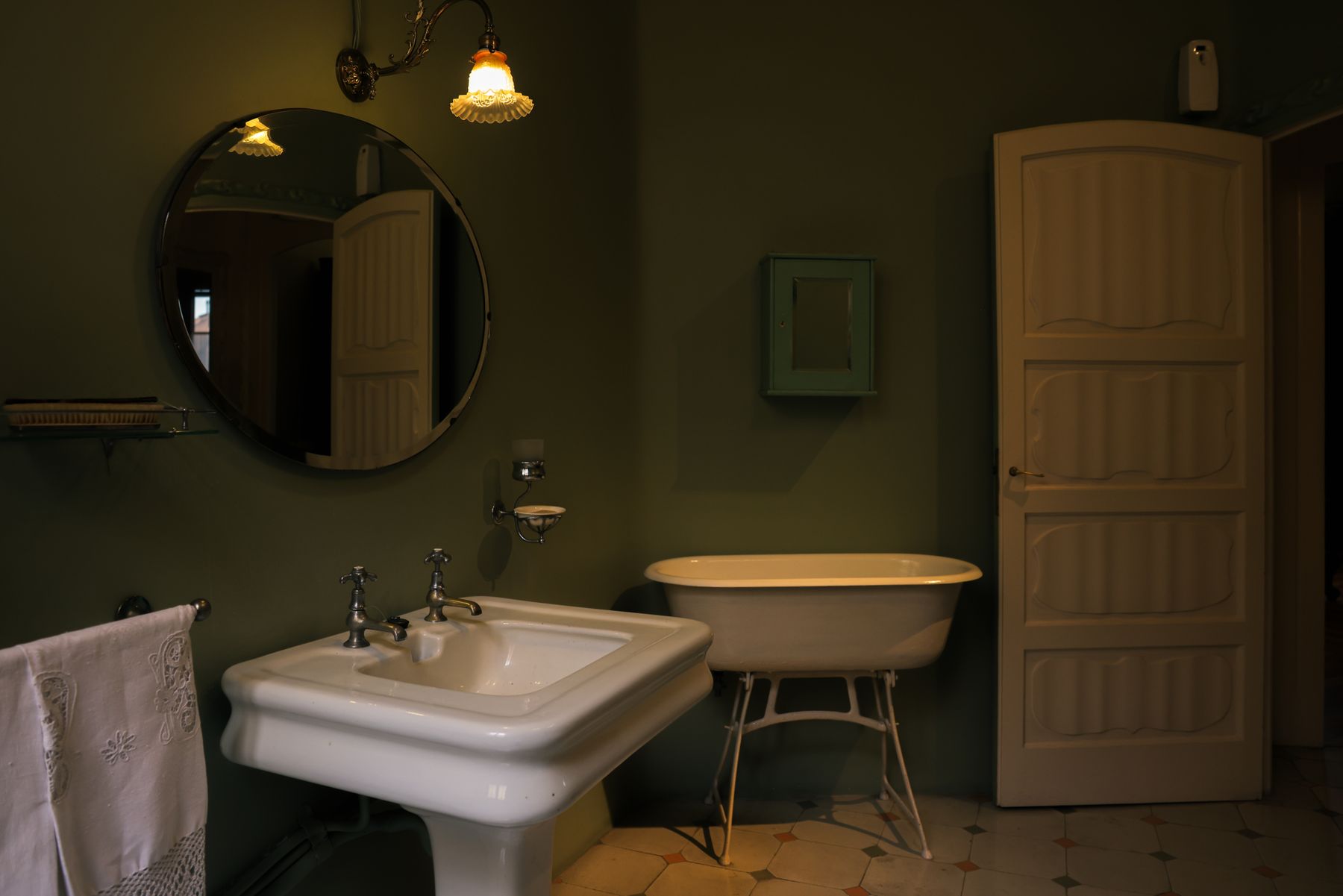
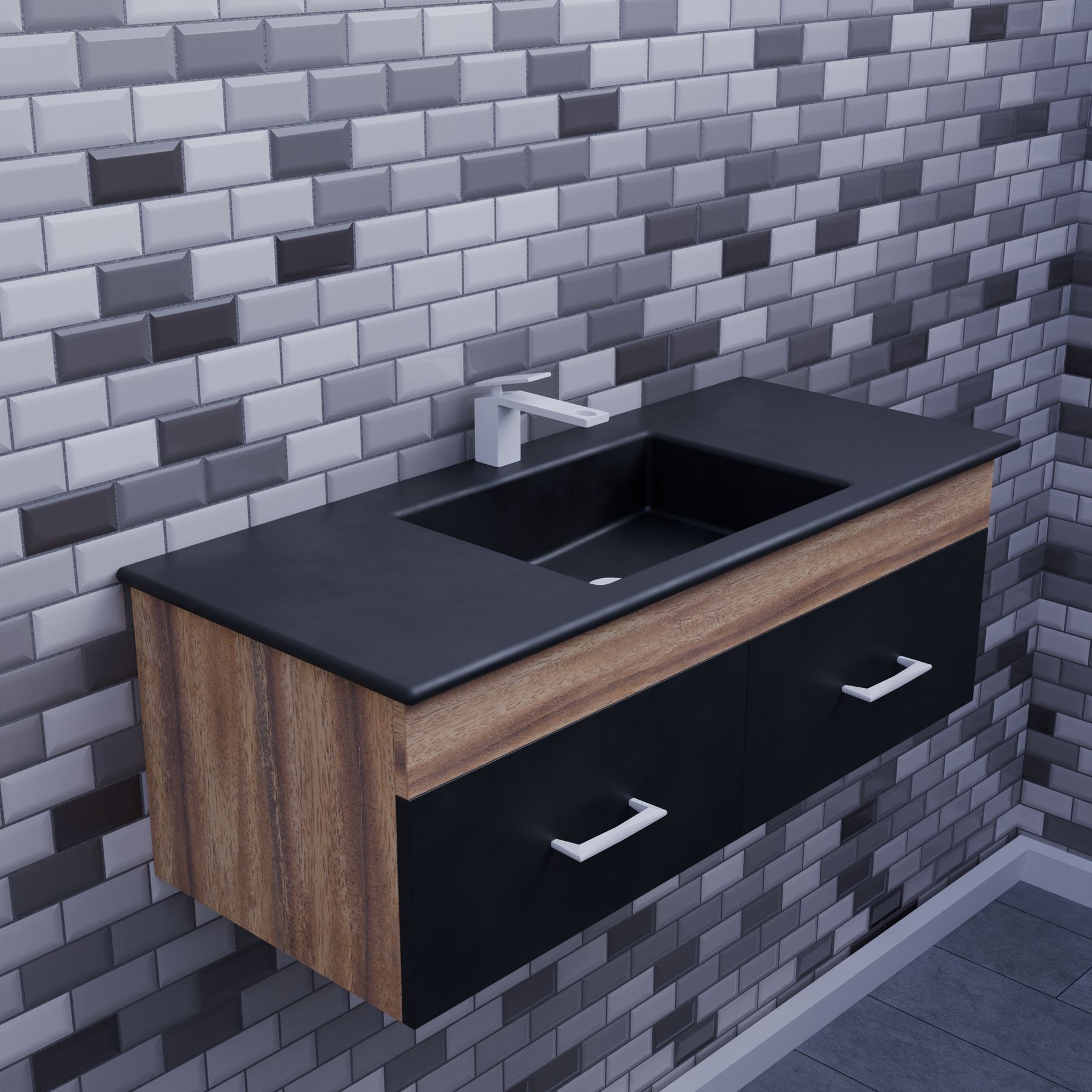
Charcoal, forest, tobacco, oxblood and navy can reduce visual exposure and make evening bathing feel sheltered. Keep contrast at the basin, controls, floor edge and support points, and use light to reveal texture rather than flatten the room into blackness. A darker ceiling can lower an awkward volume; a single deep vanity wall can anchor a small room. Check maintenance because soap, dust and hard water may show strongly. Moody is cozy only when faces, steps and cleaning conditions remain clearly visible.
Let Warm Wood Carry One Architectural Plane
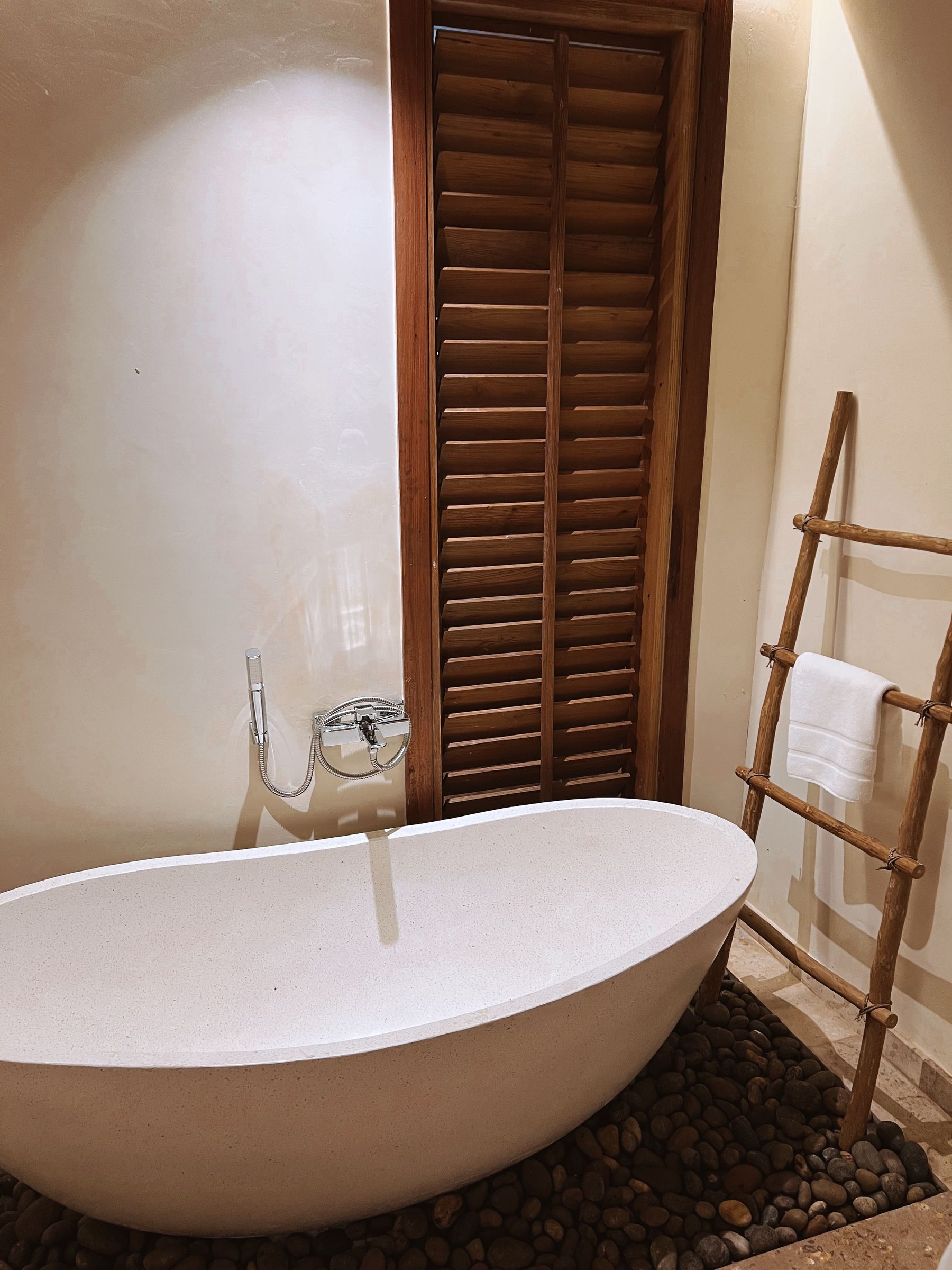
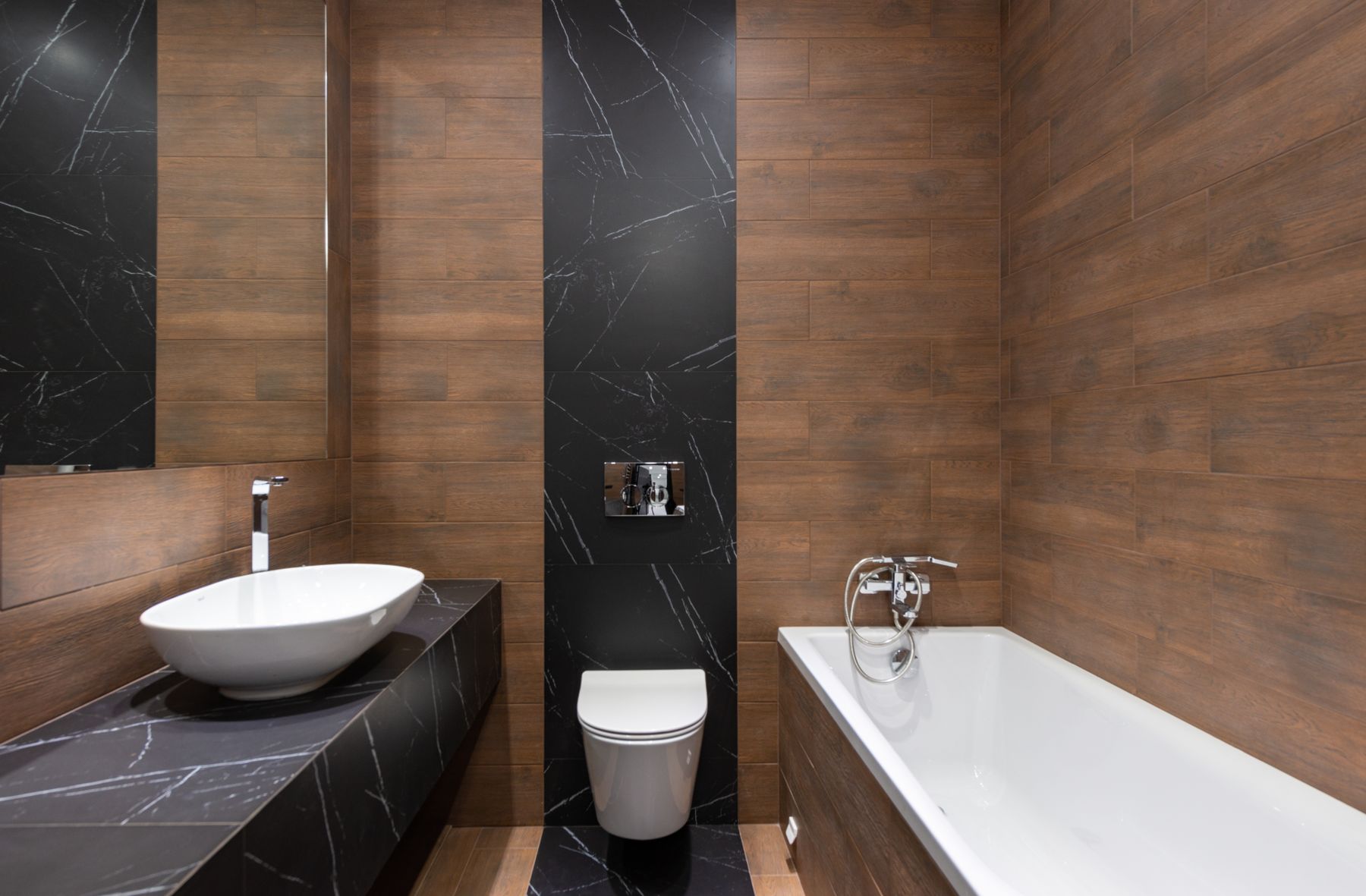
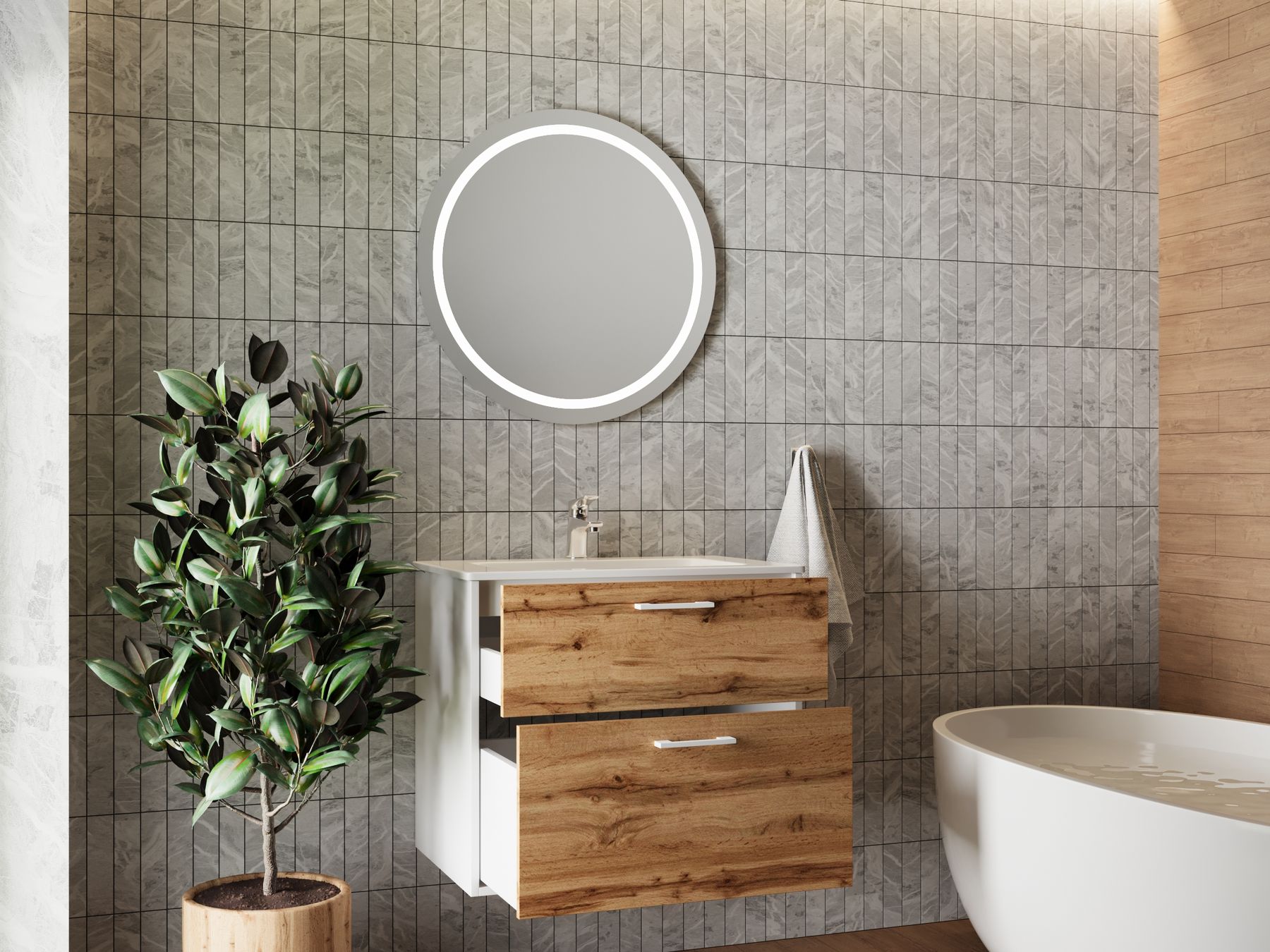
Use timber at the vanity, ceiling, one dry wall or a fitted storage block, then let mineral and ceramic surfaces handle harder exposure. Species, substrate, edge sealing, ventilation and replacement access matter more than the label natural. Avoid thin decorative strips around every surface; a coherent plane reads calmer and is easier to inspect. Wood-look porcelain can carry tone in the shower while real timber remains where hands and eyes can appreciate its grain. Cozy is the sensory outcome; Warm Wood remains the material-led destination.
Choose Honed Mineral Texture Over Visual Coldness
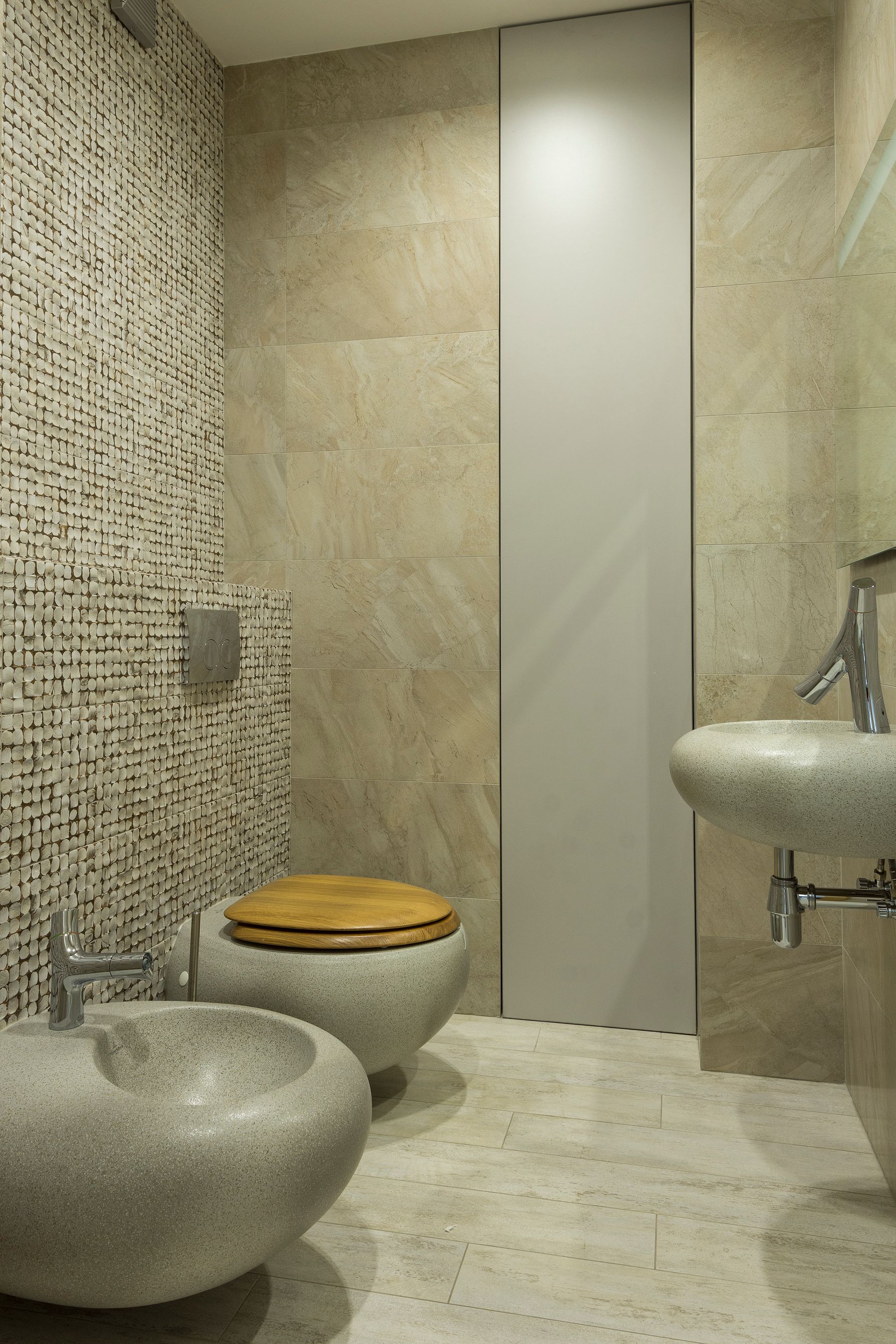
Stone, terrazzo, plaster-like finishes and matte porcelain can make the room feel grounded without becoming hard or luxurious. Select them by wet grip, porosity, cleaning chemistry and installation skill. Honed surfaces often scatter light more gently than polished slab, but some show oils or water differently. Use one dominant mineral texture and pair it with wood, warm metal or textile; several competing stones create visual noise. A cozy bathroom needs durable quietness, not a collection of expensive samples.
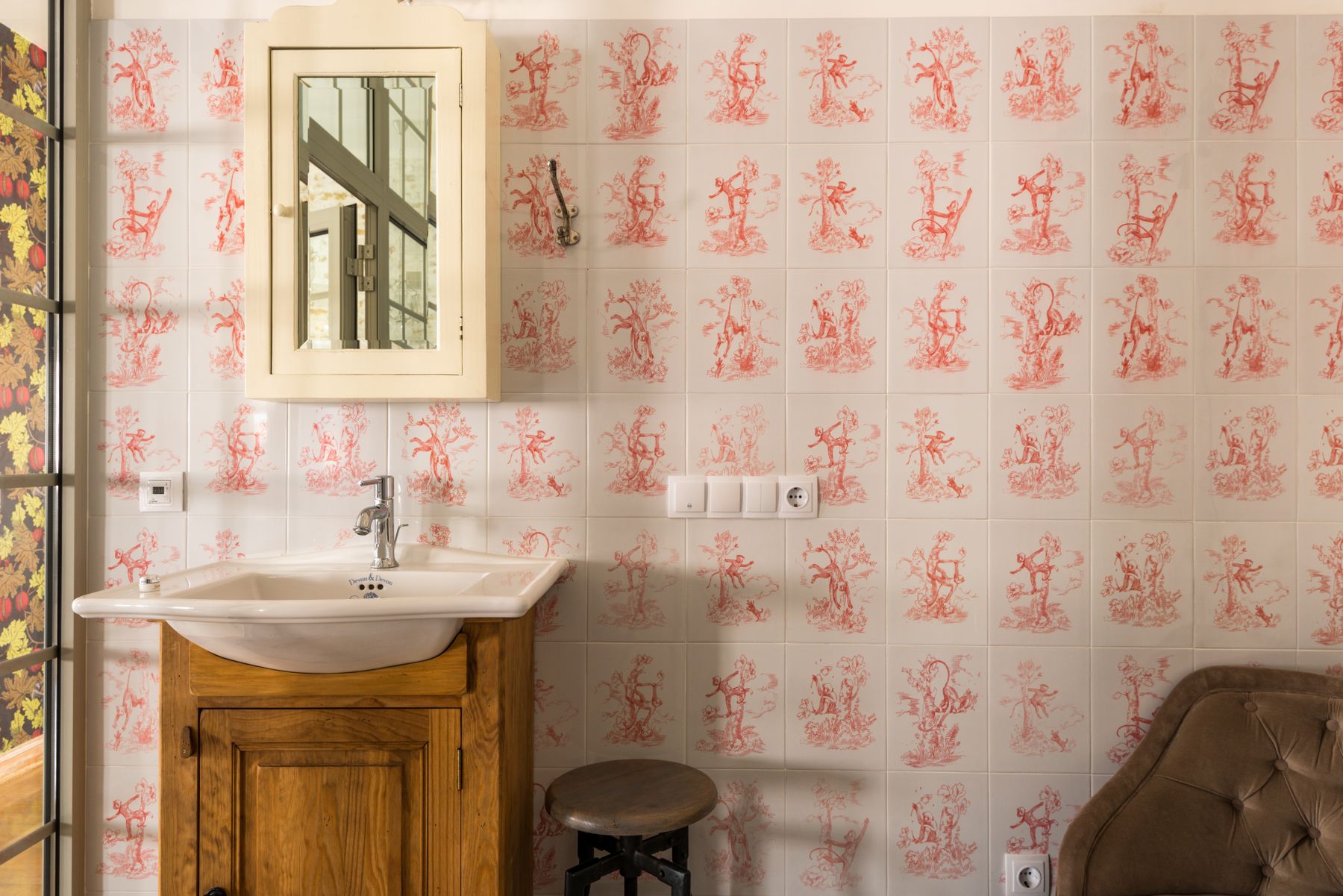
Use Tile Scale and Grout to Slow the Visual Rhythm
Small tile and pattern can make a bathroom feel room-like, but every joint increases visual activity and cleaning. Use fine rhythm at the floor, niche or one lower wall, then balance it with larger or closely grouted surfaces. A grout near the tile value creates softness; strong contrast makes the grid explicit and exposes uneven work. Handmade variation can feel personal when batch and layout are controlled. Draw every boundary so the cozy pattern does not dissolve into thin cuts around fixtures.
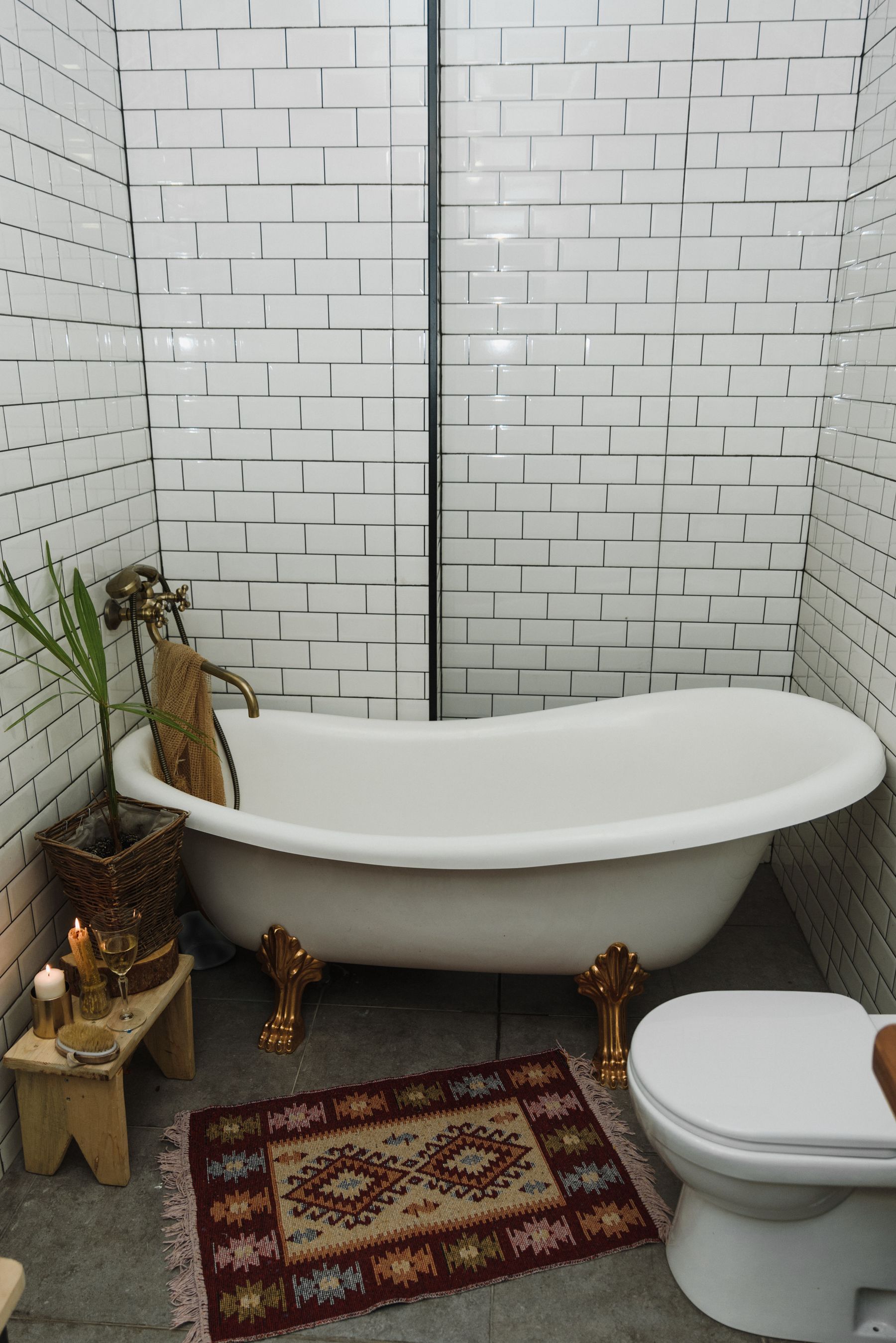
Soften the Room With Textiles That Can Be Washed and Dried
A shower curtain, washable blind, bath mat and good towels can add softness more safely than permanent upholstery. Choose quick-drying fibers, enough spacing between folds and hardware that lets items be removed without dismantling the room. Keep hems clear of standing water and avoid heavy drapery beside a bath where it remains damp. Coordinate texture rather than matching every color exactly. The goal is to reduce echo and visual hardness while preserving the ability to wash, dry and inspect every textile.
Replace Bathroom Carpet With a Deliberate Bath-Mat Zone
Wall-to-wall carpet and absorbent permanent flooring are poor ways to make a wet room feel warm because repeated moisture can remain concealed. Use a correctly sized washable mat or low rug only in a dry landing zone, with a backing or underlay suited to the floor and household. Avoid curled edges in routes and remove it for complete drying. If the room is accessible or shared with children, prioritize stable grip and visible floor transitions over decorative pile.
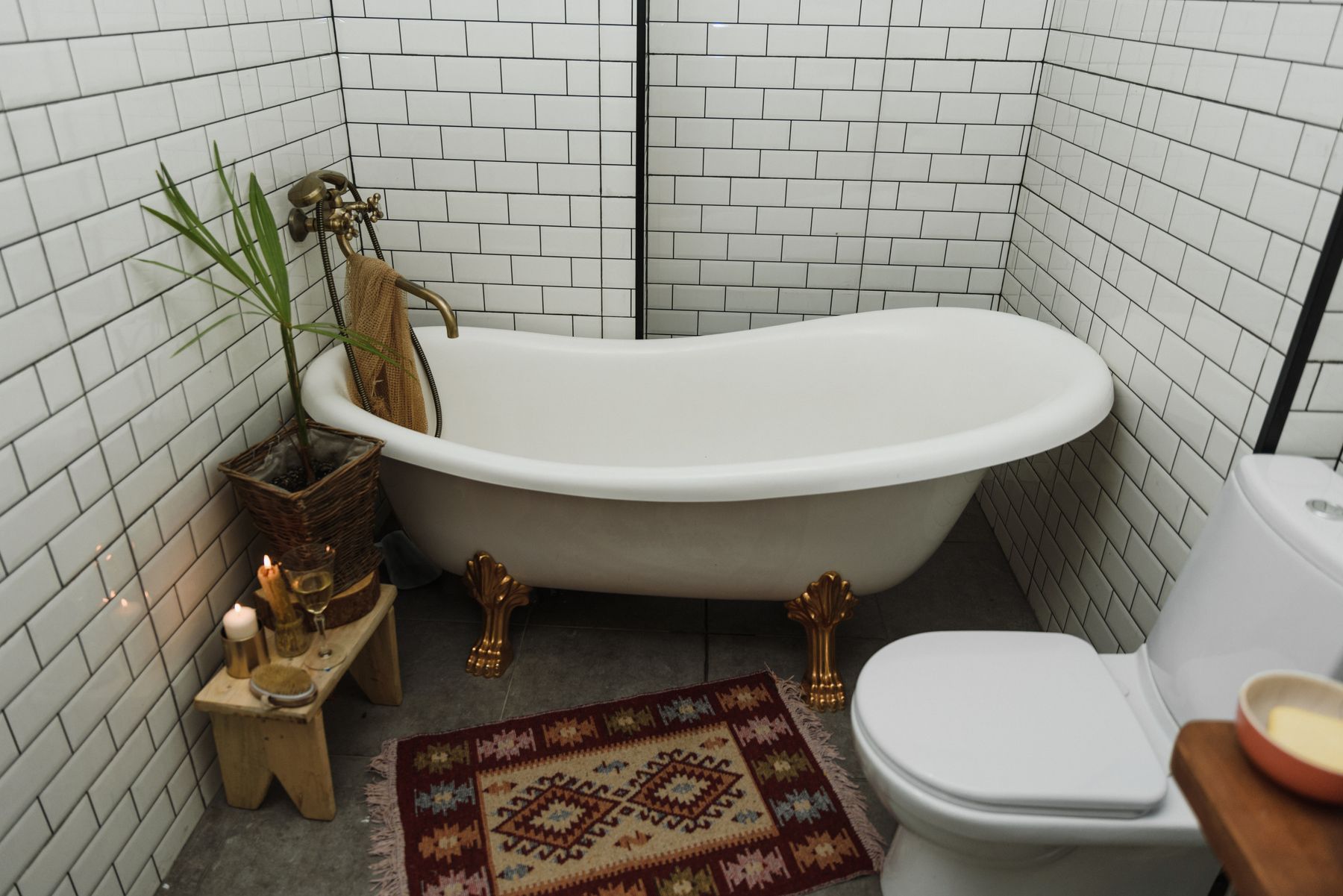
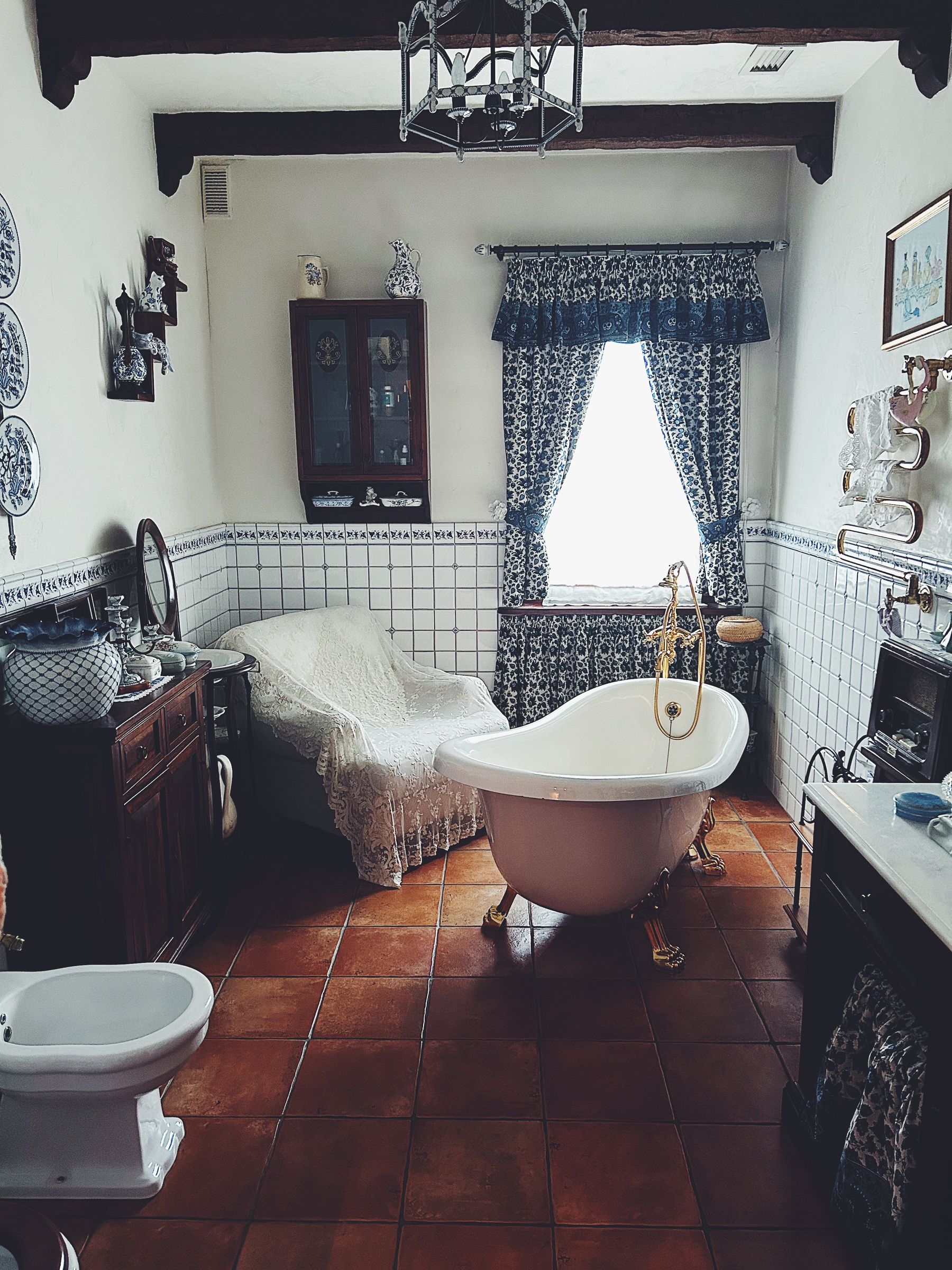
Layer Window Privacy Without Losing Soft Daylight
Map the true sightline from street, neighboring windows and upper floors in daylight and after dark. Frosted lower glazing, top-down blinds, shutters or a light washable curtain can protect the body without eliminating sky light. Keep fabric outside direct spray and allow air around the window to limit condensation. Privacy also includes the doorway: a bath that feels hidden from outdoors may still sit in a direct hall view. Cozy enclosure depends on knowing exactly where visibility begins and ends.

Replace Flat Ceiling Light With Three Useful Layers
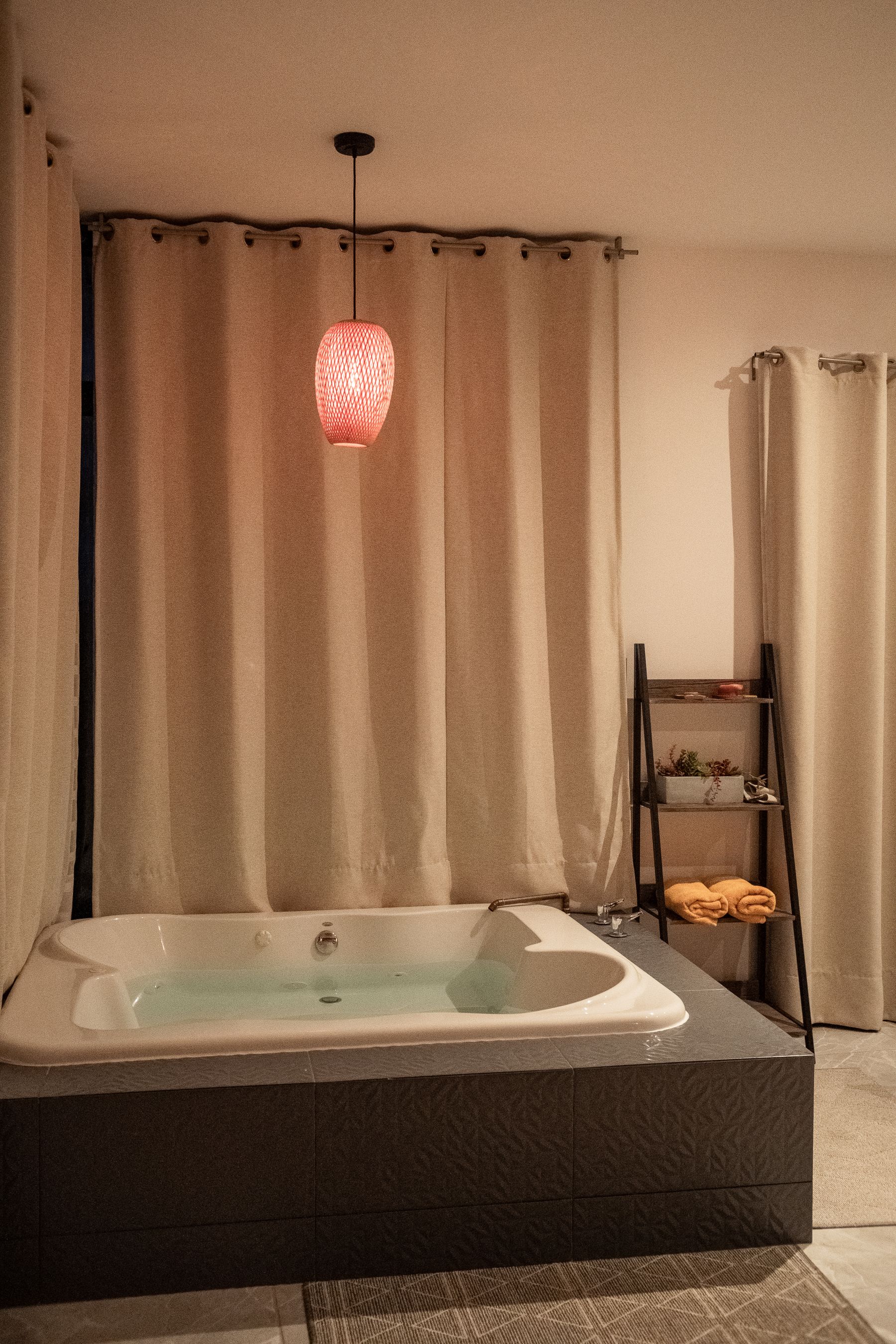
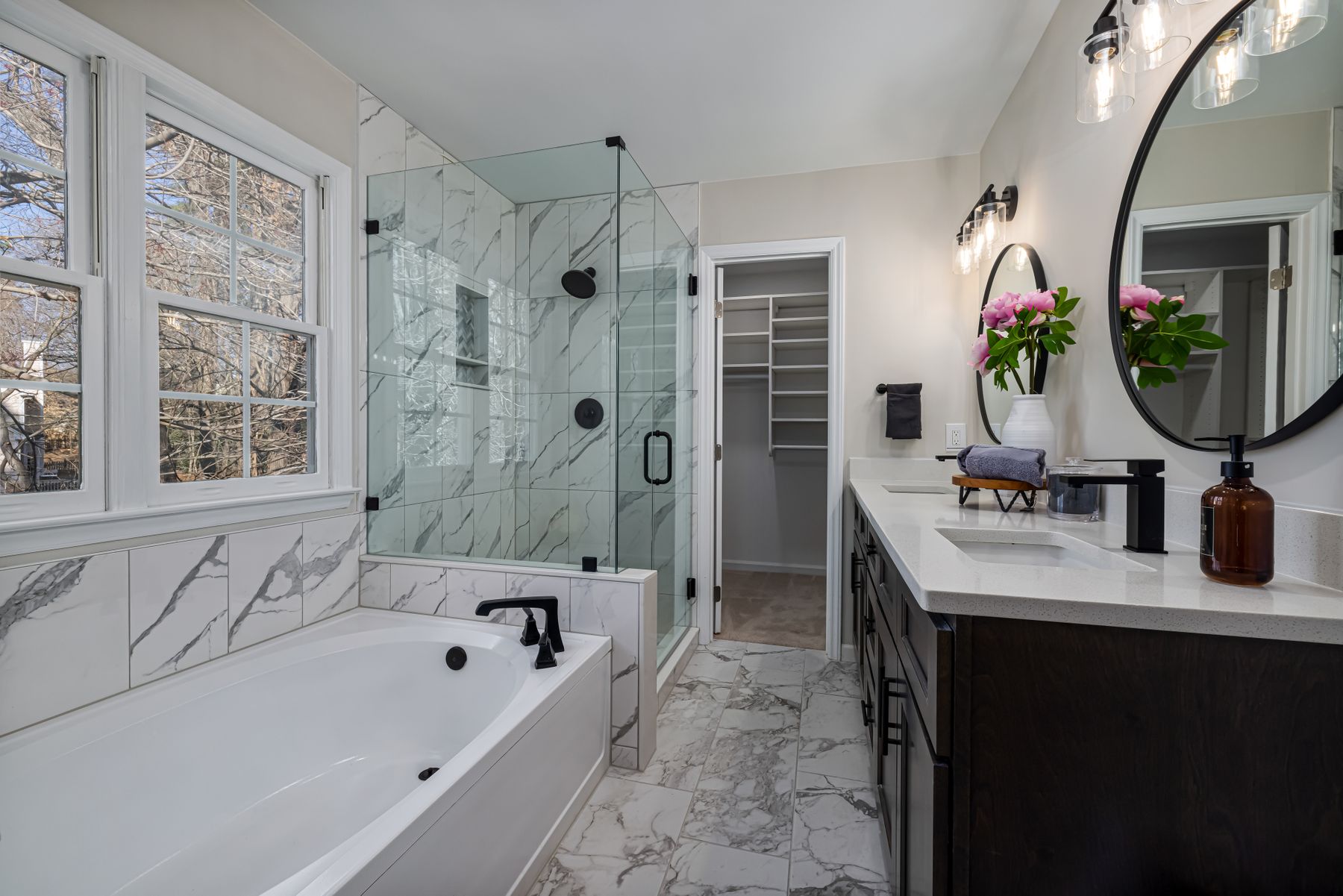
Use an ambient layer to understand the room, vertical light to see the face accurately and a low or indirect layer for night and bathing. Put them on separate controls and dim only compatible equipment. Warm light can make timber and clay inviting, but excessively amber lamps distort skin and cleaning. Avoid one bright downlight above the head that creates eye shadows and glare. Moisture rating, driver access and replacement matter as much as fixture appearance in a room used every day.
Make the Mirror Light Flattering but Truthful
Place diffuse light beside or around the mirror so it reaches both sides of the face. A decorative pendant may create mood but rarely replaces task light. Check color rendering, glare from the bath and reflections from glossy tile. The mirror should show a calm view rather than multiplying the toilet or open storage. If a medicine cabinet provides useful depth, integrate it without squeezing sconces into awkward positions. Cozy light supports recognition and care; it should not conceal dirt or distort color.
Add a Low Night Route Without Waking the Room
Use a shielded low wall light, under-vanity strip or dim night source to reveal the route from door to toilet and basin. Keep the source out of direct view from bed and preserve contrast at thresholds. Motion control can help, but the delay and sensitivity should suit the household rather than switching bright light on unexpectedly. Do not rely on candles or portable fixtures near water. A calm night bathroom remains safe and legible while allowing the body to return to sleep.
Design Acoustic Privacy at the Door and Fan
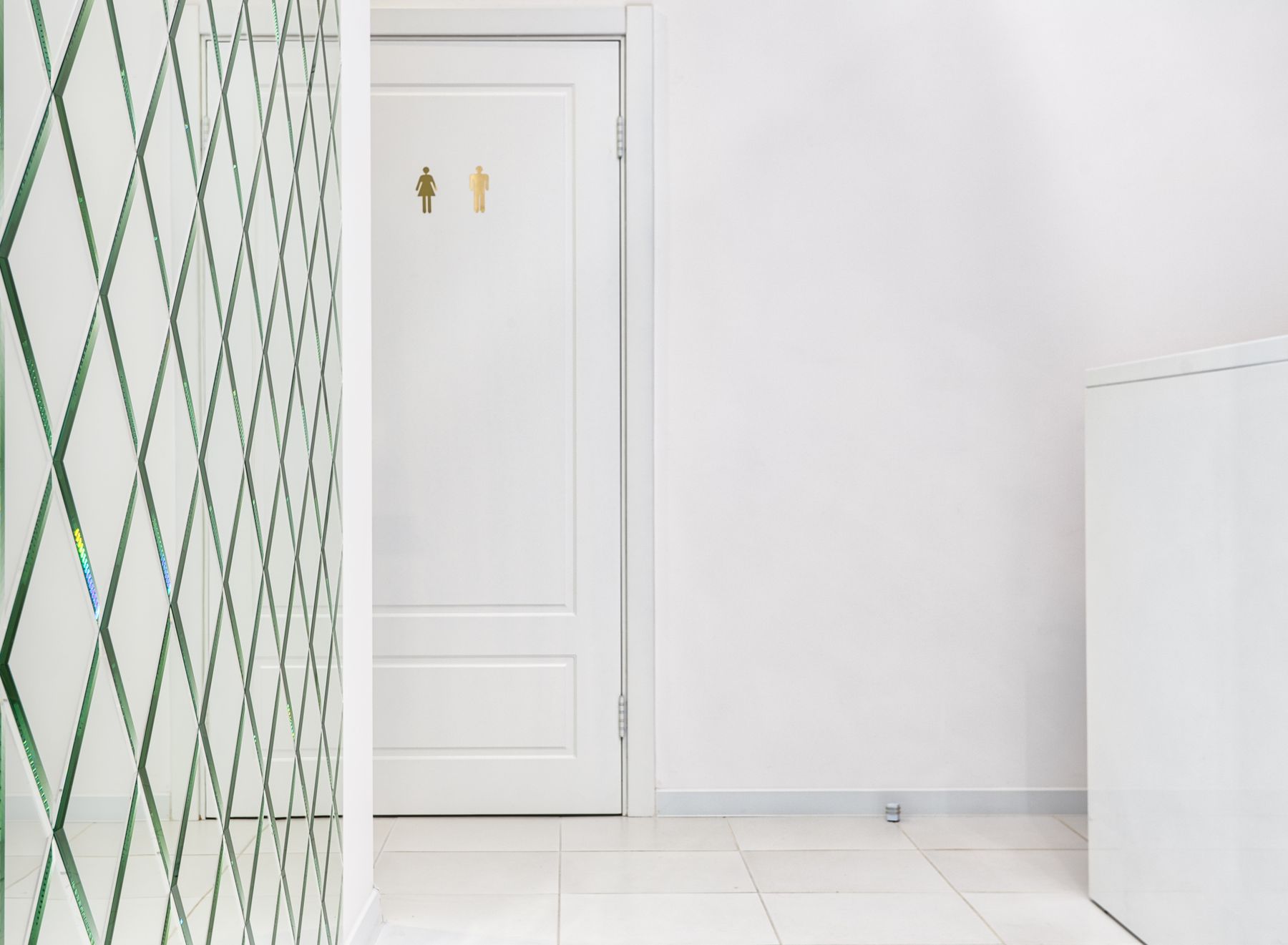
Comfort disappears when every sound carries into a bedroom or living area. Use a properly fitted solid or well-sealed door where possible, but preserve the transfer-air path required by the ventilation design. Avoid decorative barn doors when acoustic and visual privacy are priorities. Select a quiet fan at its real operating resistance, isolate vibration and keep the duct smooth and correctly sized. Towels and washable textiles reduce hard-surface echo, yet they cannot compensate for a large door gap or rattling exhaust.
Choose a Bath for Supported Rest, Not Sculpture Alone
Test the internal length, slope, rim, water depth and control reach with the intended users. A visually soft oval can be uncomfortable if the body slides or the filler sits beyond reach. Preserve stable entry, a nearby towel and cleaning access without leaving a cold unusable moat around the tub. A built-in bath may retain heat and use space more efficiently than a freestanding model. Coziness comes from supported, repeatable bathing rather than the silhouette photographed from the doorway.
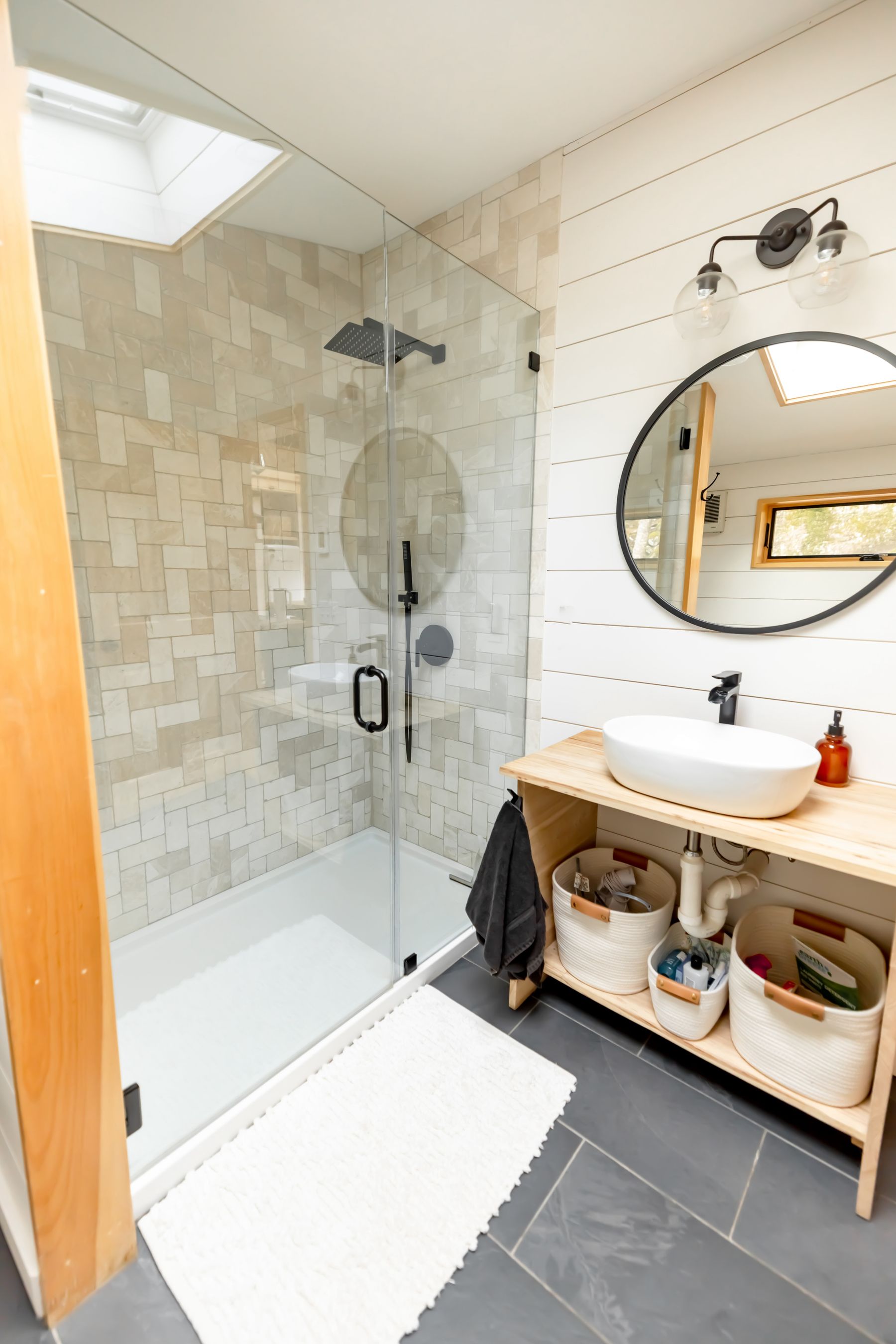
Keep the Shower Warm Without Trapping Moisture
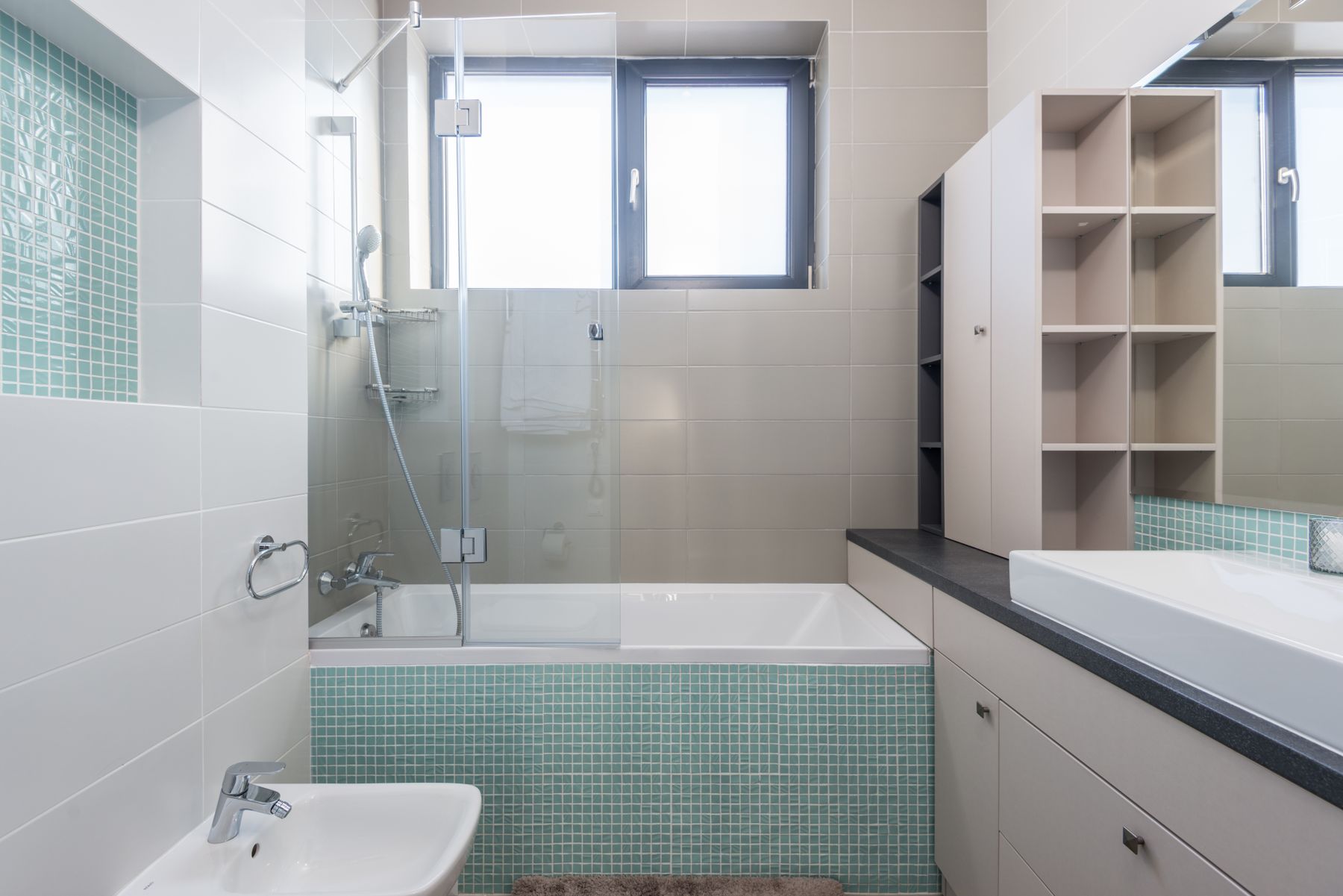
A fully open shower can feel visually generous but cold in a cool climate. Size the opening, screen and heated zone for the actual room rather than copying a resort plan. Put controls where water can be started before entry, add a stable seat or ledge when useful and keep the towel outside spray. Larger rain fixtures need adequate pressure and hot-water capacity. After use, the enclosure must dry: warm air and glass do not replace extraction or a clear drainage fall.
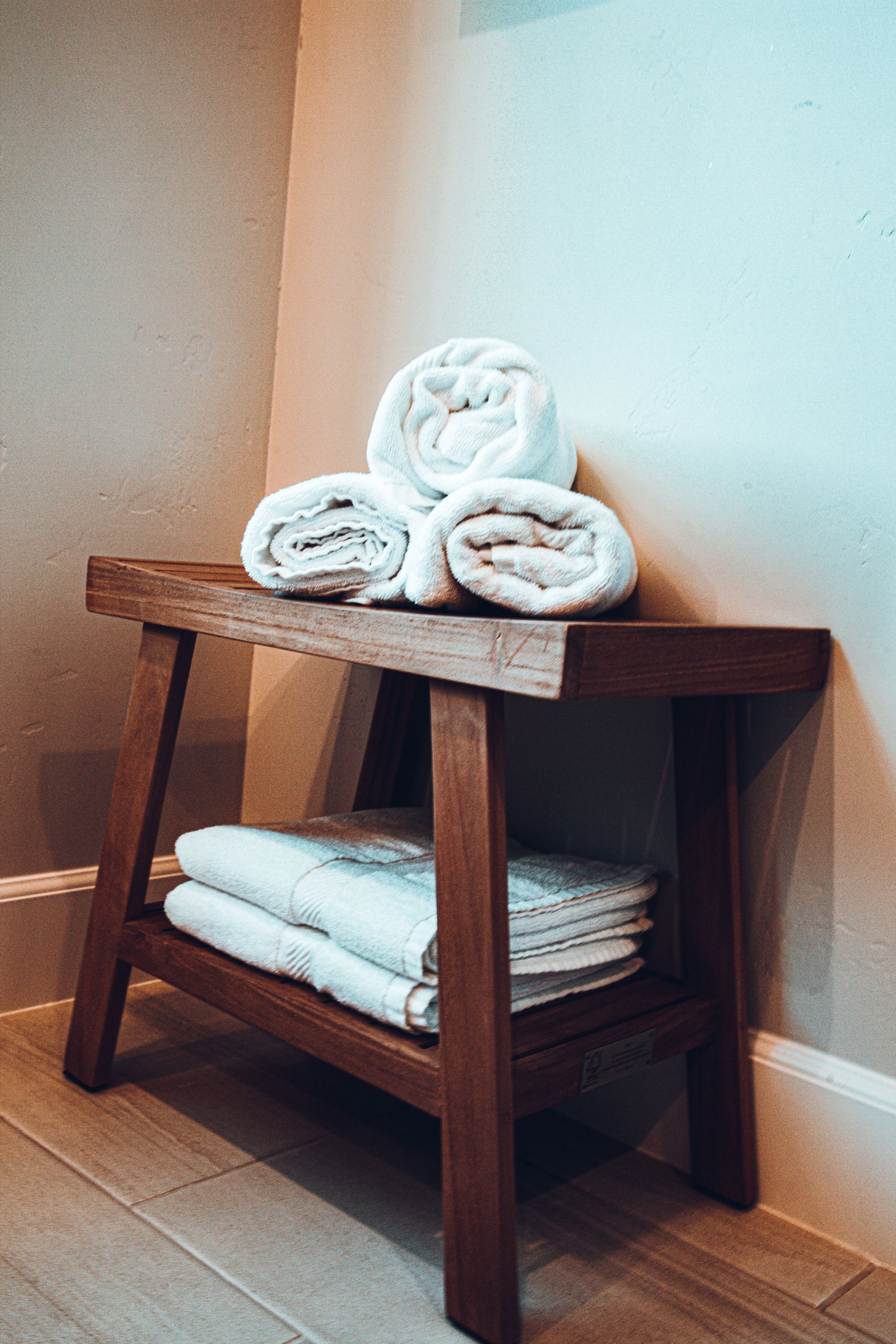
Give Towels Enough Rail, Air and Drying Time
Provide one real drying position per regular user rather than folding several damp towels over a short ring. A rail exposes more fabric than a hook; a warmer must have enough usable length and should not become permanent storage. Keep clean towels in a dry cabinet or open shelf with air around them, and separate guest supply from daily use. Plushness is not the only measure: overly dense towels can dry slowly in a small, poorly ventilated room.
Keep a Useful Landing Zone at the Vanity
Leave enough clear counter for the items used during one routine and give the rest a nearby home. A tray can organize two or three products, but it should not become a permanent cluster around the basin. Check drawer clearance around plumbing, wet-handed pulls and cleaning access at the tap. Rounded edges and warm timber may feel inviting, yet the strongest comfort is not needing to move décor before washing or set a hot tool on a towel.
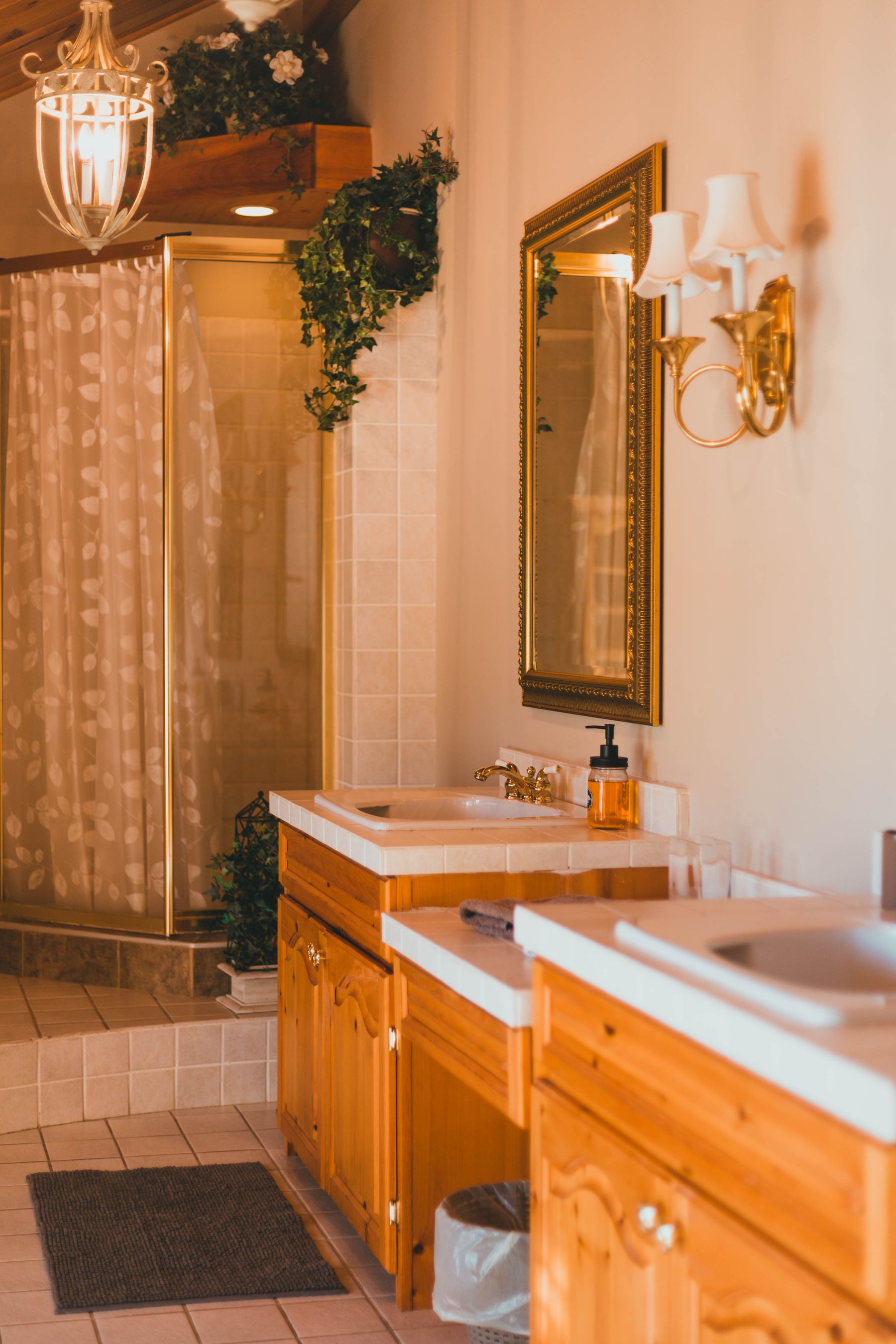
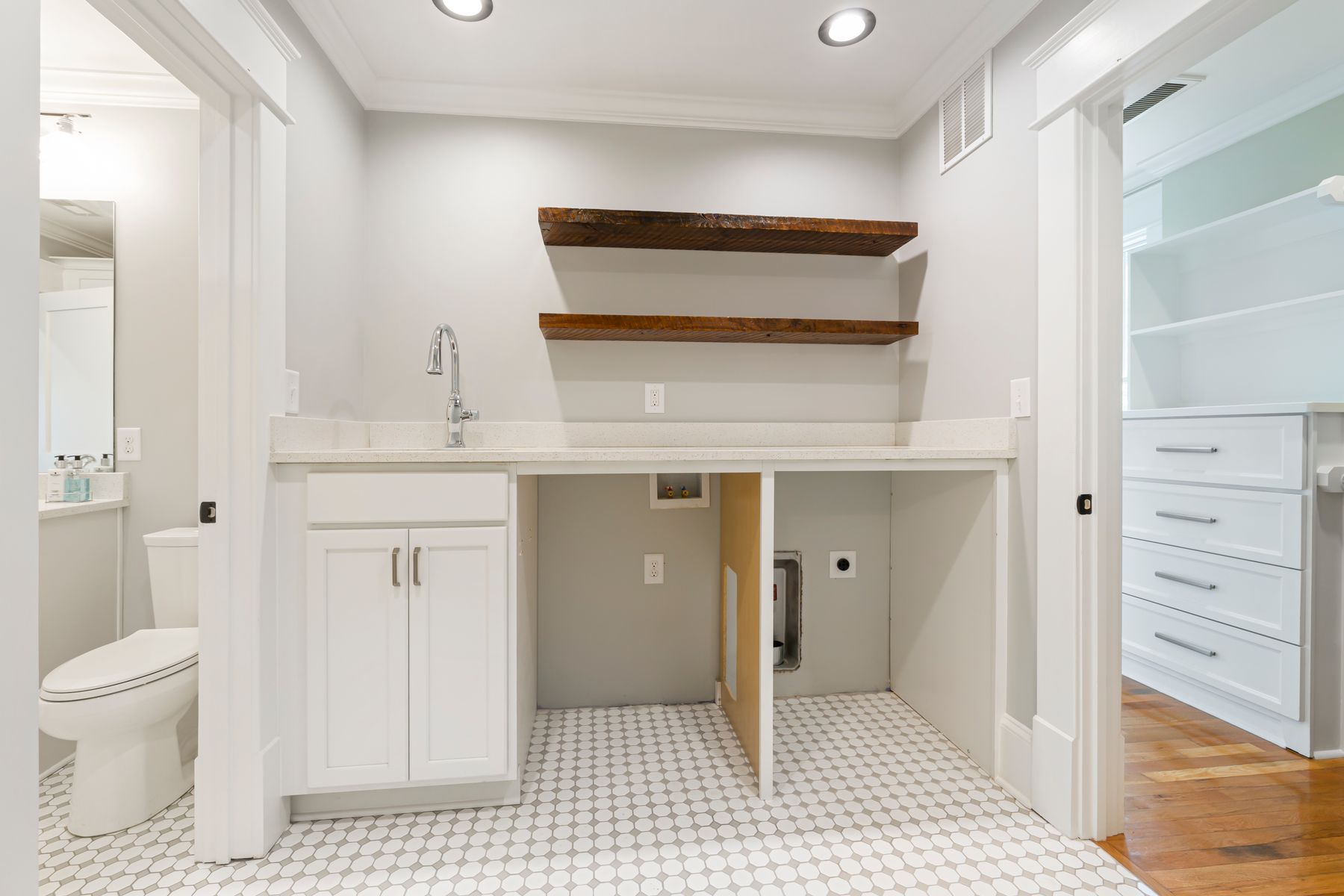
Hide Bulk Storage and Display Only the Comfort Layer
Store spare paper, cleaning products, medicines and back-stock behind doors, then reserve open shelves for a few washable and frequently used items. A recessed cabinet can protect calm without consuming floor area; a tall cupboard works only if doors and drawers clear the route. Do not decant products solely for appearance when labels contain useful instructions. Cozy storage reduces search and visual noise, and it remains easy to clean when objects are not packed tightly against every wall.
Add Personal Objects Without Creating Moisture Traps
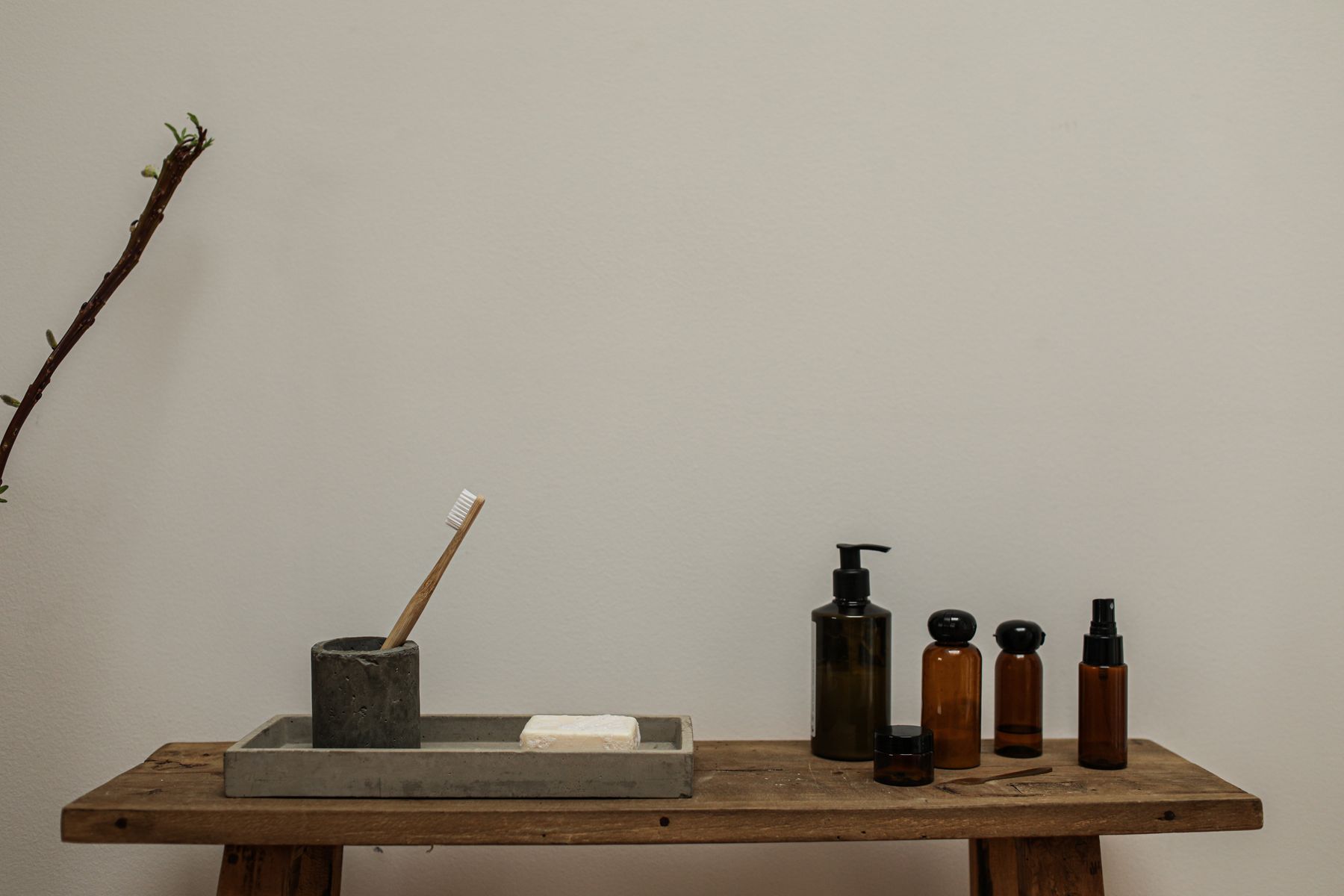
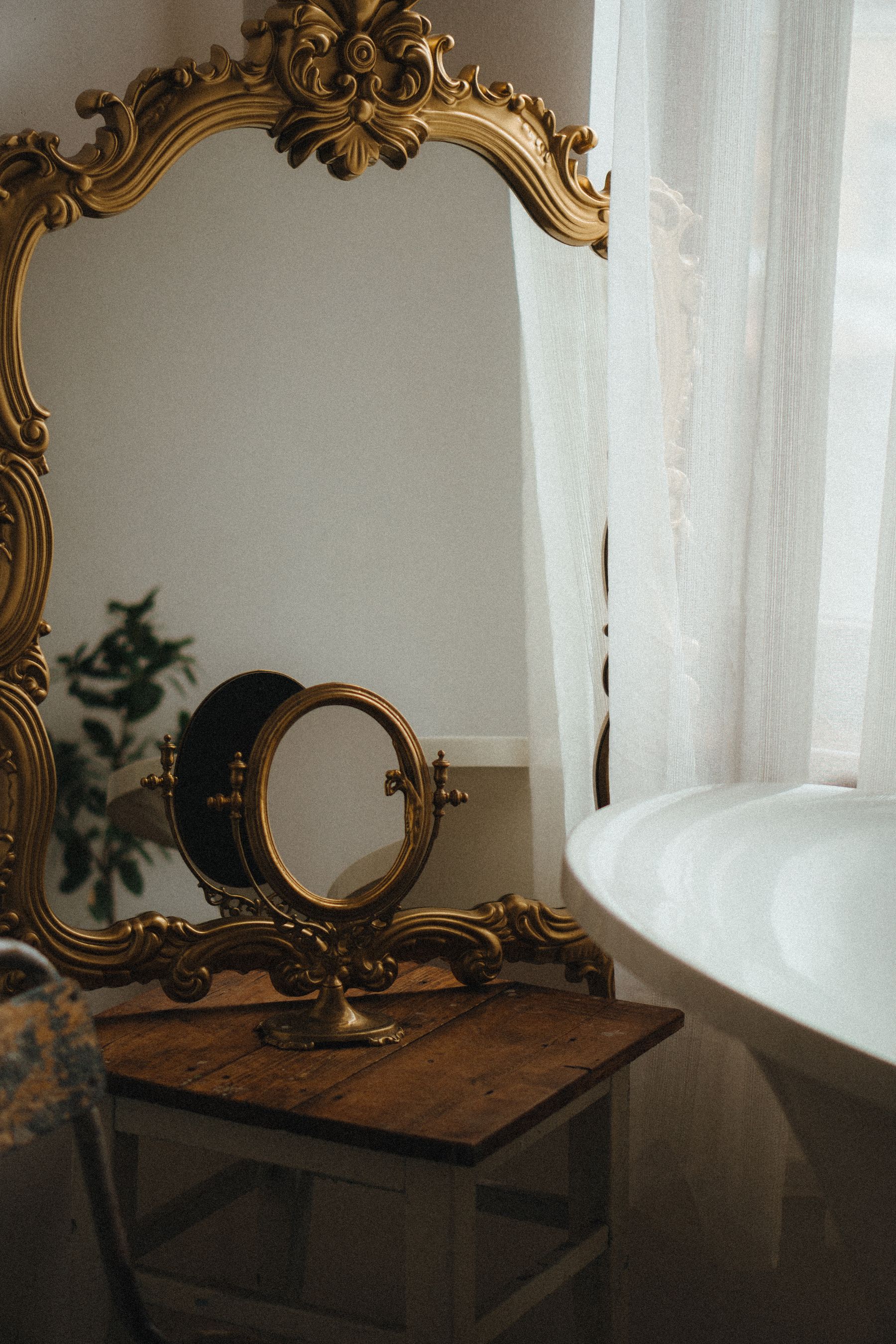
One framed print, handmade vessel, inherited mirror or useful stool can make a bathroom feel personal rather than staged. Protect paper and porous objects from condensation, use secure fixings and keep every piece reachable for dusting. Avoid filling ledges with collections that obstruct wiping or disguise mildew. Meaningful does not have to mean old: a favorite color, locally made hook or well-used timber tray may provide enough identity. The personal layer should survive normal use without demanding museum conditions.
Use Greenery and Scent Only Where the Room Supports Them
Match plants to measured light, temperature and care capacity; humidity alone does not make a windowless bathroom suitable. Keep leaves away from hot lamps, direct spray and fan inlets, and use waterproof saucers. Scent should be optional and restrained because fragrance can irritate users or mask a moisture problem. Prefer a well-ventilated room, clean textiles and one living plant over a collection of candles, diffusers and artificial vines. Never leave an open flame unattended or near hanging fabric.
Make a Small Bathroom Snug Without Making It Tight
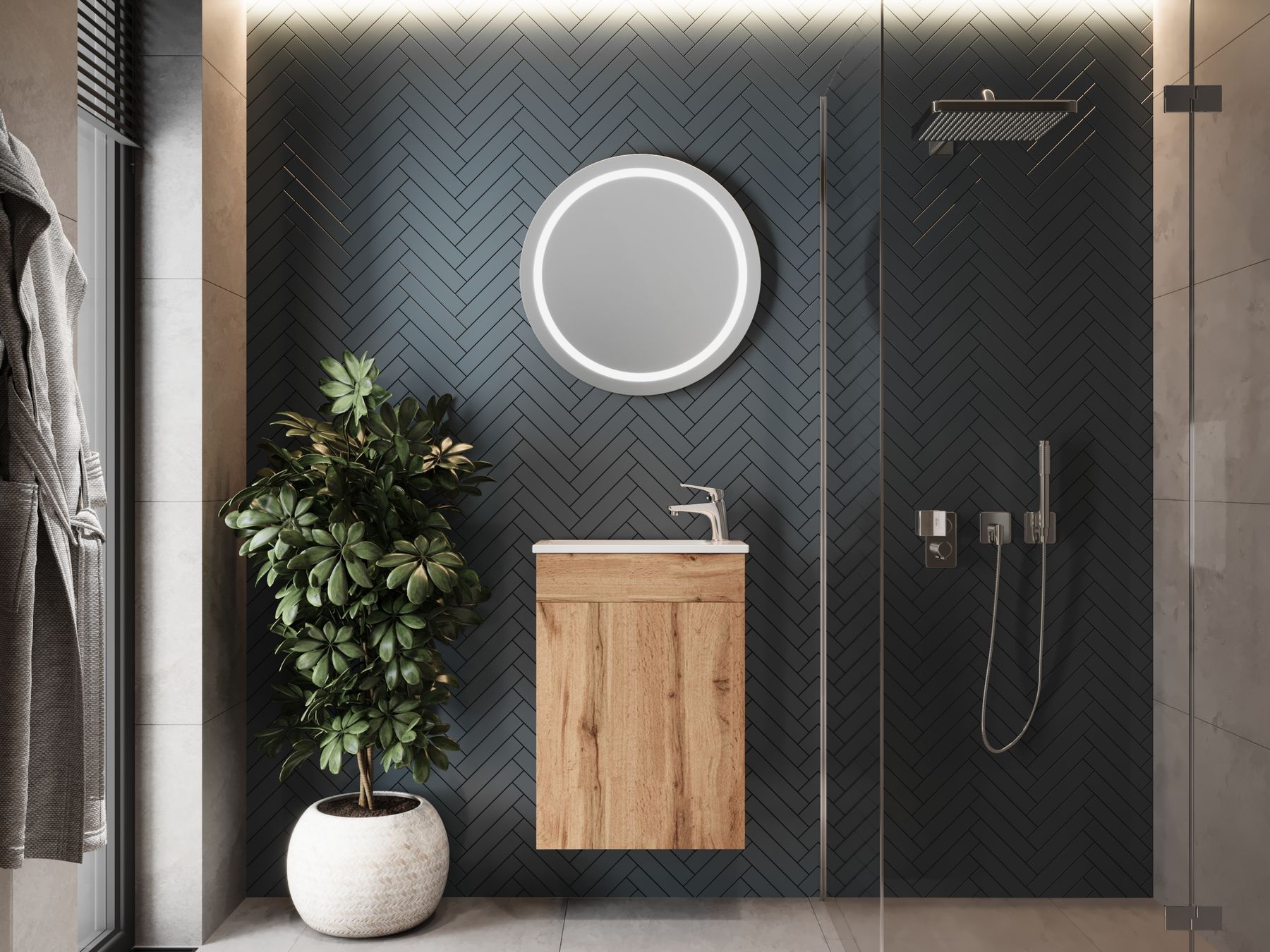
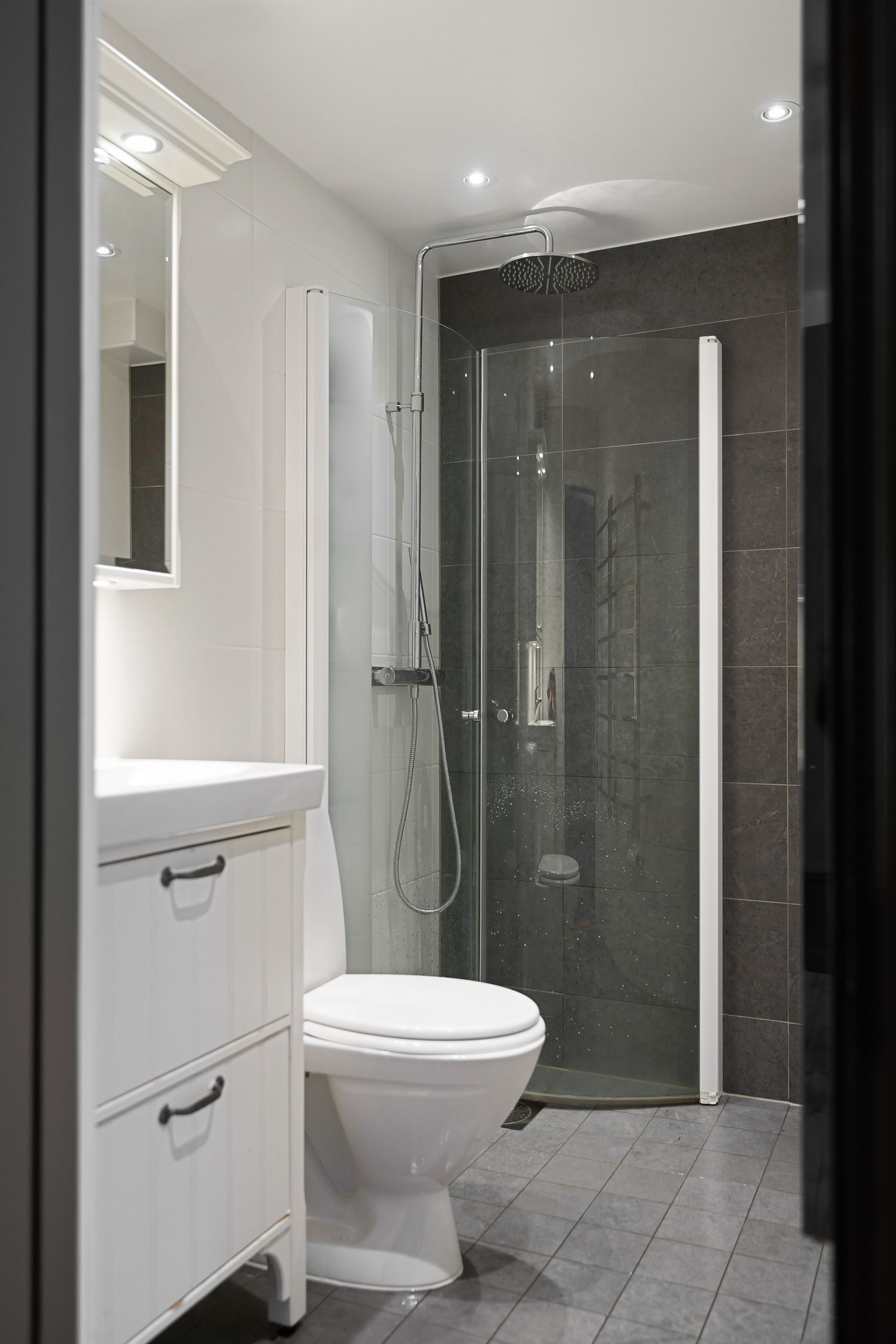
Small scale can naturally create enclosure, but excess stools, baskets, plants and thick textiles quickly obstruct the route. Use a shallow vanity, recessed storage, one immersive wall or ceiling color and a clear shower screen where helpful. Keep the floor visible enough to understand the room and provide a towel position that does not narrow access. A compact bathroom becomes cozy through proportion and closeness; it becomes cramped when decorative volume competes with the body.
Make a Windowless Bathroom Glow Rather Than Glare
Use warm but accurate face light, a soft ambient layer and one low or reflected source to create depth. Slightly deeper walls can feel more intentional than trying to imitate daylight with brilliant white paint. Place mirrors to expand useful light rather than multiply fixtures and clutter. Strong extraction is non-negotiable because there is no window to assist drying. Live plants require a proper grow-light plan; botanical color, art or ceramic is the more credible cozy layer in most windowless rooms.
Create Rental Coziness With Reversible Functional Changes
Start with the lamp color, shower curtain, matching everyday towels, stable bath mat, freestanding closed storage and an over-door robe hook if permitted. Store original hardware and avoid adhesives that fail in steam or damage waterproof surfaces. A rechargeable lamp may support mood only when it is suitable for the location and kept outside wet zones. Do not cover a moisture problem with peel-and-stick material. The best rental changes improve routine and can move safely to the next home.
Integrate Support, Grip and Warmth Instead of Hiding Them
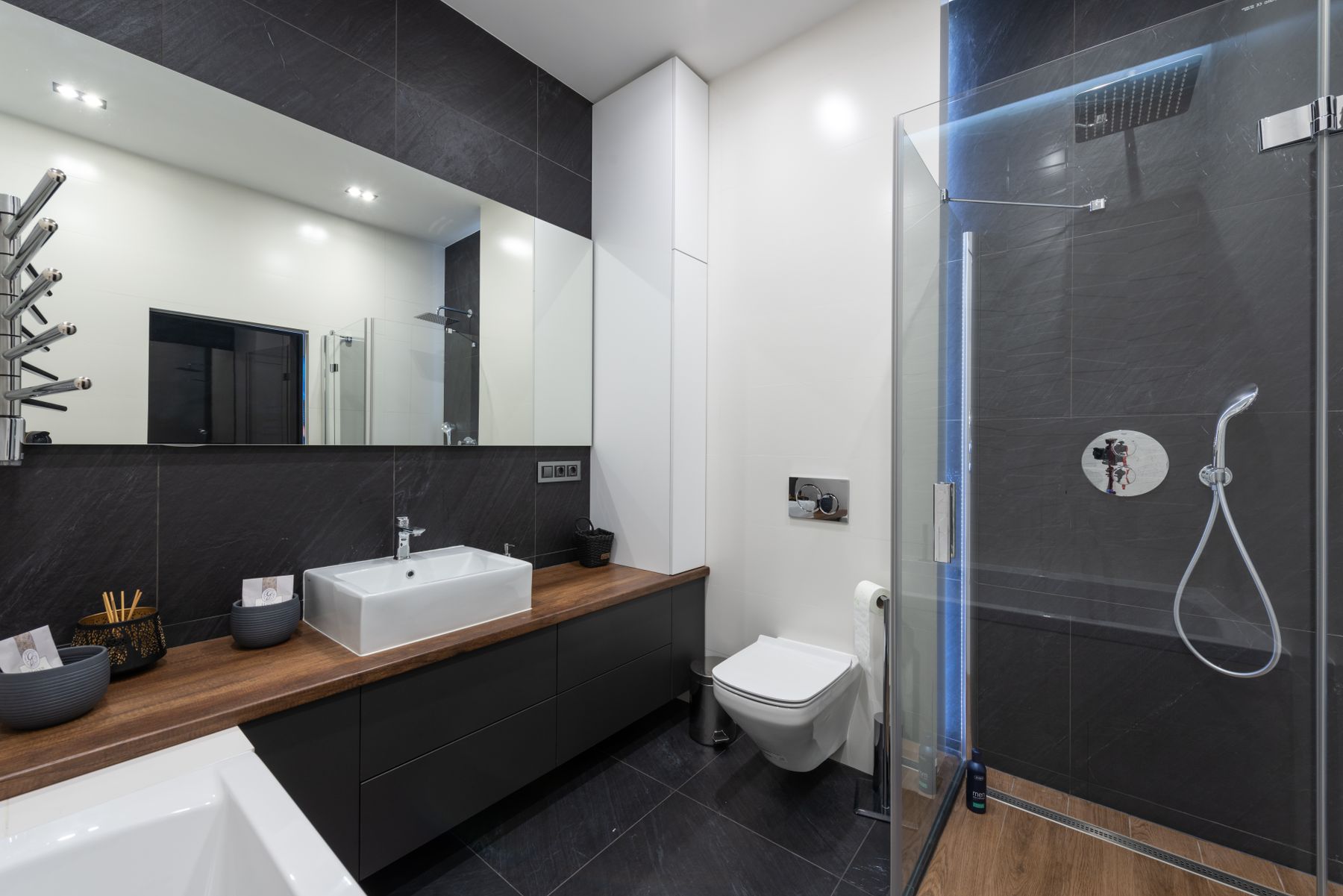
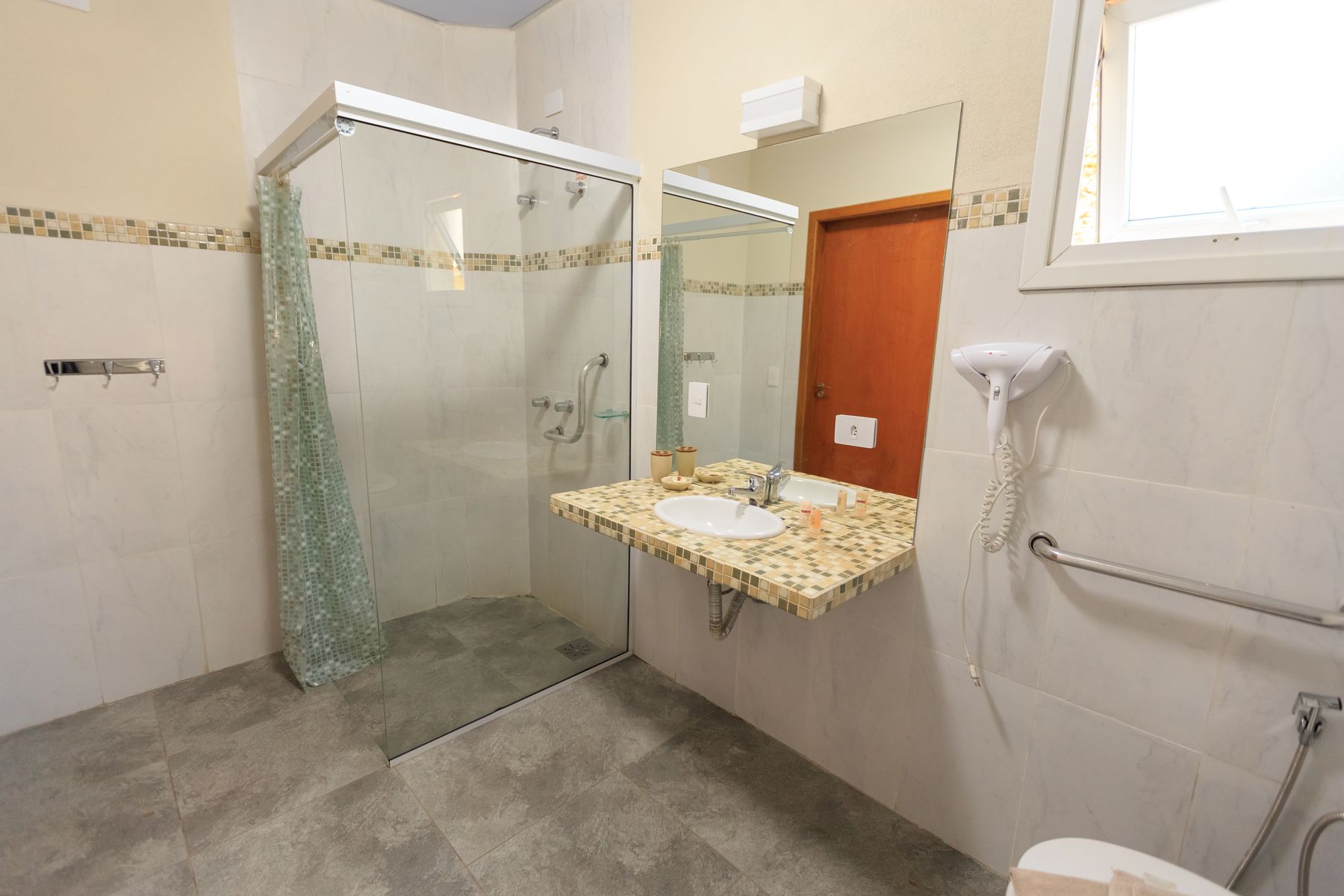
Provide a step-free route where possible, stable seating, adequate turning and transfer space, reachable controls, visible floor edges and wall blocking for support. Warm metal or a dark rail against pale tile can look intentional while preserving contrast. Avoid deep-pile mats, low stools and crowded plant stands. Thermal comfort matters especially when dressing takes longer, so place towels and robes within reach and prevent direct drafts. A cozy bathroom should welcome more bodies and abilities, not depend on agile movement.
Ventilate Quietly Enough That People Use the Fan
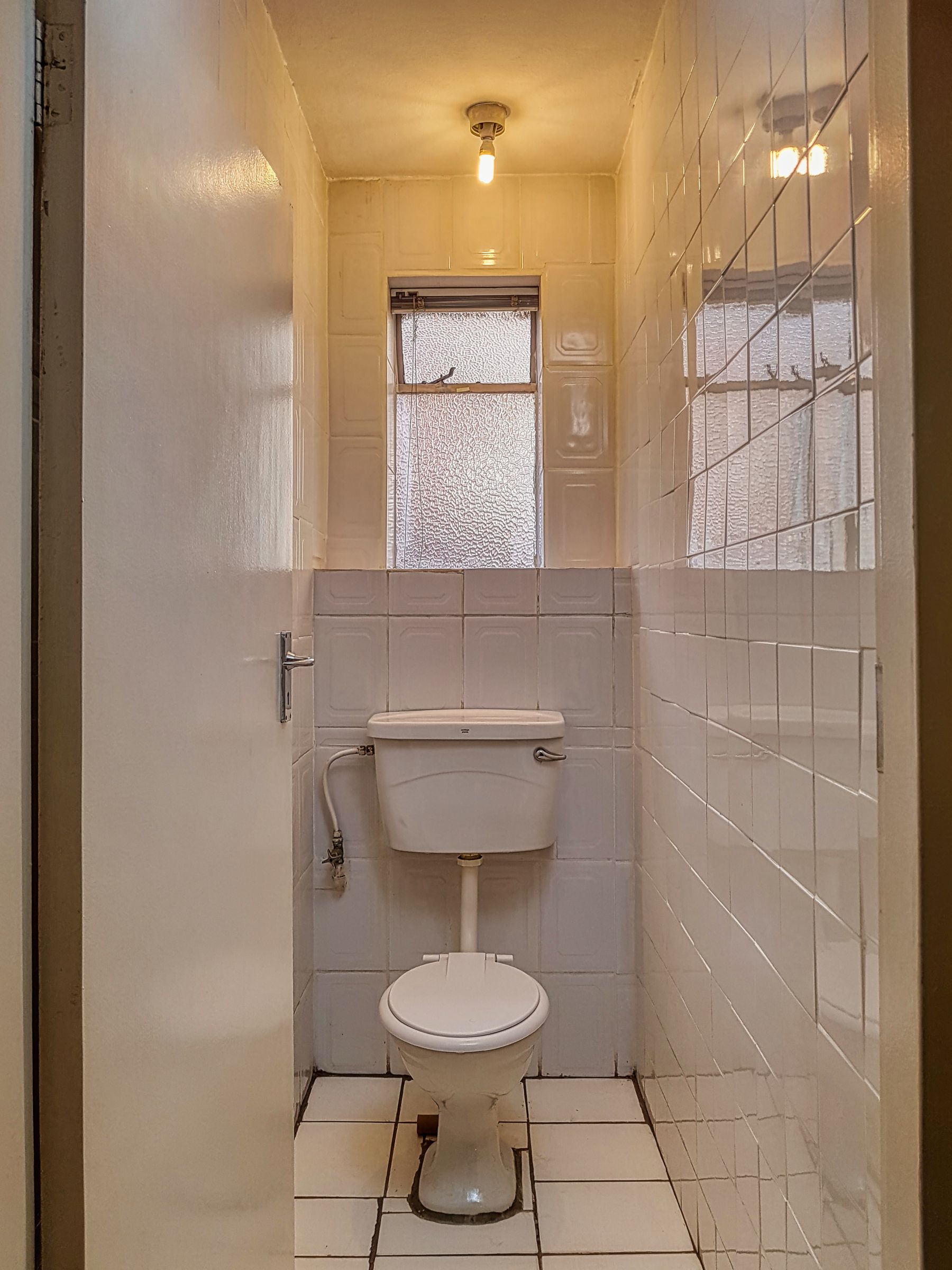
Size extraction for the room and bathing load, vent it directly outdoors and provide make-up air. Choose quiet equipment at the actual duct resistance, then use a timer or humidity control where appropriate. A silent fan that moves too little air is not a solution, and a powerful rattling fan may be switched off. Persistent condensation, damp towels and recurring mildew are incompatible with coziness. Keep grilles, ducts and controls accessible so comfort does not decline as the system becomes dirty or obstructed.
Maintain the Materials That Create Comfort
Soft towels need laundering and full drying; timber edges need inspection; stone needs compatible cleaner; mats need washing beneath; fans need cleaning and lamps eventually need replacement. Record the approved care for each permanent finish and keep spare tile, paint and sealant information. Patina is gradual and stable; swelling, mildew, corrosion and failed joints are damage. If the household cannot sustain the planned care, reduce material variety and decorative objects now. Ease of reset is part of comfort, not separate from it.
Keep Cozy Distinct From Spa, Cottage and Rustic
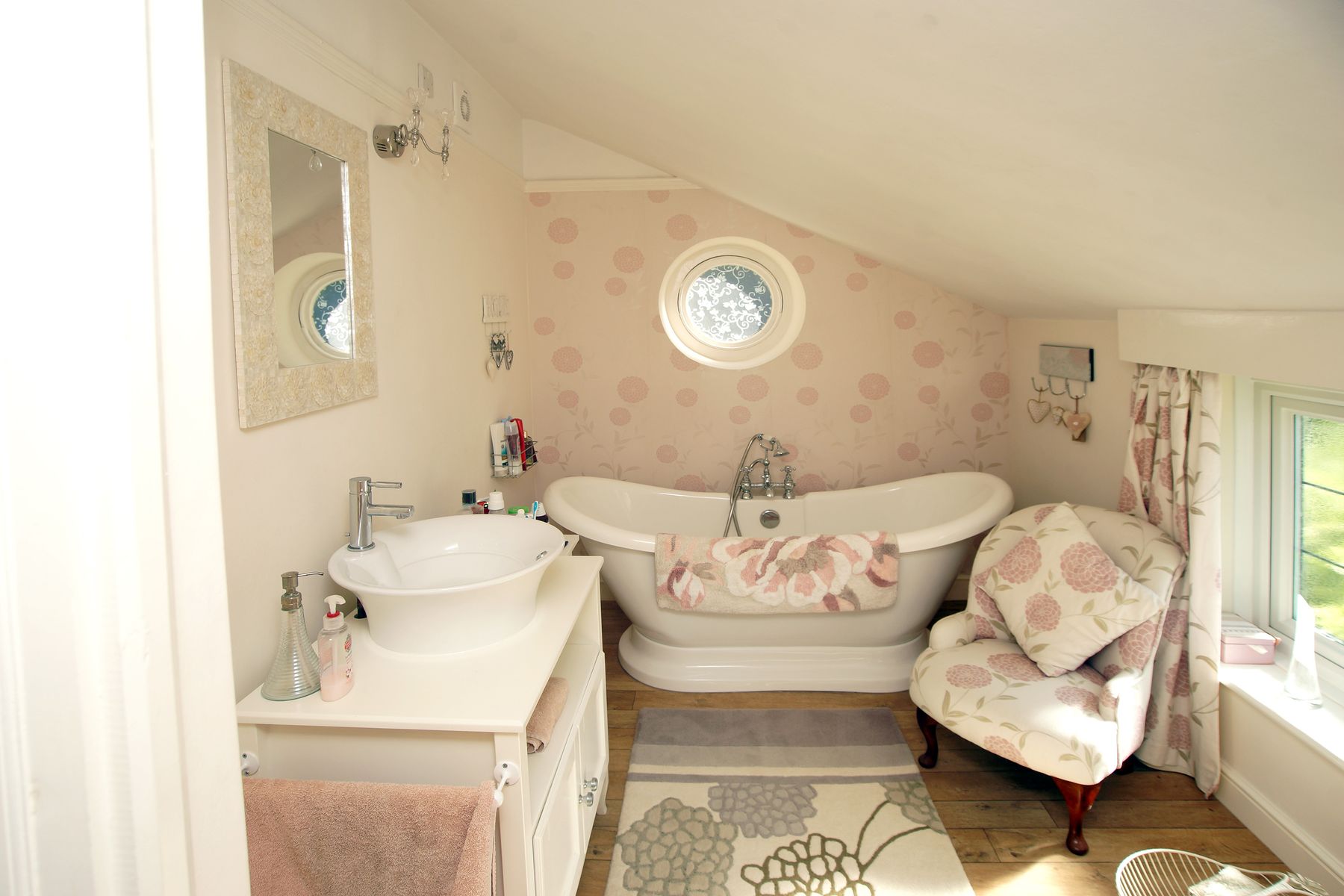
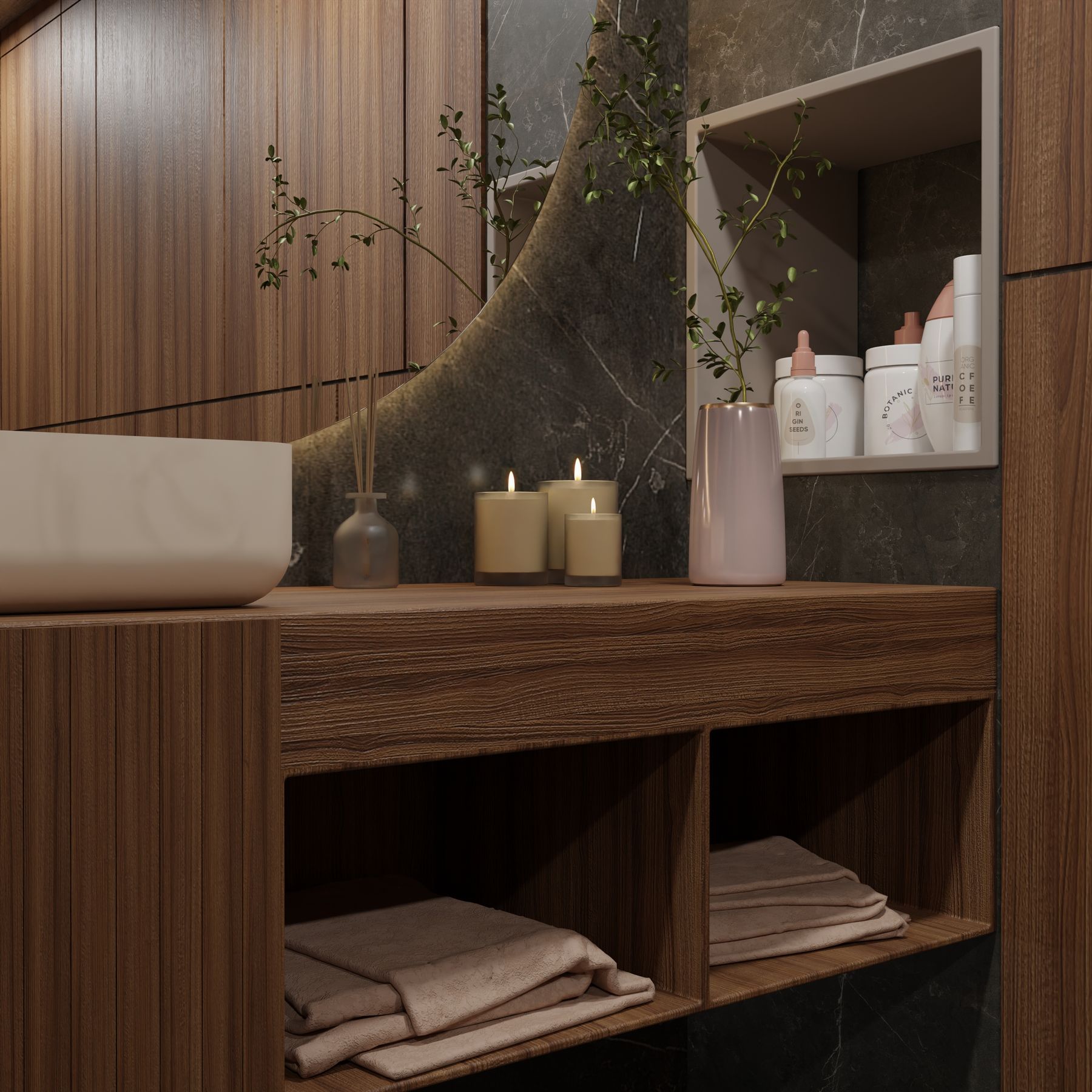
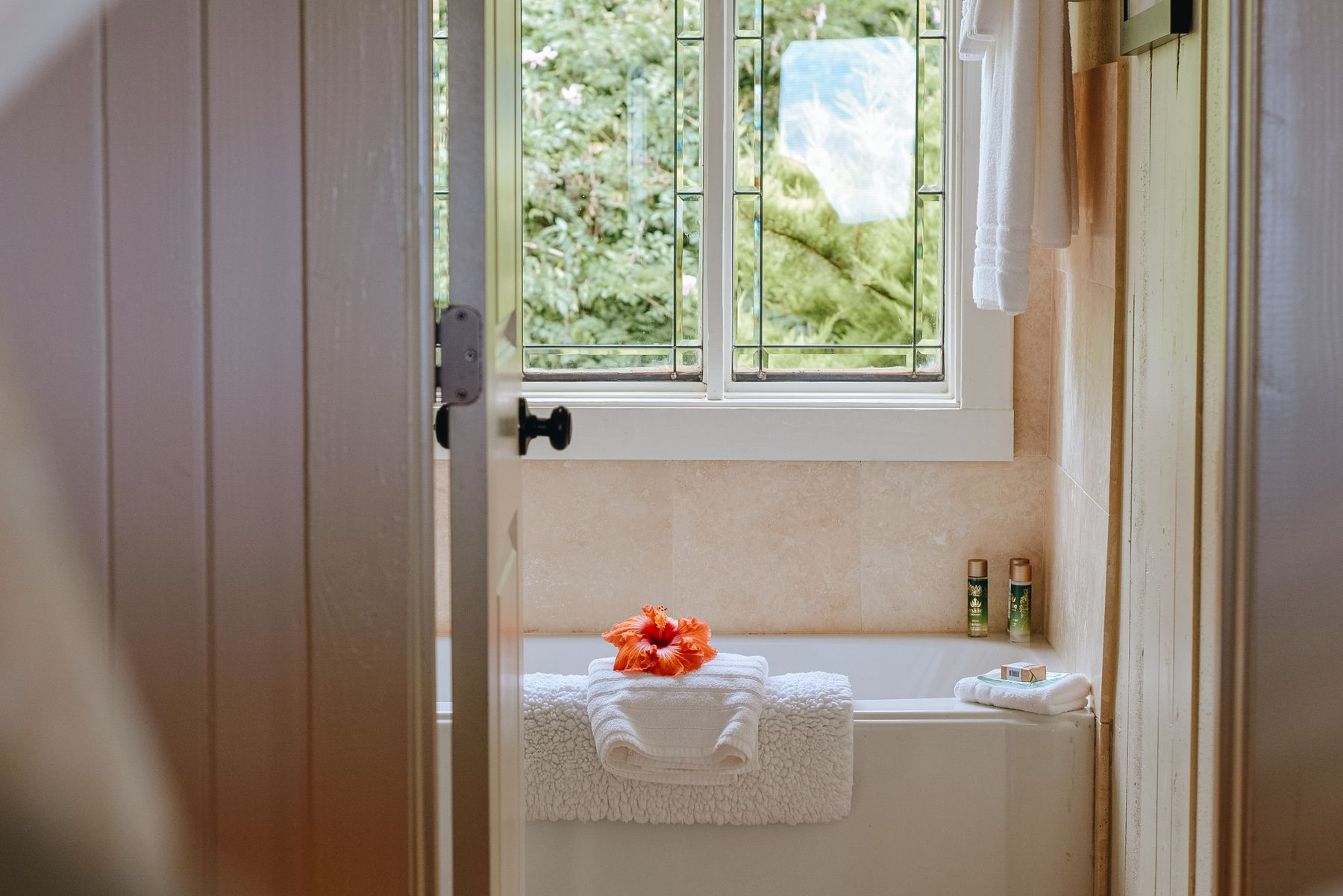
Spa Bathroom centers wellness rituals and reduced sensory friction; Cottage uses small-scale historic character, garden pattern and familiar fittings; Rustic emphasizes weathered material; Neutral organizes a broad quiet palette; Warm Wood is specifically material-led. Cozy can overlap with all five because it describes felt comfort, but it should show its own evidence: supportive layout, temperature, privacy, soft light, acoustic ease and useful personal layers. Naming those mechanisms prevents the destination from becoming a gallery of unrelated beige bathrooms.
Use Seasonal Color Without Rebuilding the Bathroom
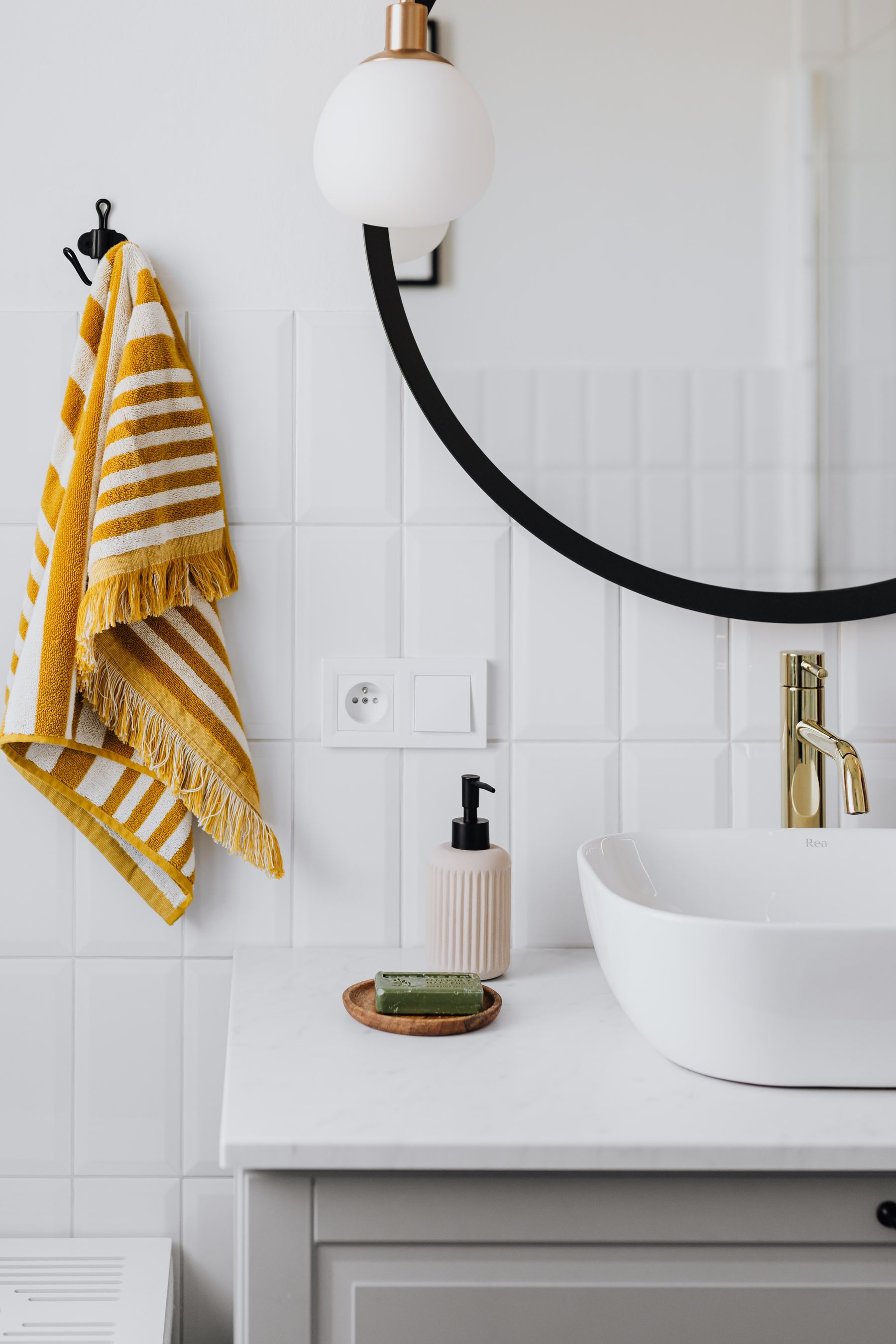
Keep permanent tile, sanitaryware and cabinetry broad enough to support small seasonal changes. In winter, a deeper towel, bath mat or framed print can add visual warmth; in summer, lighter textiles can reduce heaviness. Store the alternate set clean and dry rather than accumulating every layer in the room. Seasonal scent and novelty décor are optional, not required. The most effective change is often lamp dimming or textile color because it alters the evening atmosphere without compromising waterproof construction.
Use the One-Minute Reset as a Comfort Test
After the busiest routine, time how long it takes to hang towels, clear the counter, return products and remove standing water. If the room cannot reset in about a minute, storage, drying or waste placement is probably unresolved. Do not blame the users for a cabinet that is hard to reach or a rail that is too short. Cozy design reduces the work required to recover calm. Adjust the system before adding baskets, trays or decorative containers that create another layer to manage.
Finish With the Warm, Safe and Lived-In Test
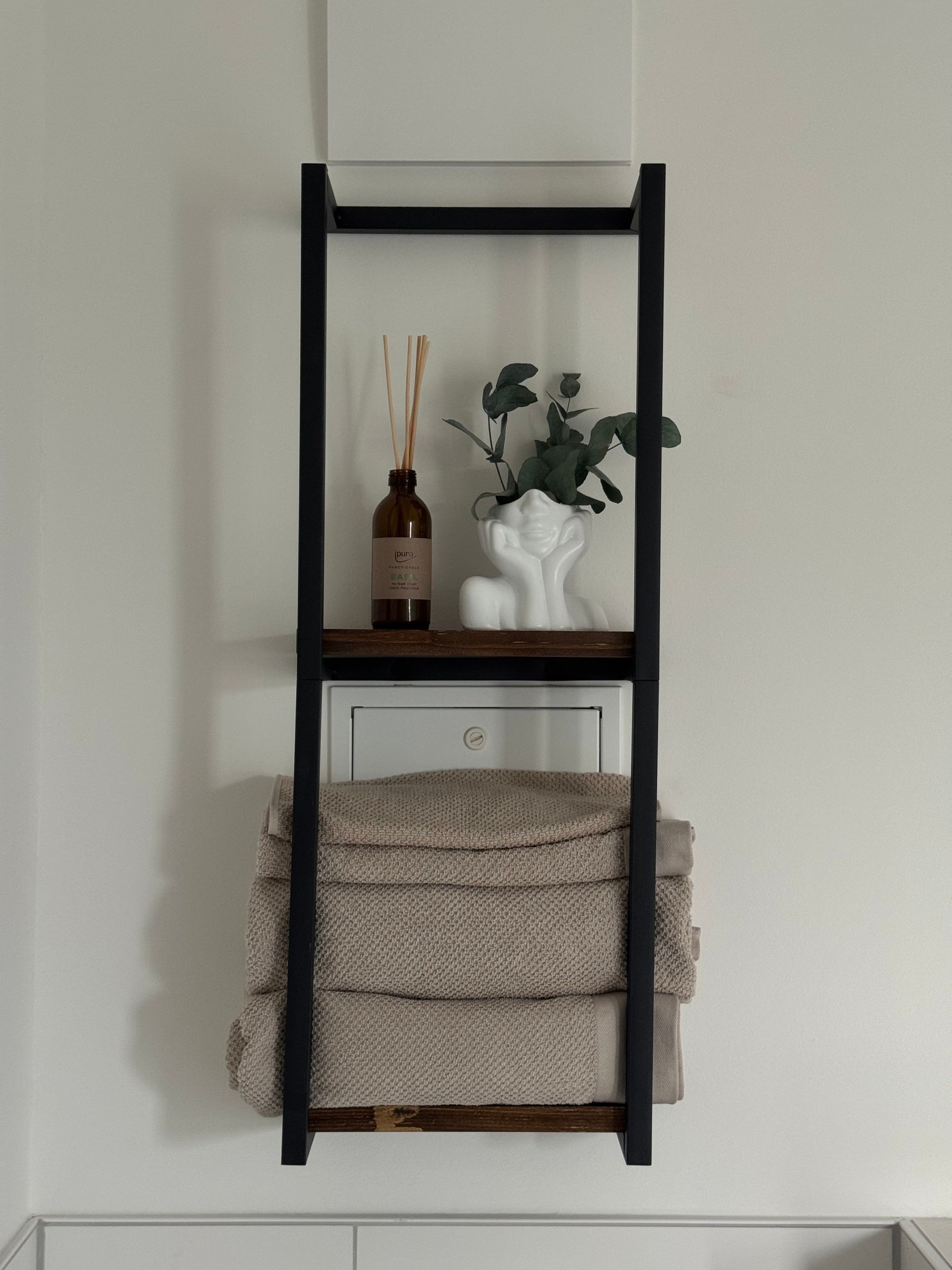
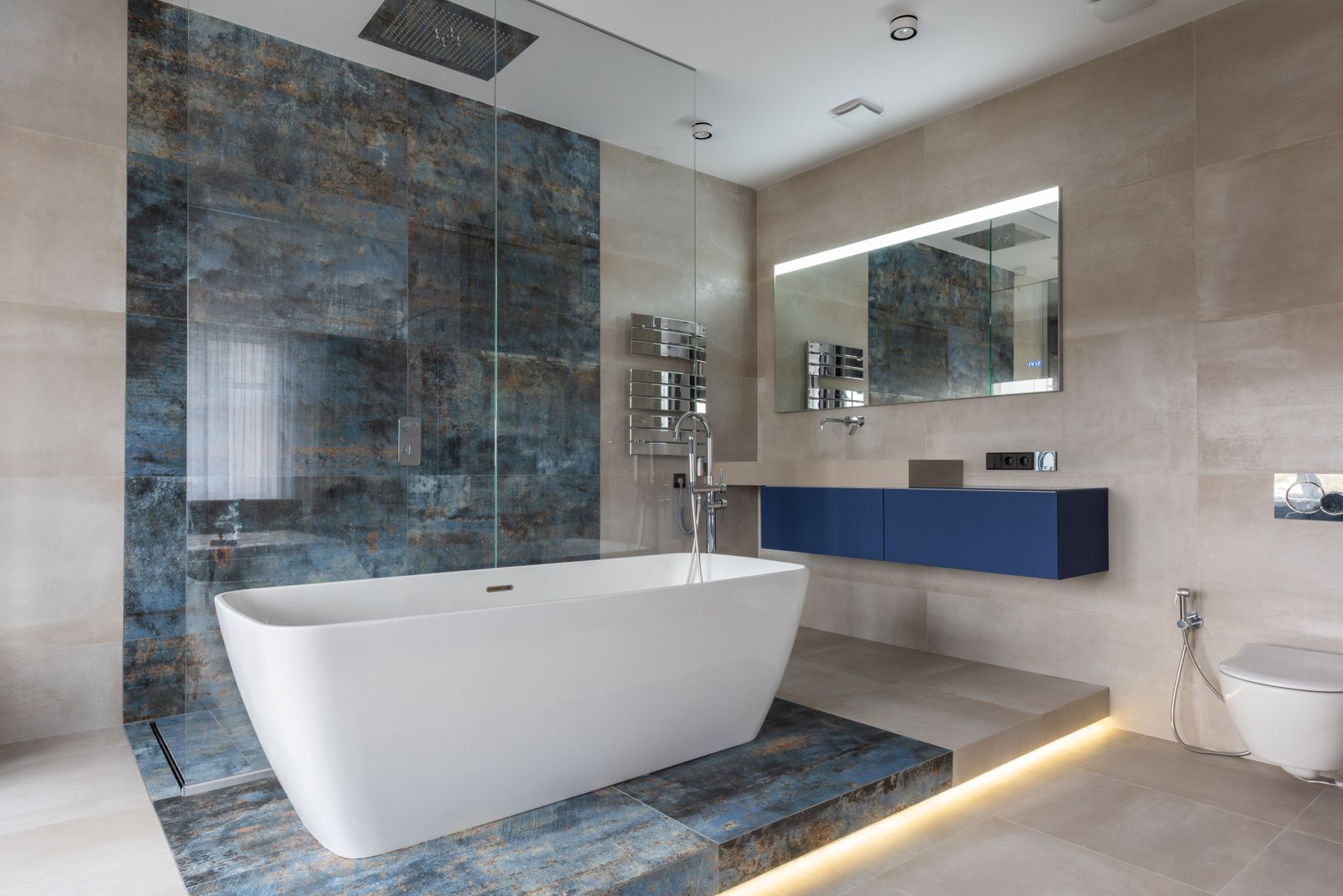
Remove decorative candles, extra trays, artificial greenery and towels that exist only for the photograph. Then use the bathroom at dawn, after dark and immediately after a shower. Check floor warmth, glare, privacy, echo, towel reach, grip, ventilation, storage and cleaning. If the room still feels supportive and personal when ordinary products are present, the cozy intent is working. Add nothing else unless it solves a specific physical or emotional discomfort discovered during that full-use test.