Define Cottage by Scale, Not by Props
Start with the room's actual proportions and daily routine. Cottage style is strongest when fixtures and furniture feel comfortably scaled to a modest house: a shallow vanity, a simple basin, one pattern and enough open floor to move. Country is the broader rural-house family; Farmhouse emphasizes utility; Shabby Chic leans further into romantic distress and ornament. Cottage can borrow from each, but its defining quality is intimacy. If removing the baskets, signs and floral towels makes the style disappear, the permanent design is not yet doing enough.
Solve the Small Plan Before Styling It
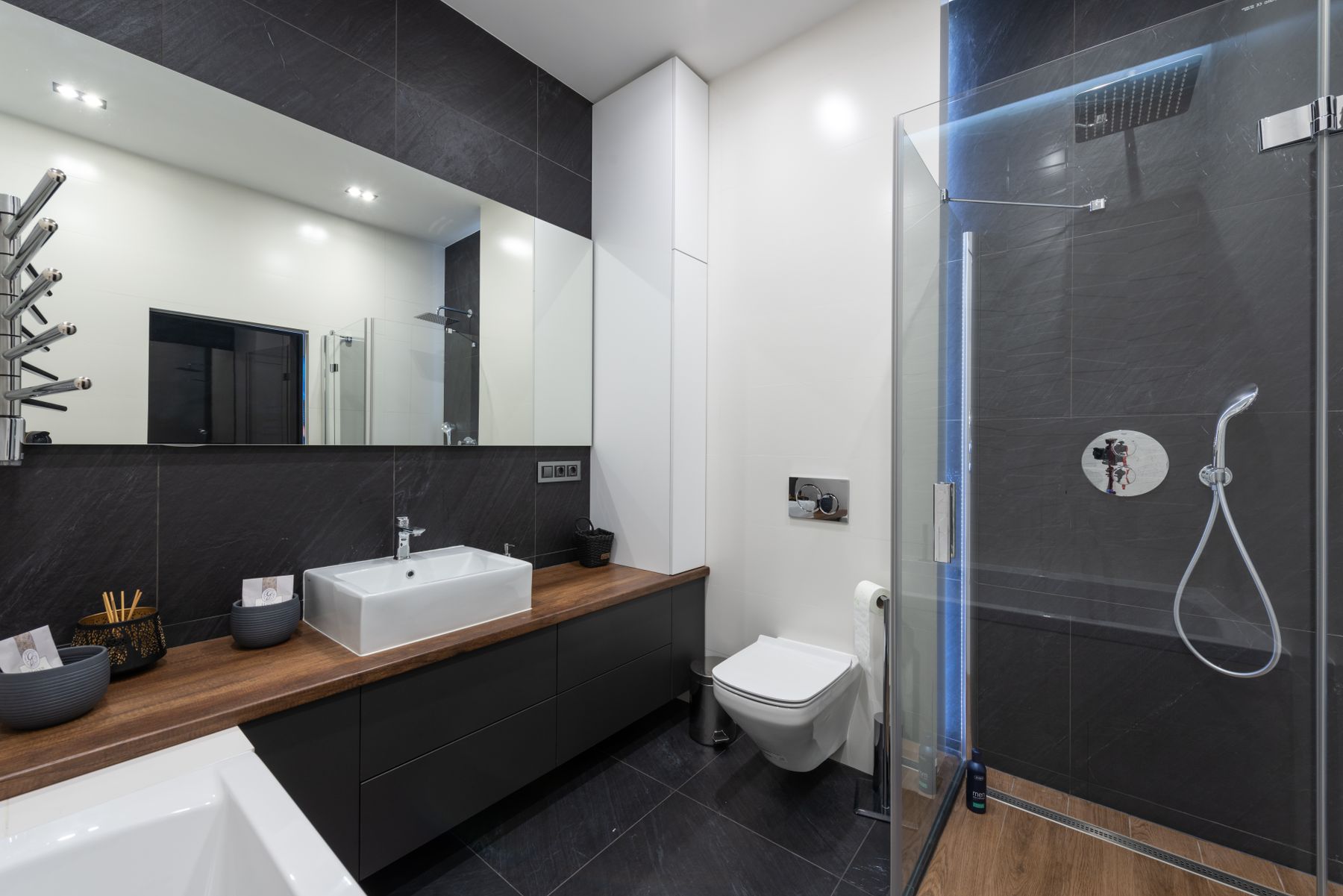
A cottage bathroom often occupies an attic, an older extension or a narrow former bedroom, so circulation is the first design material. Map door swing, standing zones, drawer travel, towel reach and the dry route from bath or shower. A wall-mounted tap, shallow basin or pocket door may save more usable space than a smaller decorative accessory ever can. Keep at least one uninterrupted sightline from the doorway; too many projecting shelves and freestanding pieces make a small room feel improvised rather than cozy.
Start With Warm White, Oat or Soft Stone
Warm white, chalk, oat, putty and pale mushroom provide the visual breathing room a compact cottage bathroom needs. Compare paint against the actual sanitaryware: a yellow cream beside a blue-white bath can look dirty, while a greyed neutral may flatten warm timber. Use one main light neutral across several surfaces to reduce fragmentation, then add depth through finish—matte paint, softly glazed tile and linen-textured fabric—rather than collecting many nearly identical whites.
Add One Faded Garden Color
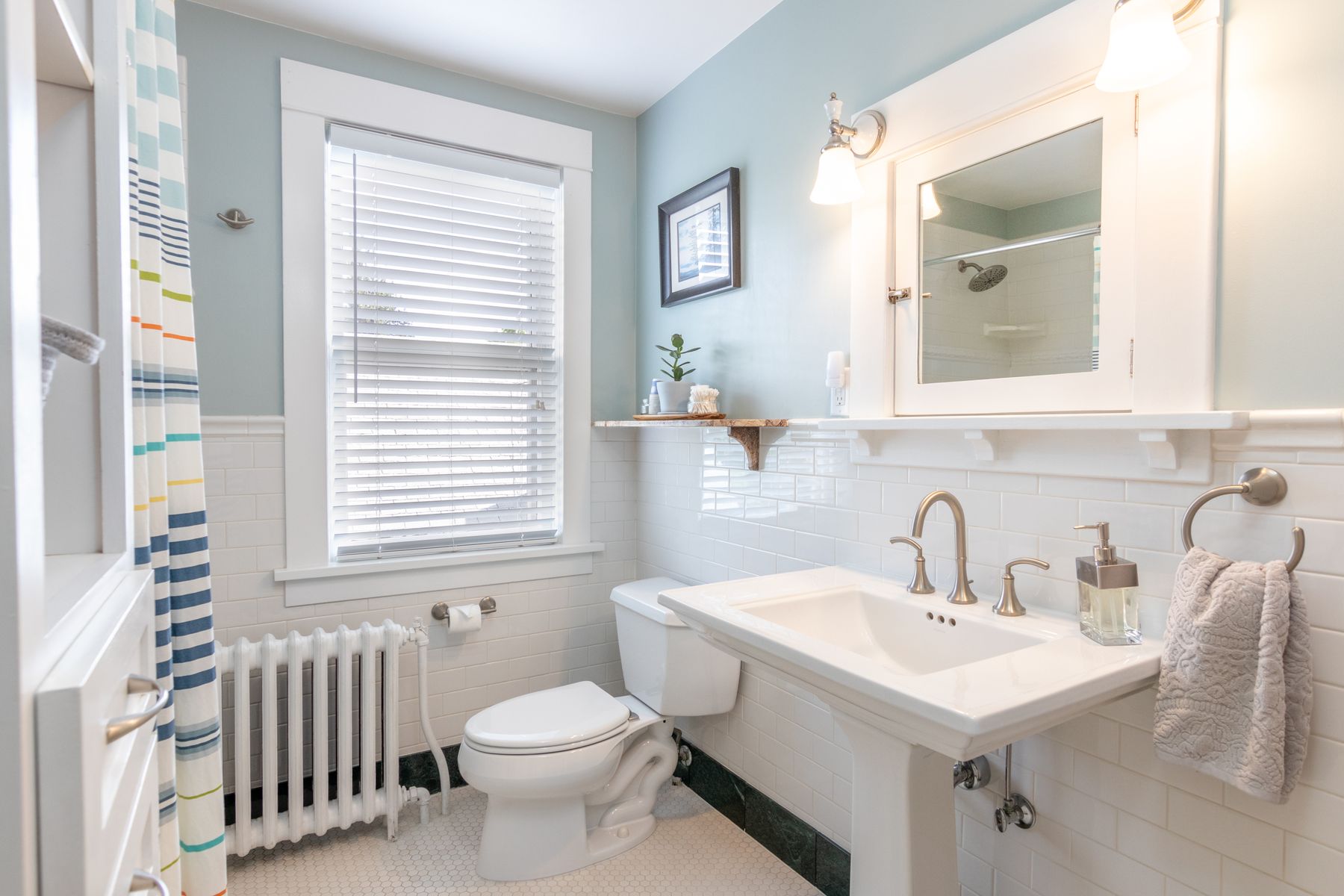
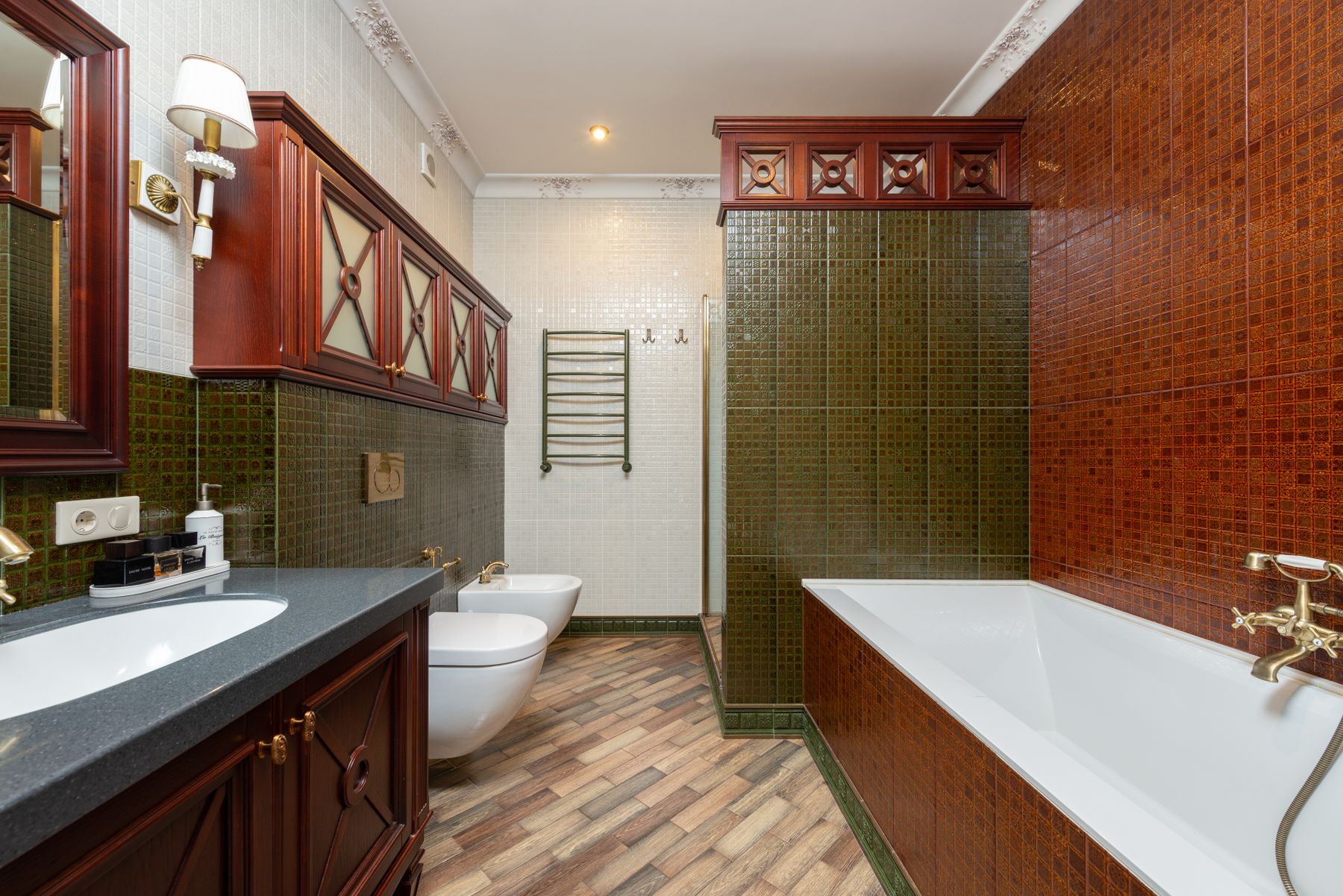
Sage, celadon, dusty blue, faded rose and soft ochre give cottage rooms their garden-led warmth. Choose one as the recurring color at the vanity, wallpaper leaf, blind or floor detail, then let neutrals and wood support it. In a low-light room, use a lighter, slightly warmer version than the inspiration image; in strong sun, a greyer tone may hold its composure. The aim is a color that feels mellowed by the room, not a deliberately antiqued finish.
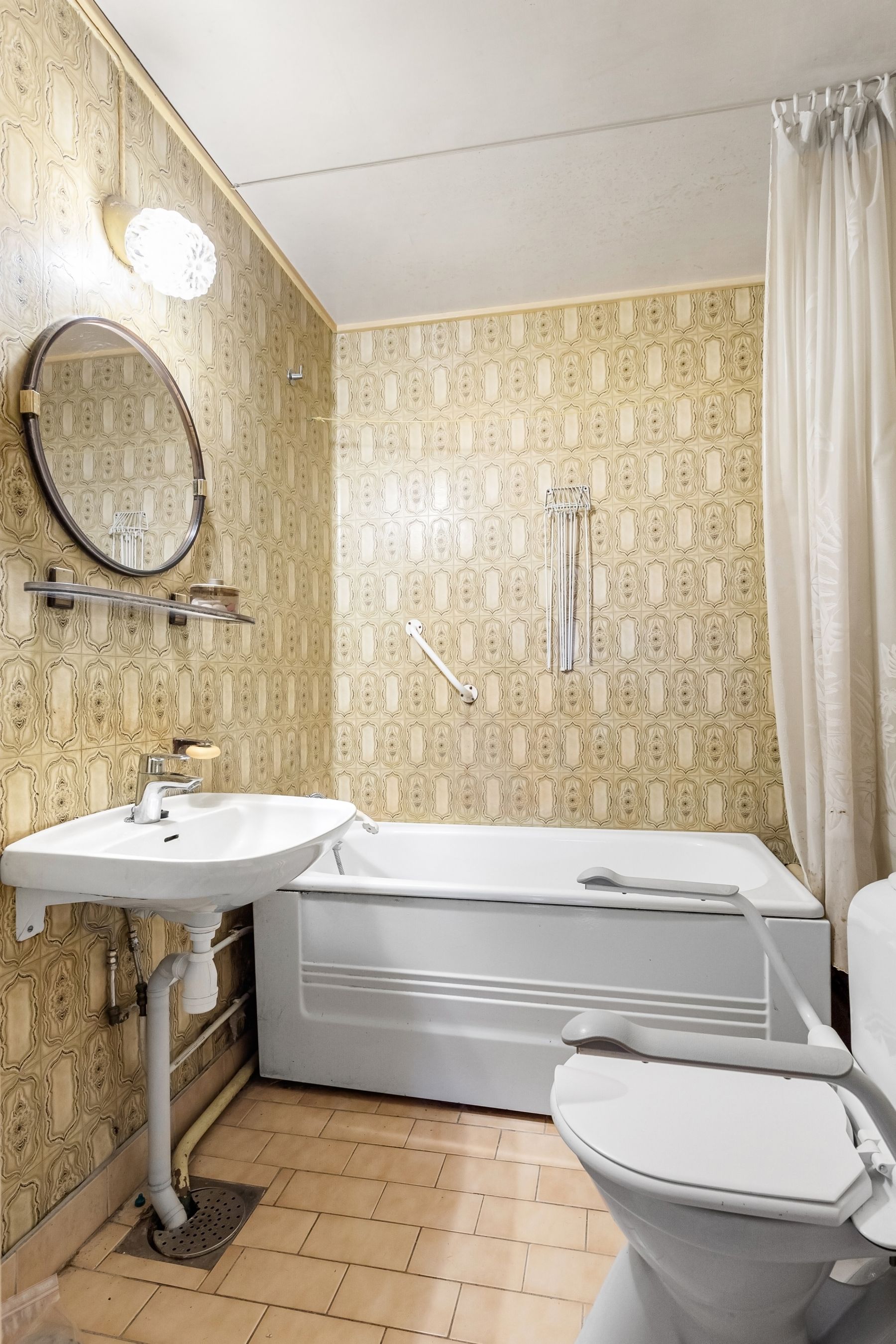
Use Small-Scale Wallpaper in the Dry Zone
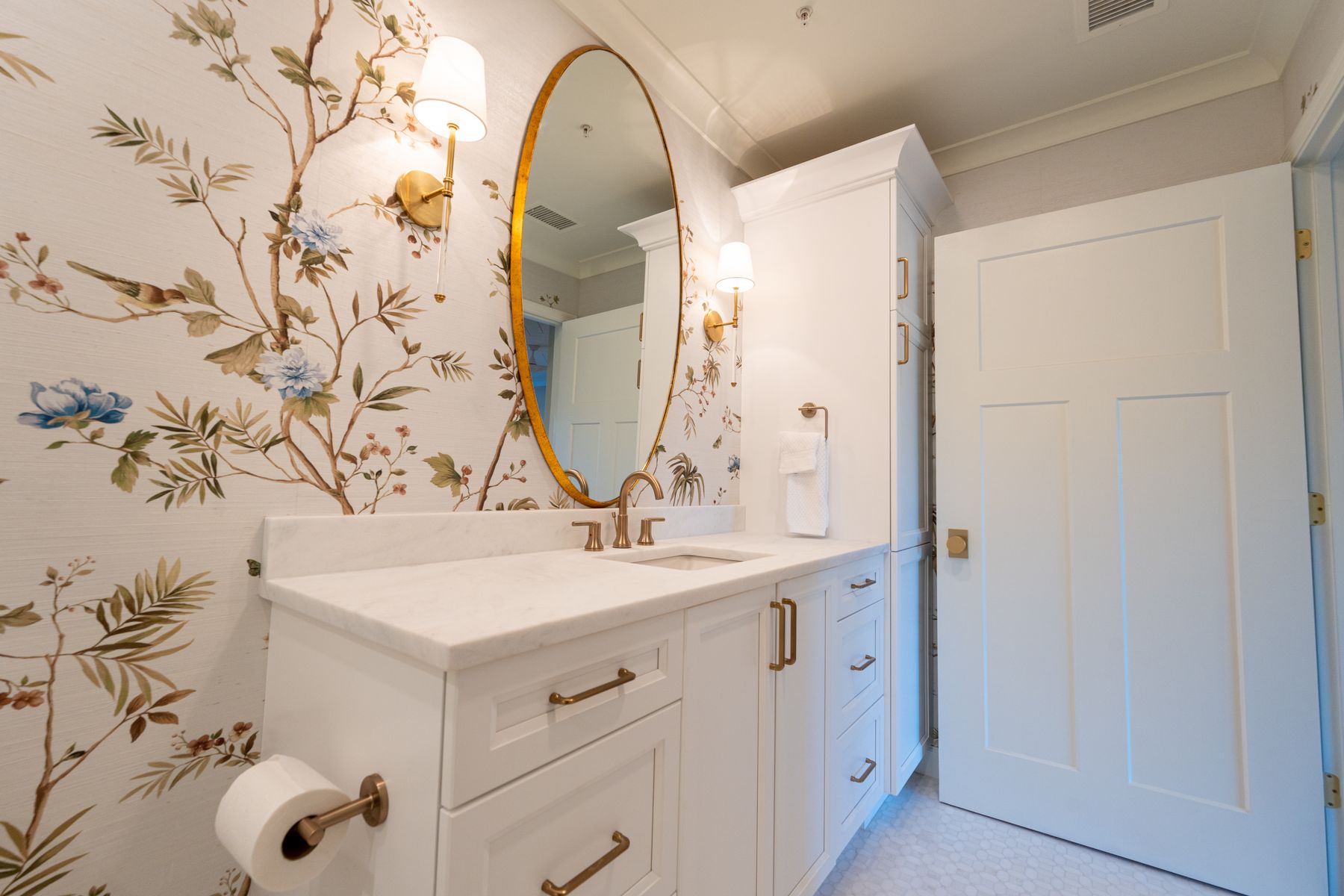
Trailing leaves, tiny florals, ticking stripes and restrained geometrics fit cottage scale because they can be read at close range. Keep wallpaper on dry upper walls or in a powder room, use the preparation and adhesive specified for the product, and provide reliable extraction. Look at several complete repeats around corners and in the mirror before committing. If the wallpaper carries two or three colors, simplify the floor, towels and shower curtain so the room does not become a pattern sample book.
Treat the Ceiling as Part of the Little Room
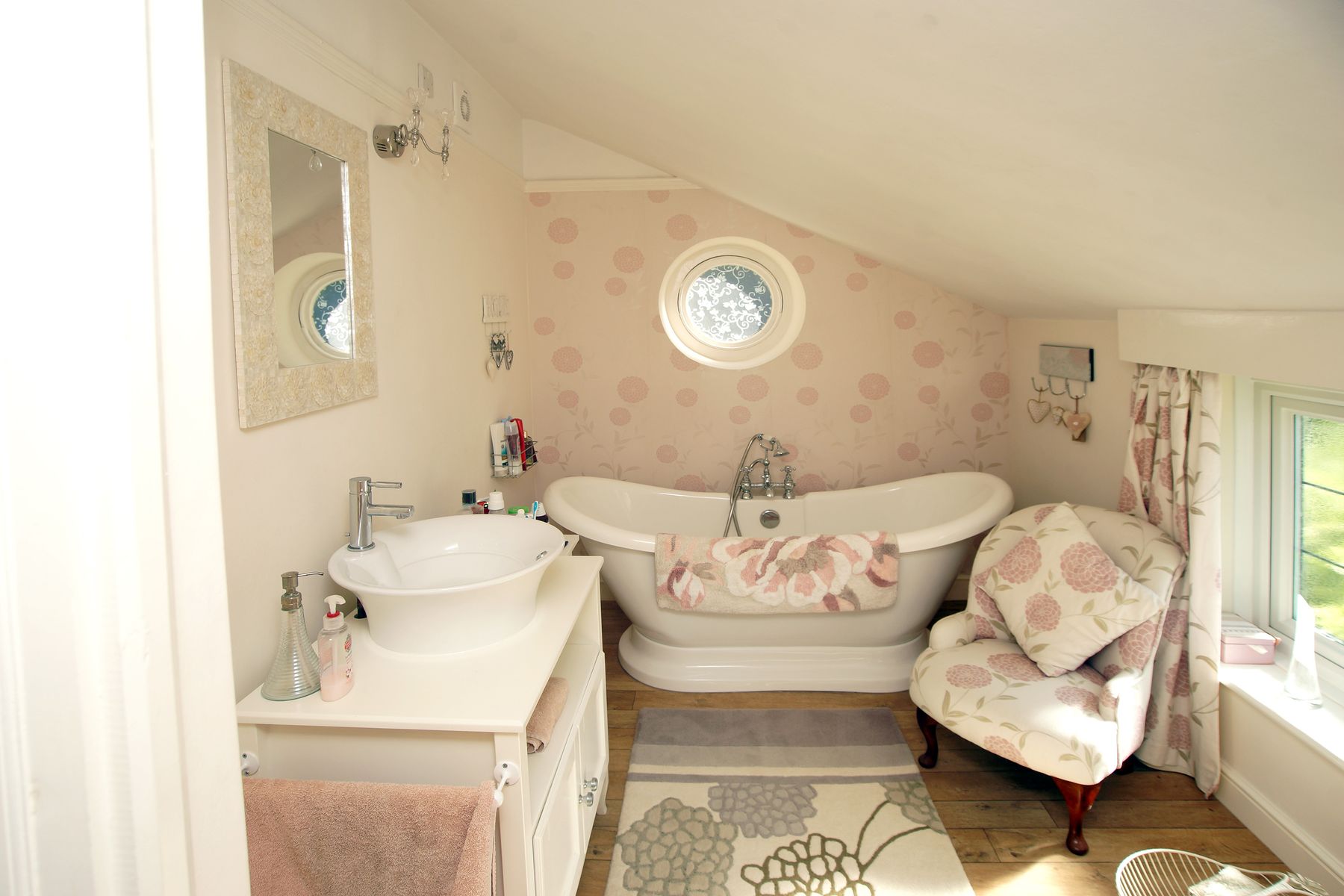
Attic slopes and low cottage ceilings are not defects to disguise automatically. Painting the ceiling the wall color can soften awkward junctions; carrying a restrained pattern overhead can make a powder room feel jewel-like; keeping it one step lighter can preserve lift. Before adding paper or timber, resolve extraction, access panels, recessed fittings and condensation. A decorative fifth wall is effective only when the lighting and moisture strategy still work.
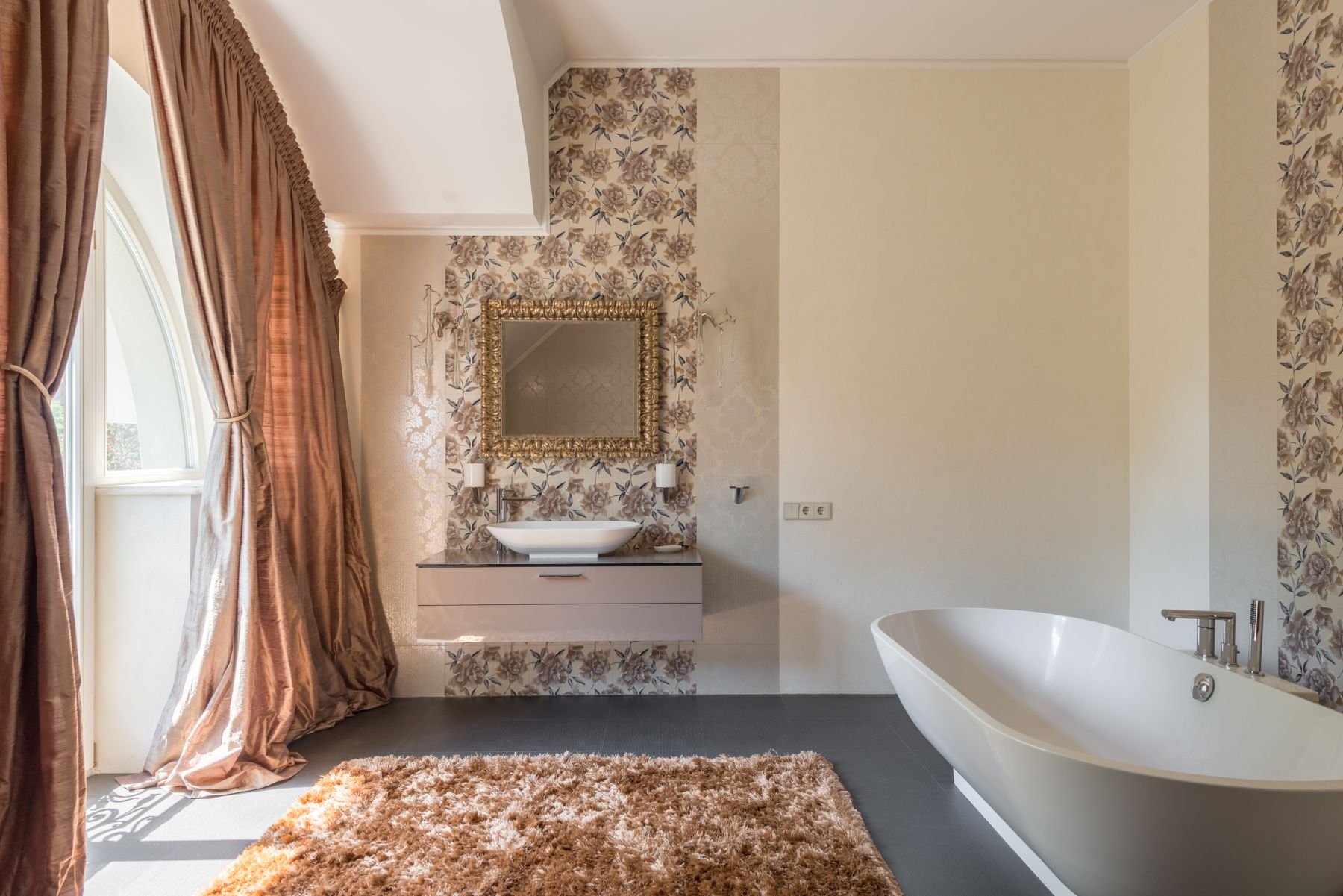
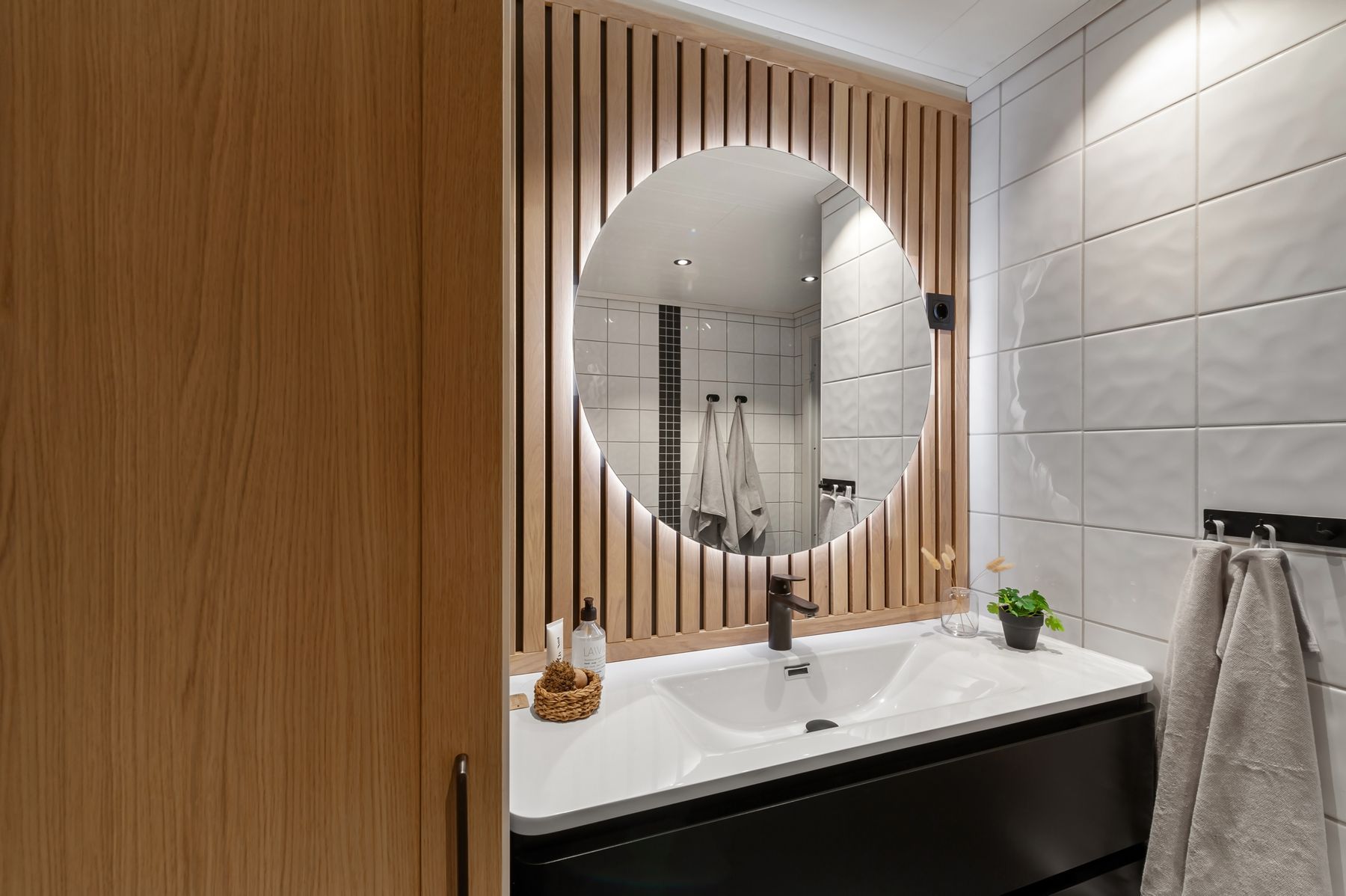
Use Paneling to Correct Proportion
Painted tongue-and-groove, narrow boards or a simple wainscot can make a cottage bathroom feel constructed rather than decorated. Vertical lines help a low room; a lower rail can settle a tall narrow wall. Keep vulnerable joints away from constant spray unless the entire assembly is specified for wet use, and coordinate outlets, skirting and tile edges before installation. Paneling should clarify the architecture, not wrap every surface by default.
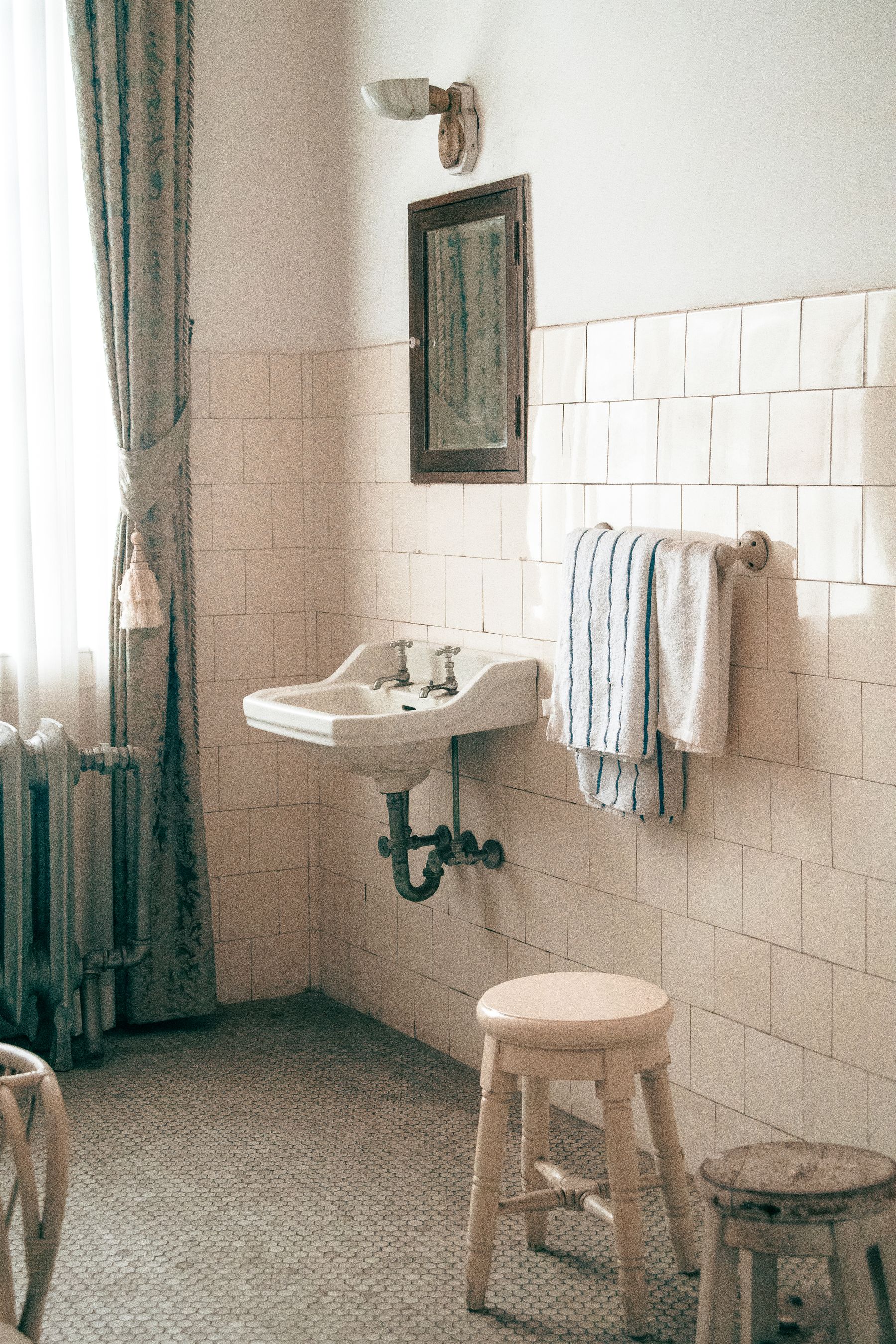
Keep Wet-Zone Tile Simple and Familiar
Plain square or rectangular tile, softly irregular glaze and restrained stone-look surfaces are convincing because they feel useful and repairable. Lay them in a clear brick, stacked or vertical pattern and resolve the cuts around niches, valves and sloped ceilings before tiling. Avoid forcing a decorative border into an already patterned room. Cottage character belongs at the visible surface; waterproofing, movement joints and substrate design should meet current technical requirements.
Let a Modest Floor Carry Pattern
Small checkerboard, basketweave, quiet encaustic-look tile and simple mosaics suit cottage rooms when the repeat relates to the floor area. Print the pattern at full scale so you can see the border cuts at the door, vanity and bath. Select for wet slip performance and realistic cleaning, not only appearance. If the floor is strong, reduce wallpaper scale or use paint above; two competing all-over patterns can shrink a small room visually.
Choose a Shallow Furniture-Like Vanity
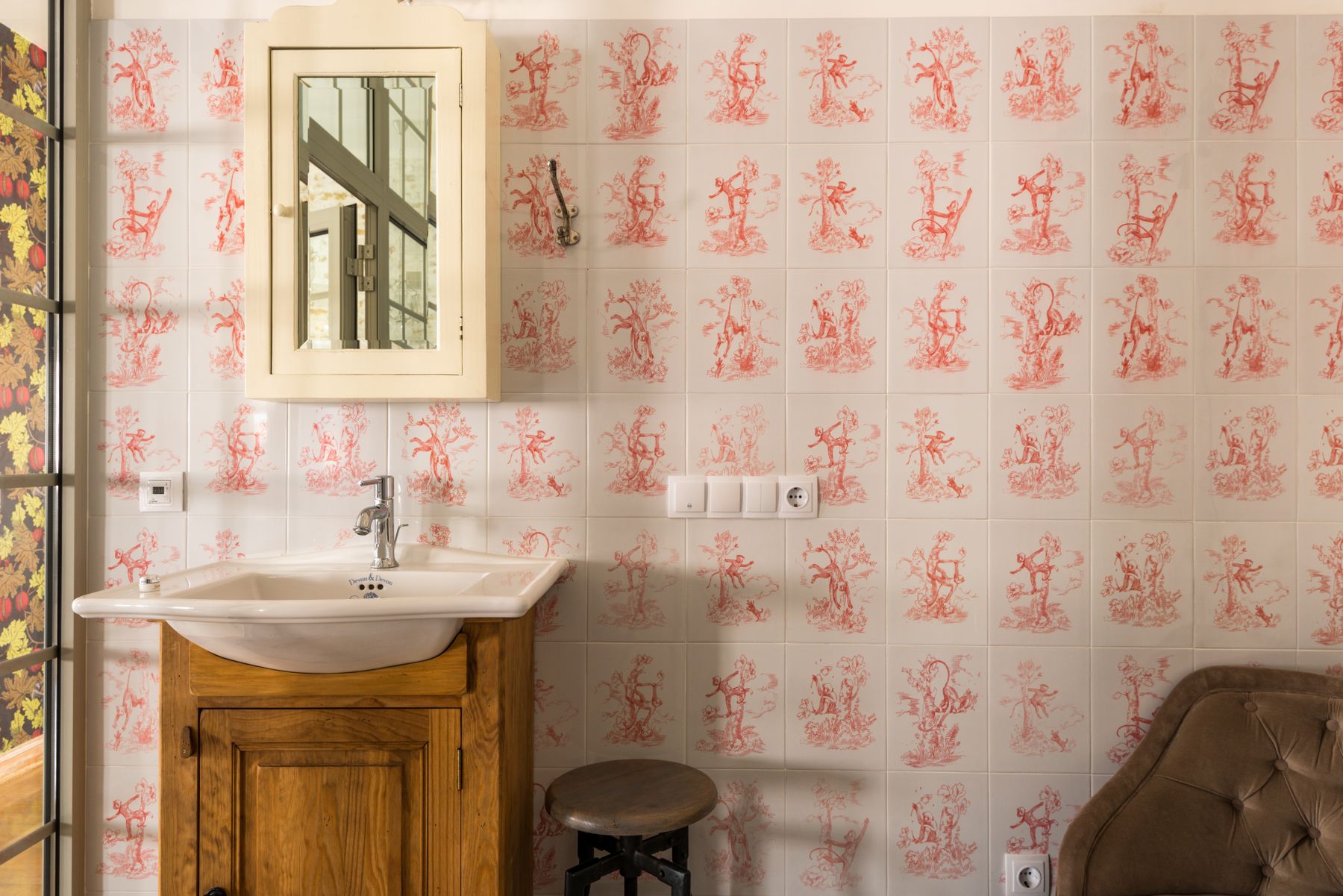
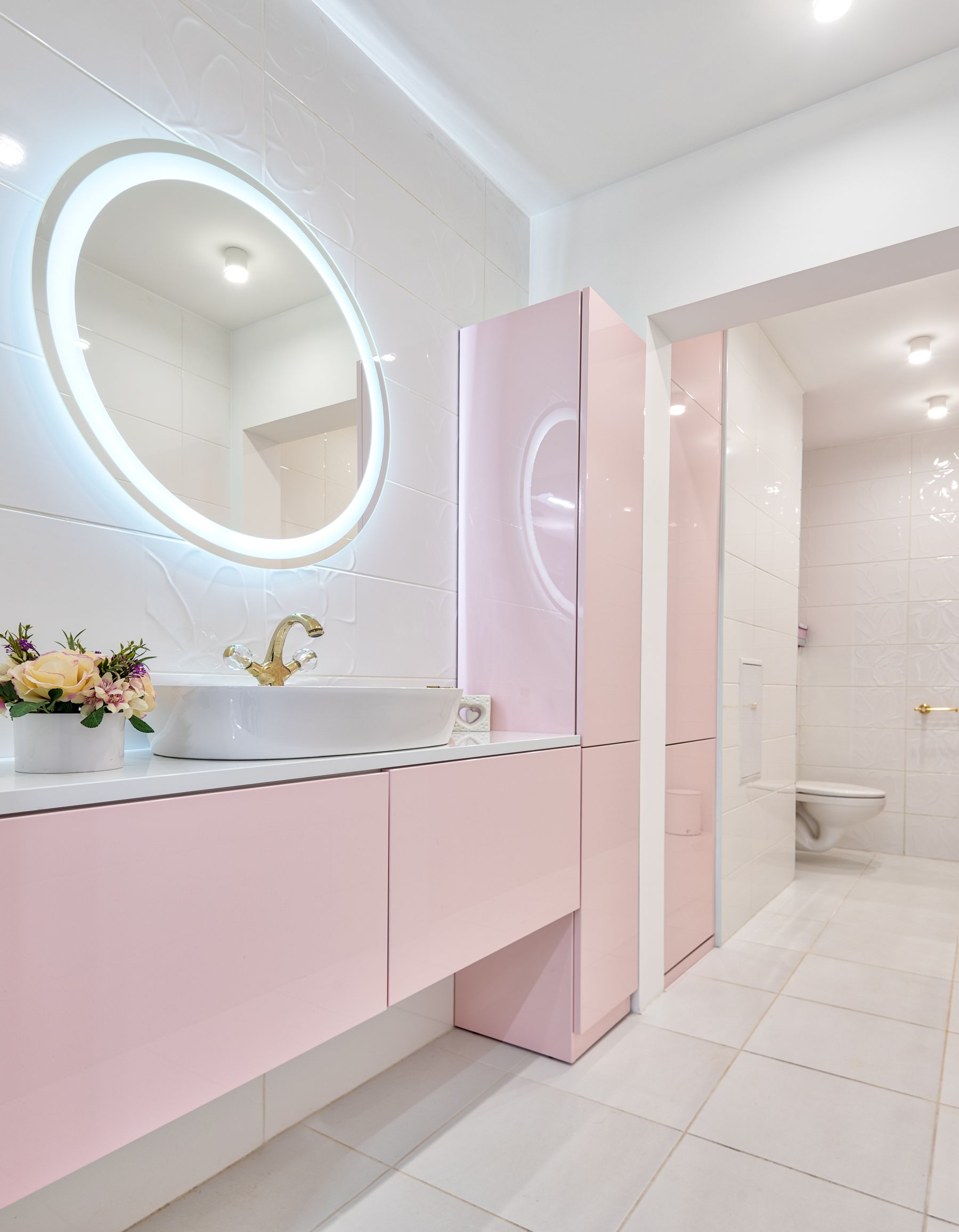
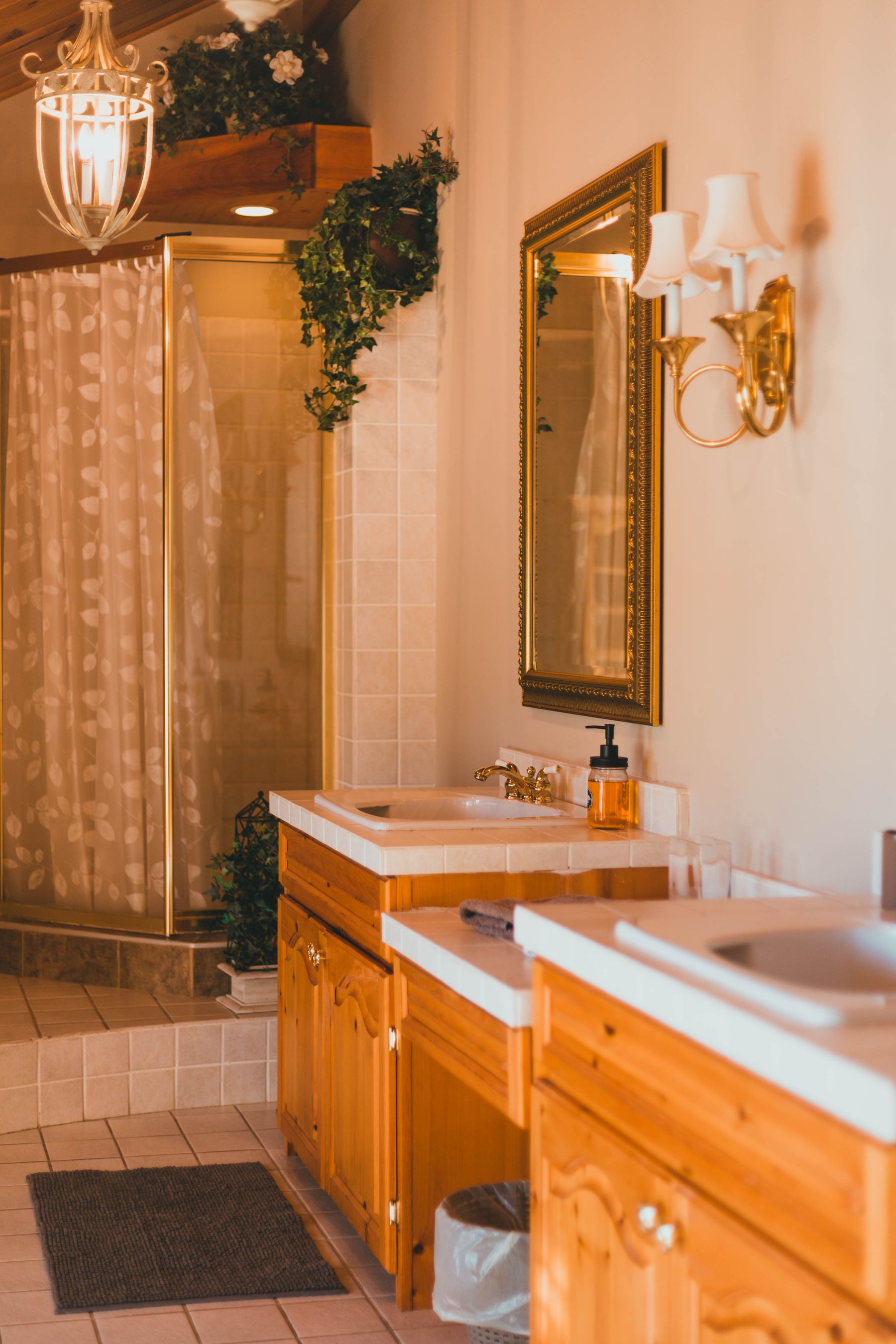
A vanity with framed doors, visible legs or a simple furniture silhouette gives cottage style weight without occupying the whole room. In a narrow plan, reduce depth before sacrificing useful drawer width. Adapted furniture can work, but only after checking structure, finished height, basin cutout, plumbing, sealed edges and splash exposure. A new cabinet painted in a garden color is often more practical than a fragile antique and does not need fake distressing to feel at home.
Use a Skirted Basin as a Washable Soft Layer
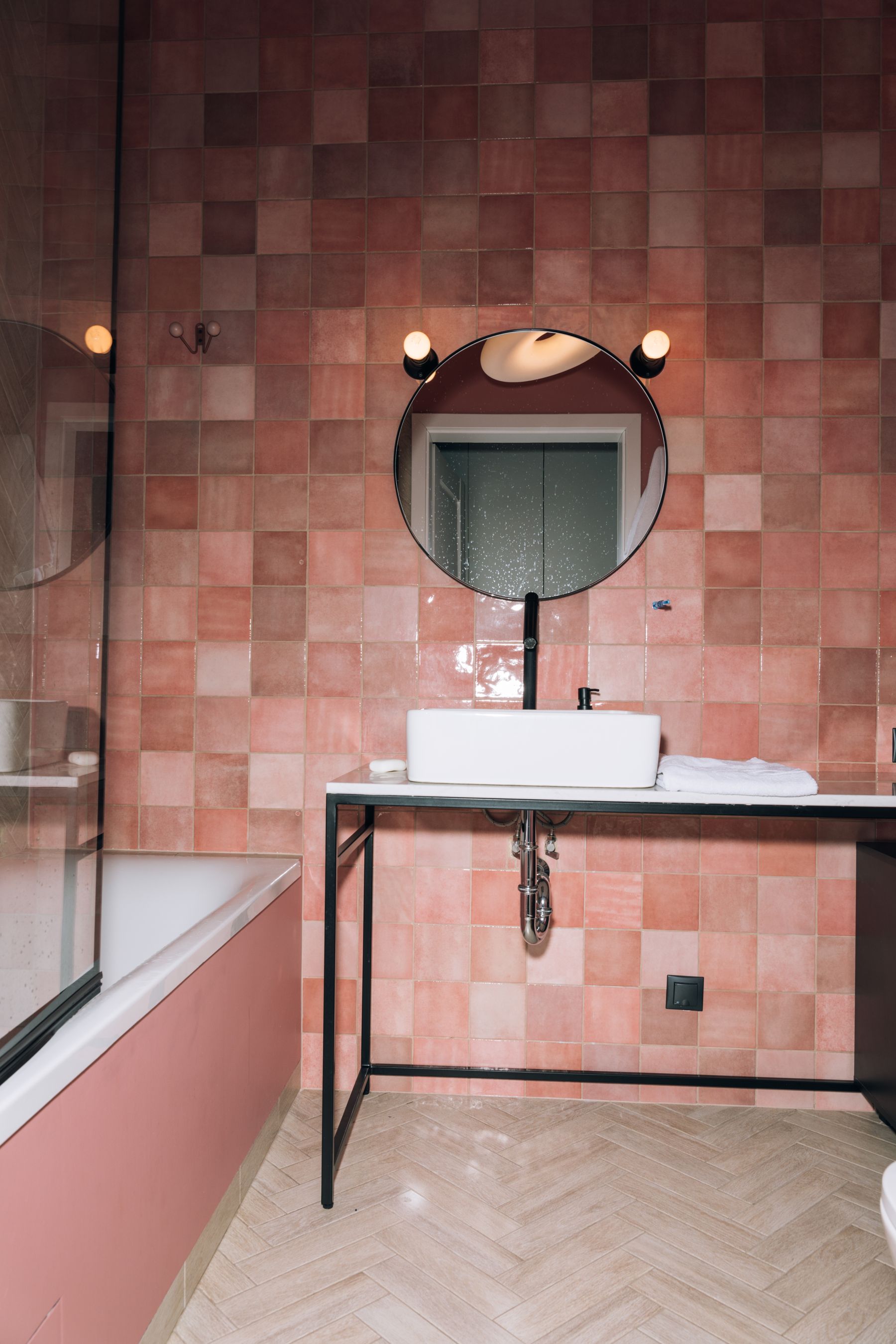
A simple gathered or pleated skirt is genuinely useful in a cottage bathroom when it hides pipework or a shallow shelf. Specify washable, quick-drying fabric, a removable fixing and enough floor clearance to prevent wicking. Keep it outside the shower's splash path and avoid dense folds that collect dust. The basin still needs comfortable standing or seated access, reachable valves and an everyday landing place for soap.
Reclaim Wall Depth With a Medicine Cabinet
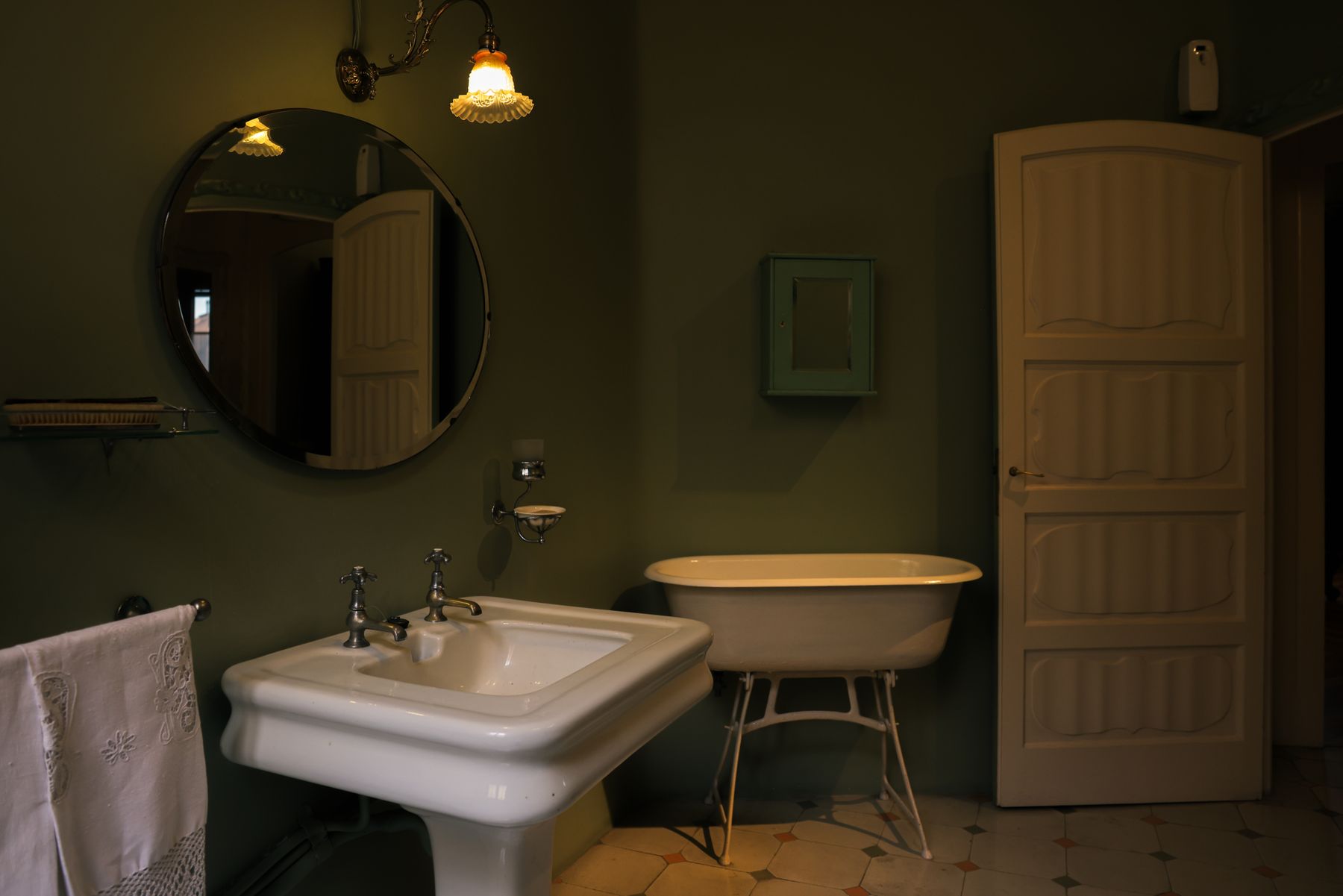
A recessed or shallow surface-mounted medicine cabinet can hold small daily objects where they are used without consuming floor area. Choose a framed or painted door that relates to the vanity, and coordinate wall structure, wiring and plumbing before cutting a recess. Keep medication and hazardous products secure and stored according to their instructions; humidity may rule out the bathroom for some items. Open shelves can then remain sparse rather than carrying every backup bottle.
Fit the Bath to the Plan, Not the Fantasy
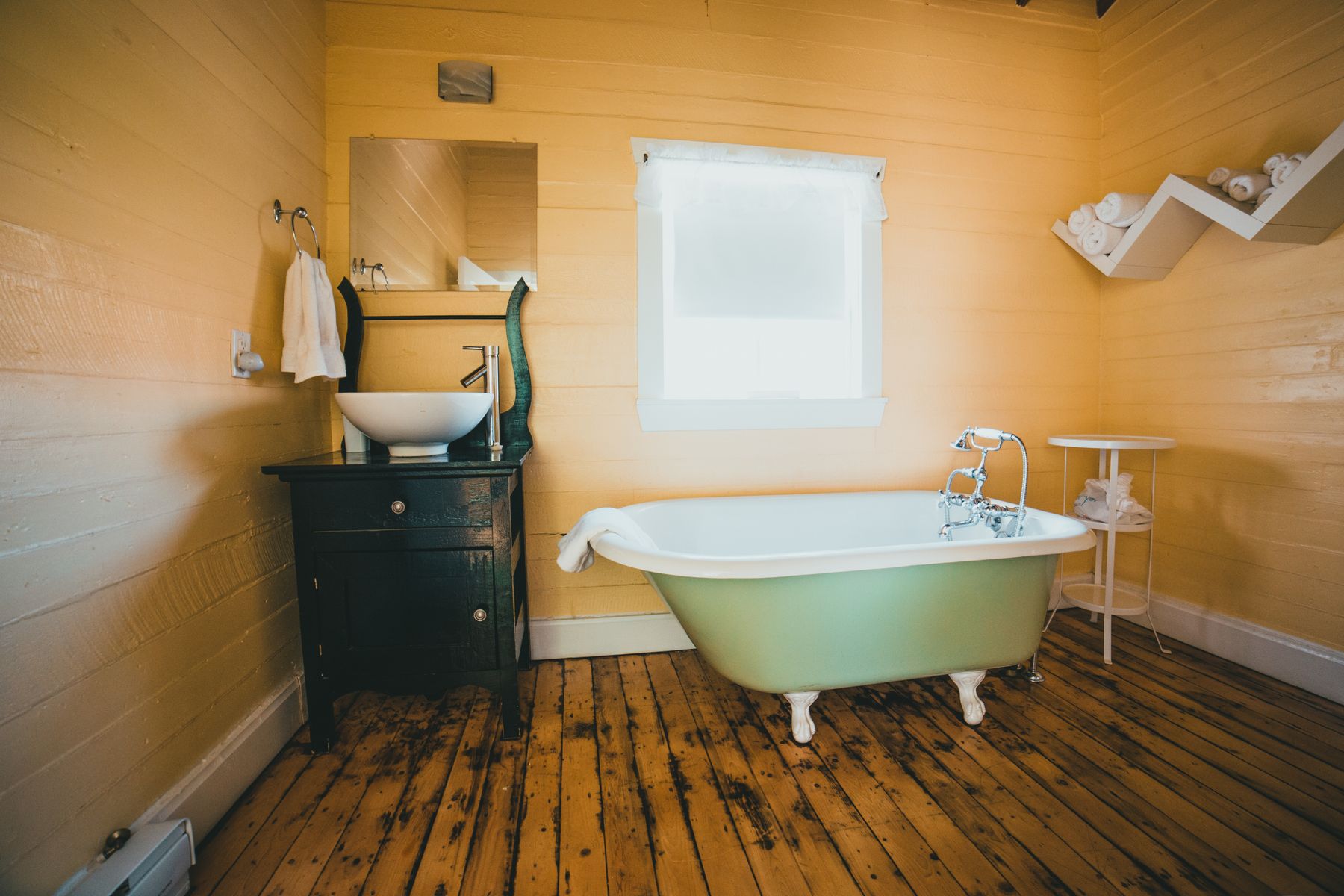
A compact roll-top, slipper, clawfoot or paneled built-in bath can all work. Freestanding tubs need cleaning space around them and may feel squeezed against sloping walls; a back-to-wall model can preserve the silhouette while using the footprint better. Families may prefer a built-in bath with a painted apron and stable shower screen. Check floor loading, filler reach, entry height and where shampoo actually lives before choosing the most photogenic form.
Choose Curtain or Glass by the Splash Pattern
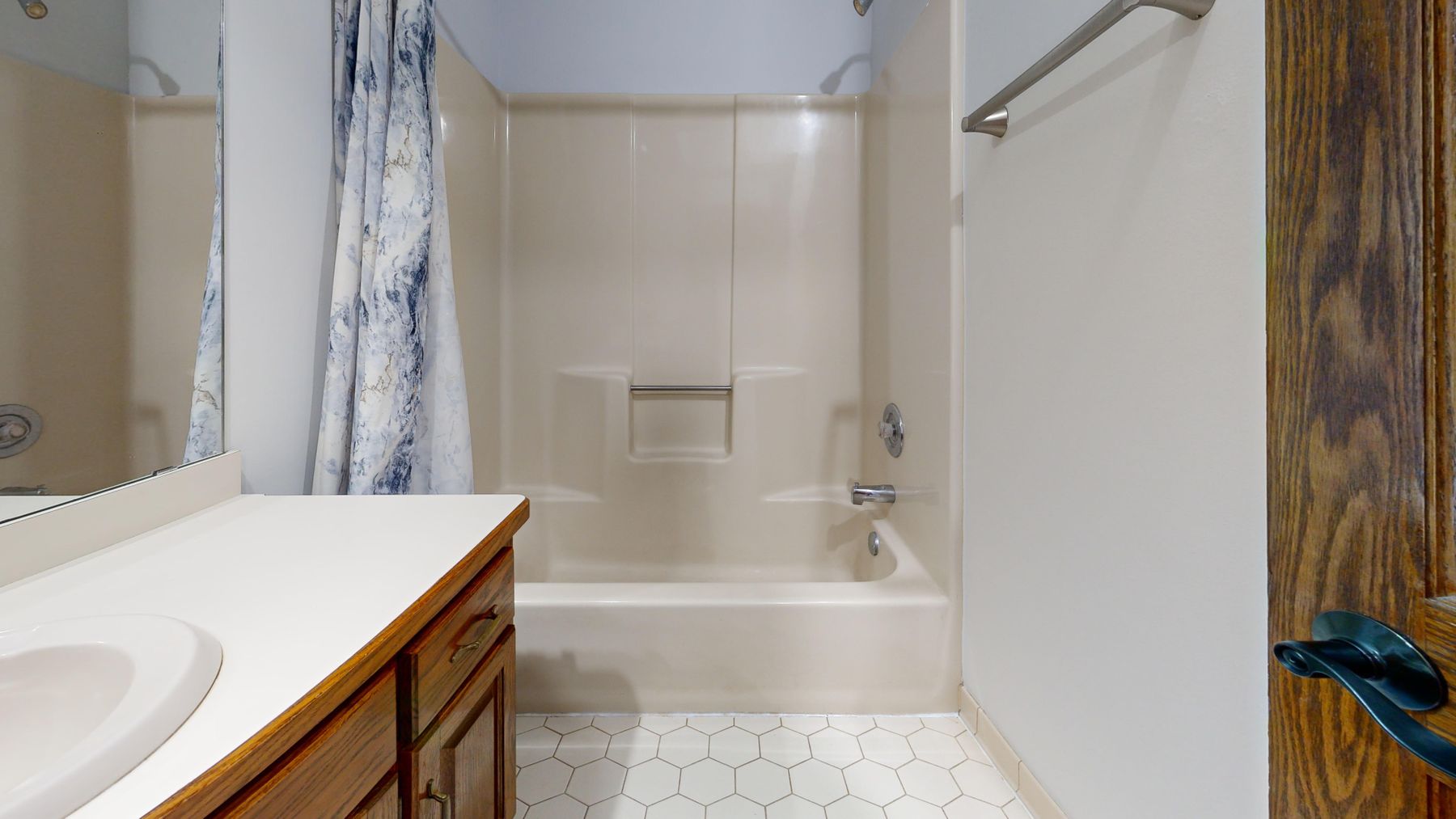
A washable shower curtain adds softness and can fold away, but it needs enough width, a reliable liner and room to dry without clinging to the user. Clear glass preserves sightlines but adds edges, hardware and cleaning. Reeded glass gives privacy but can make a tight room feel more enclosed. Map the actual spray, door swing and towel location before choosing. Cottage style does not justify a fabric treatment that keeps the floor wet.
Use Honest Wood and Repairable Paint
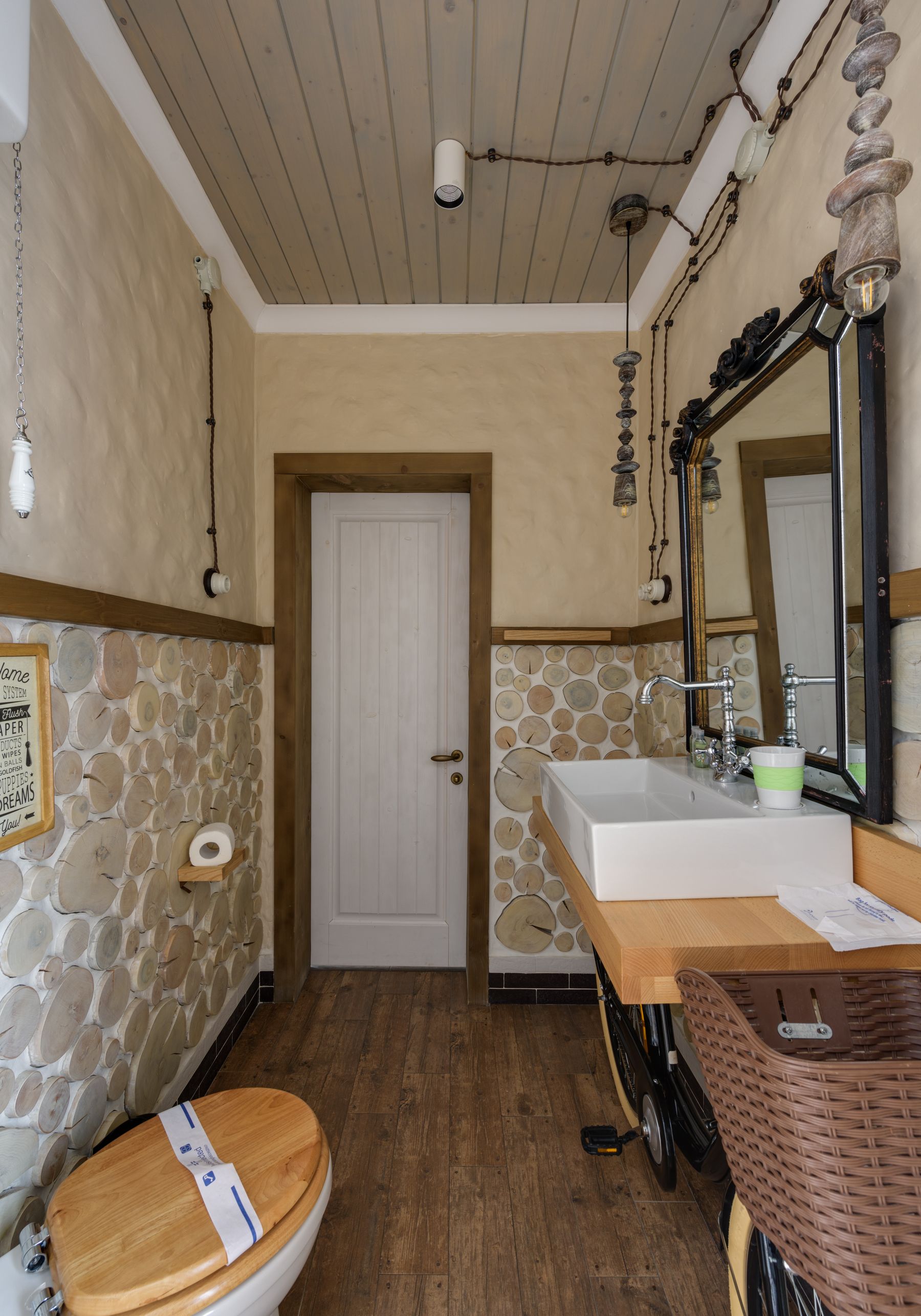
Wood belongs in a cottage bathroom at cabinetry, a mirror, shelf or sound existing floor, not automatically across every wet surface. Use stable construction, seal cut edges and provide air around furniture. Painted joinery is especially useful because localized wear can be repaired; choose a coating system suited to humidity rather than manufacturing chips and rubbed corners on day one. Patina should come from use and care, not a decorative distressing recipe.
Keep Metal Warm but Not Random
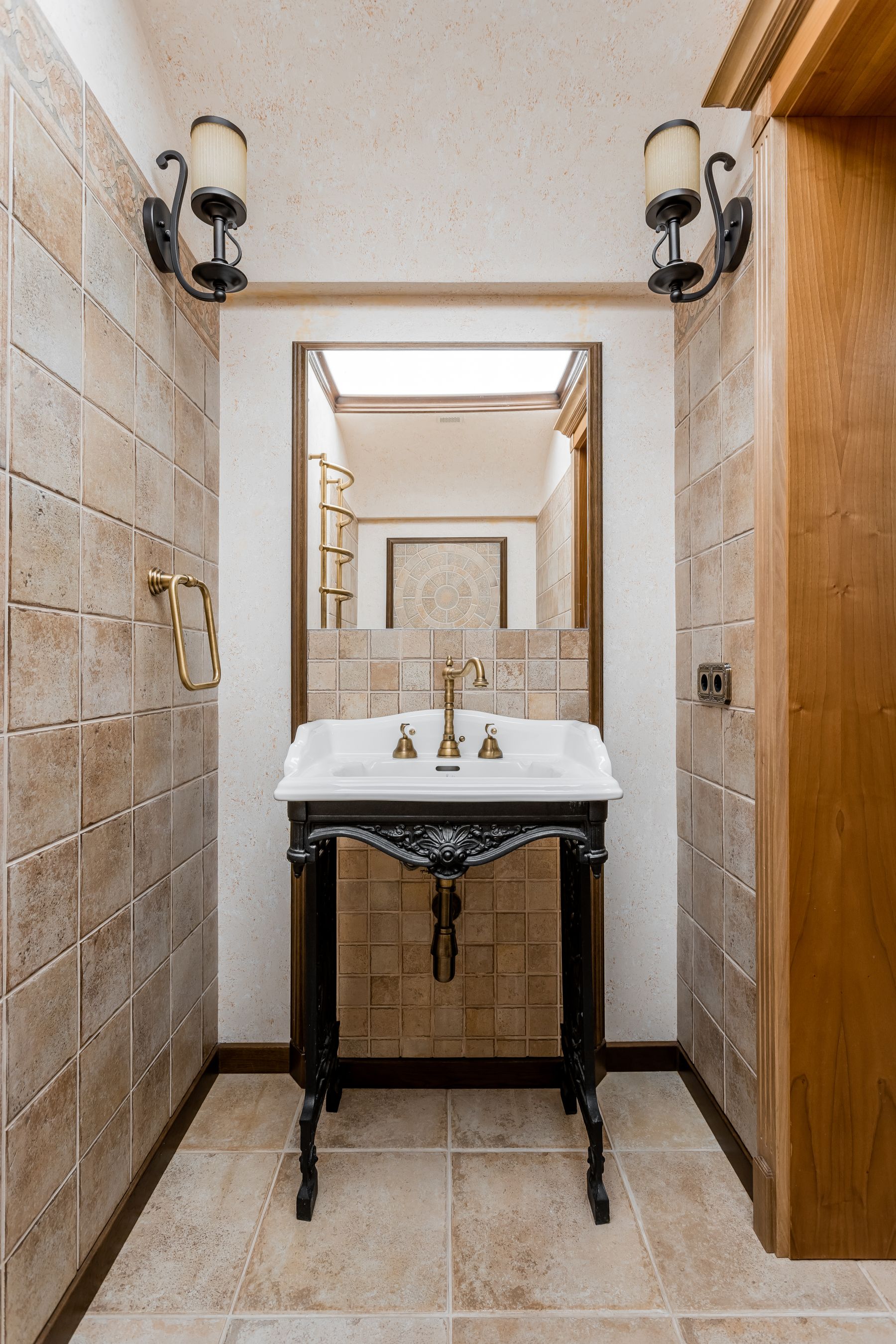
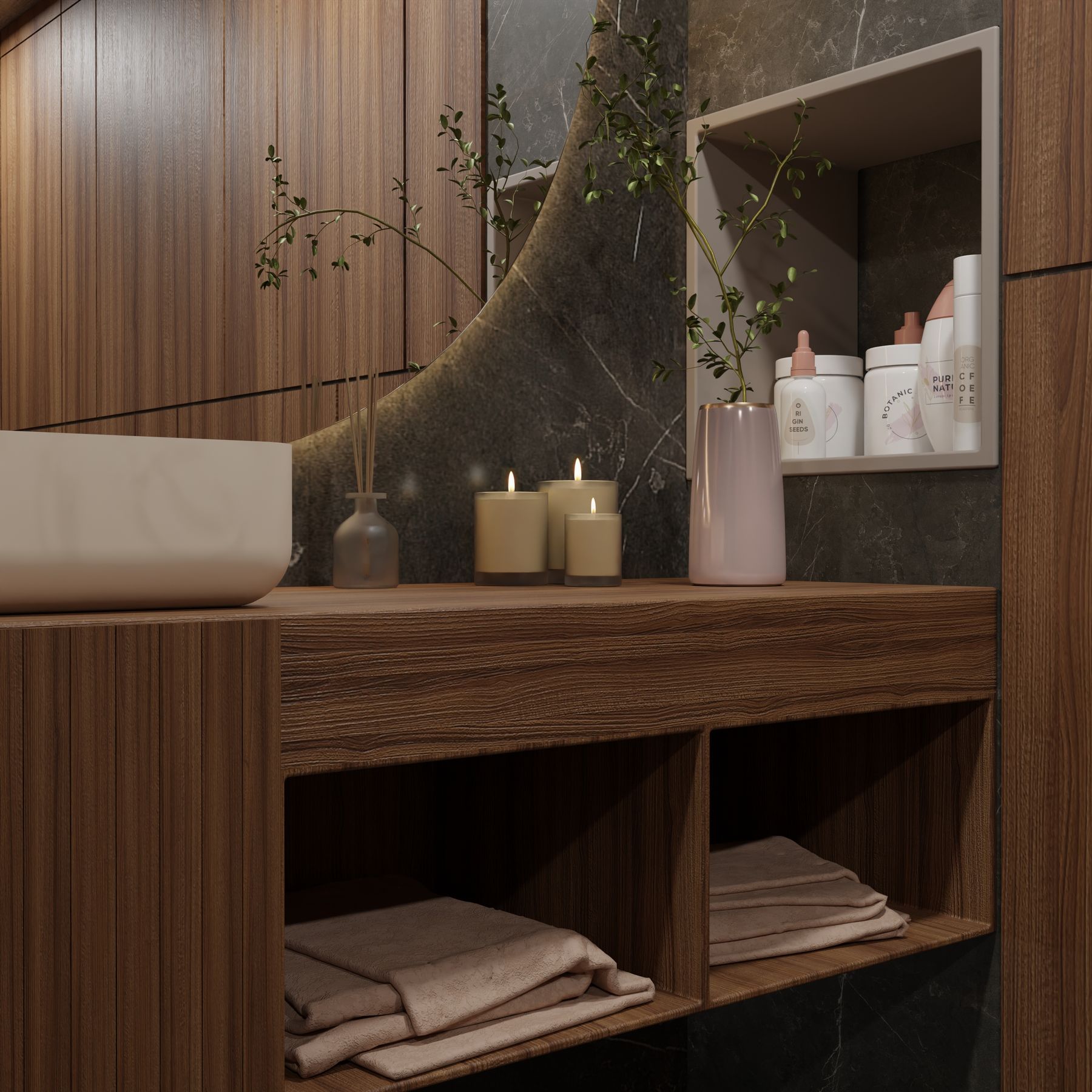
Brass, bronze, nickel and chrome can all suit cottage bathrooms. Brass warms faded paint, nickel feels quietly traditional and chrome can keep a tiny room crisp. Decide whether a finish is living, plated or coated and follow its cleaning requirements. Mix only when the relationship is deliberate—for example, nickel plumbing with one aged-brass mirror—not because each accessory was chosen separately. Standard, replaceable parts are more useful than decorative specialty hardware that cannot be serviced.
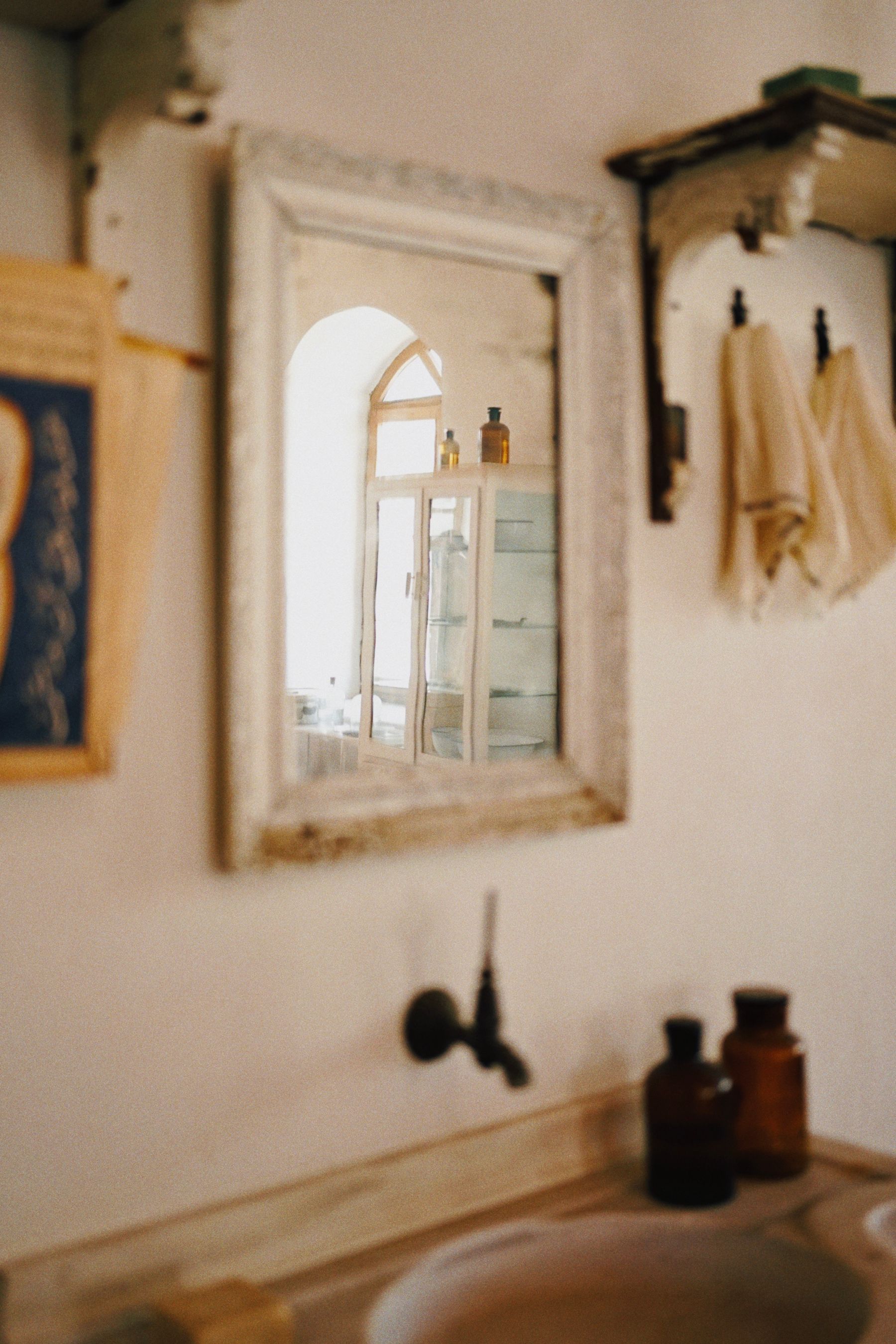
Use the Mirror as the One Collected Piece
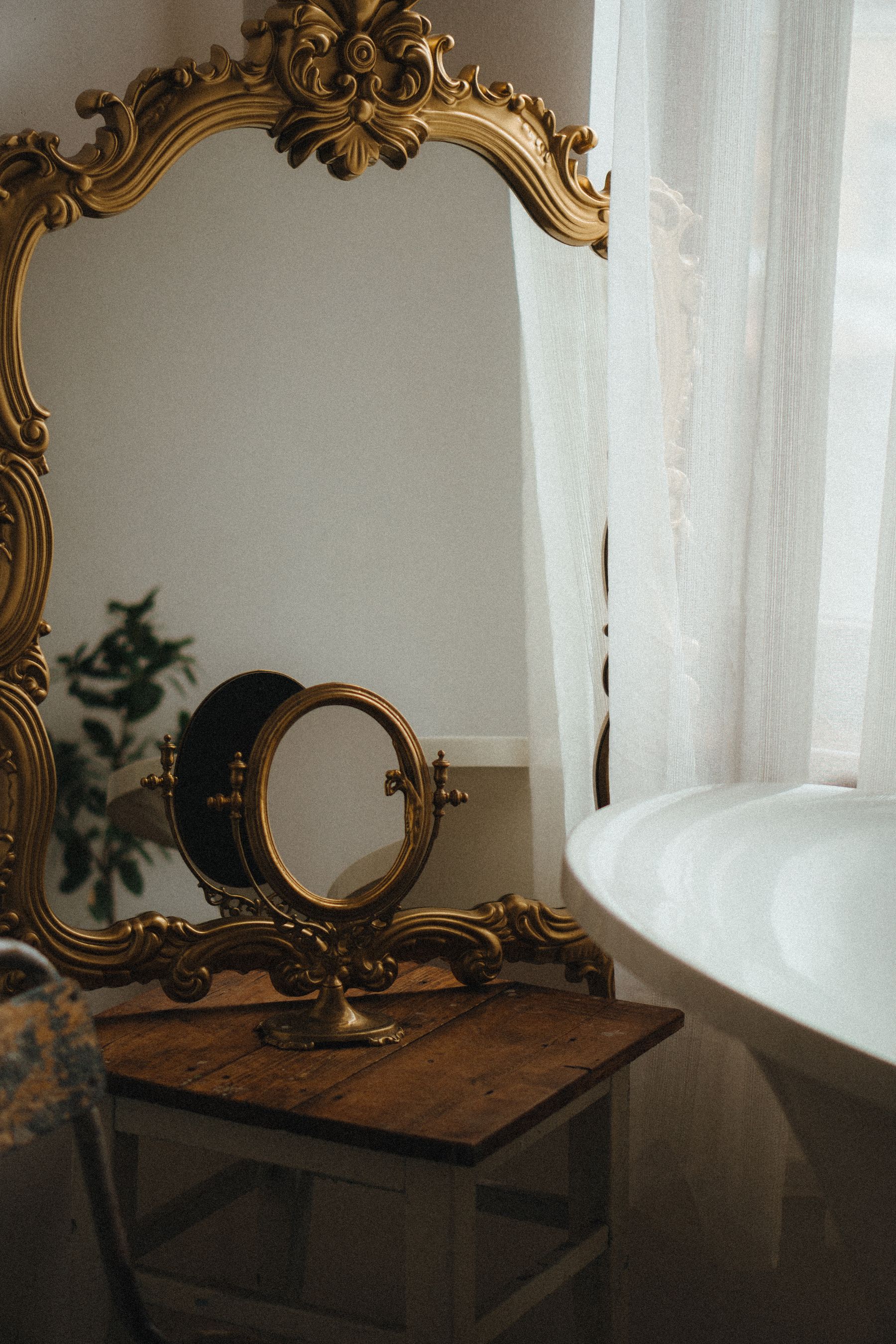
A painted timber, aged metal, simple gilt or softly shaped mirror can establish cottage character efficiently. Size it to the basin and the user's sightline, then check what it reflects; multiplying daylight or wallpaper is helpful, multiplying clutter is not. Genuine old glass may be foxed or vulnerable at the backing, so keep it clear of persistent splash and use secure moisture-appropriate mounting. The mirror must remain useful from the required standing and seated heights.
Layer Face Light, Ambient Light and Night Light
A shaded sconce or small pendant can make a cottage bathroom feel domestic, but decorative light is not a substitute for even illumination at the face. Combine vertical mirror light, general ambient light and a low-level night source on separate controls. Check wet-zone ratings, ceiling clearance and the color rendering of paint, wallpaper and skin. Avoid very amber lamps that turn warm whites muddy or leave cleaning and shaving in shadow.
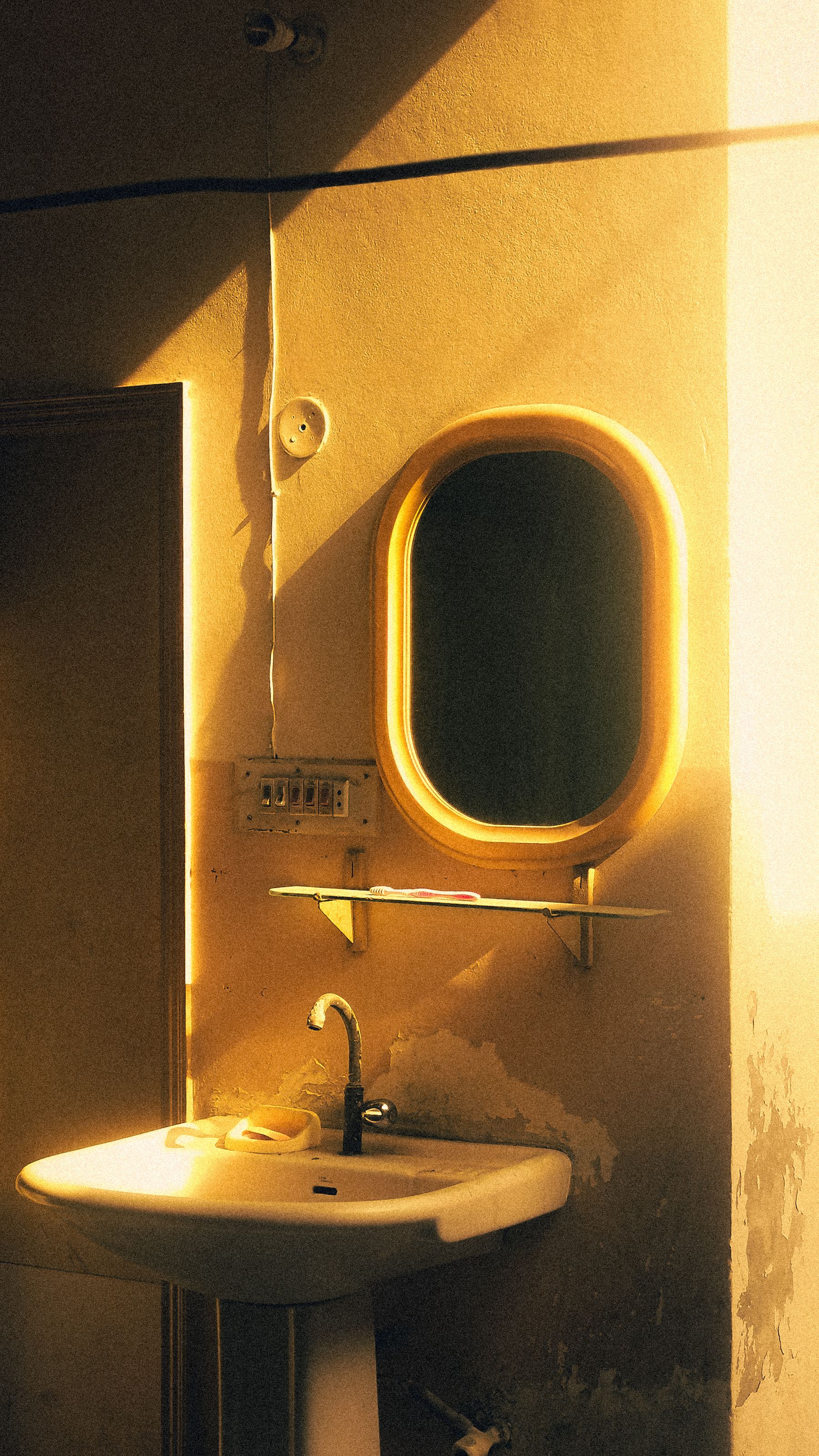
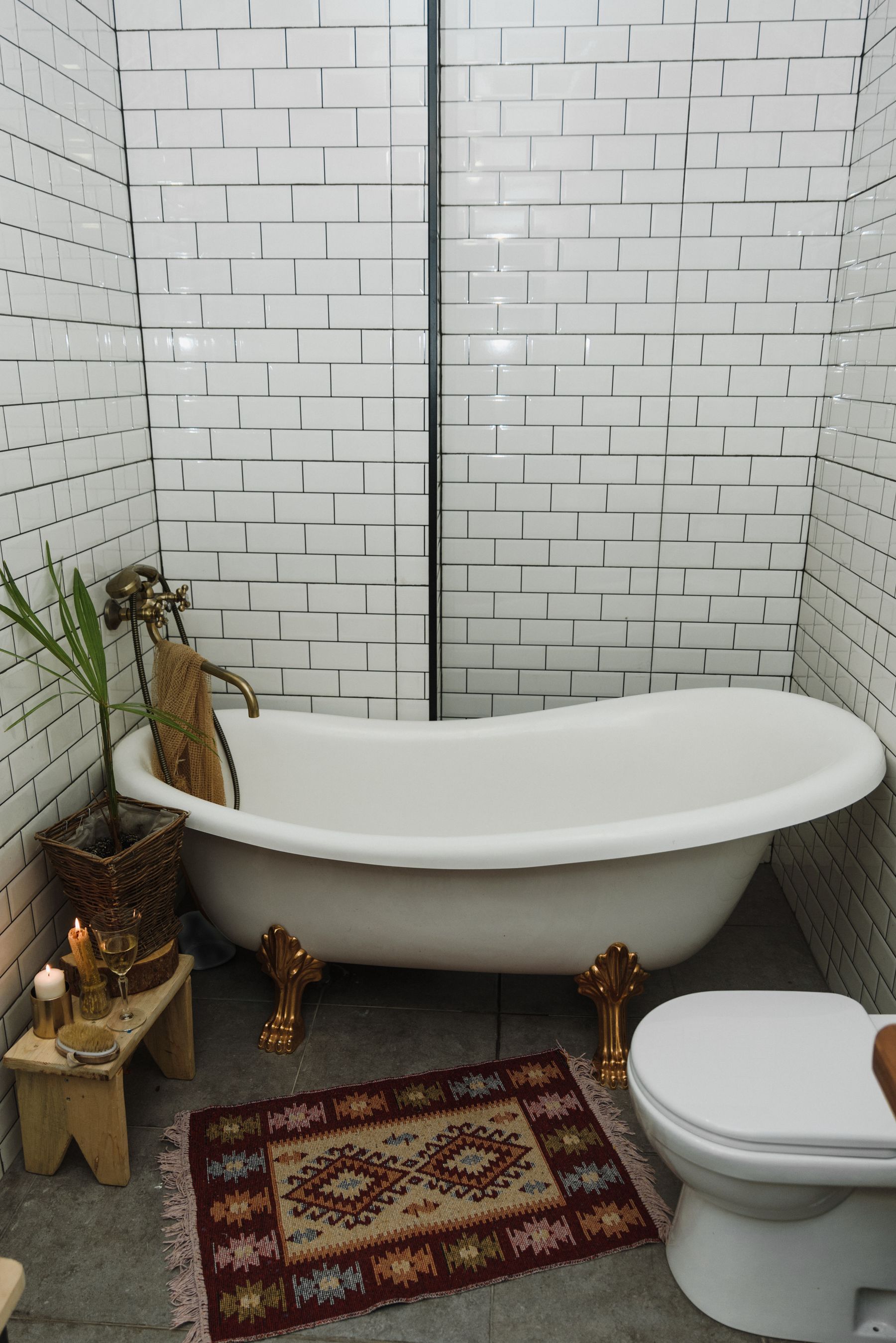
Use Textiles Only Where They Can Dry
Cottage softness may come from a café curtain, shower curtain, slim washable rug or basin skirt. Every piece needs a drying route and easy laundering. Keep rugs out of persistent splash and clear of door swing; use moisture-suitable hardware at windows; provide generous towel rails rather than decorative hooks for all bath towels. Repeat one wallpaper or paint color in the fabric instead of adding an unrelated floral.
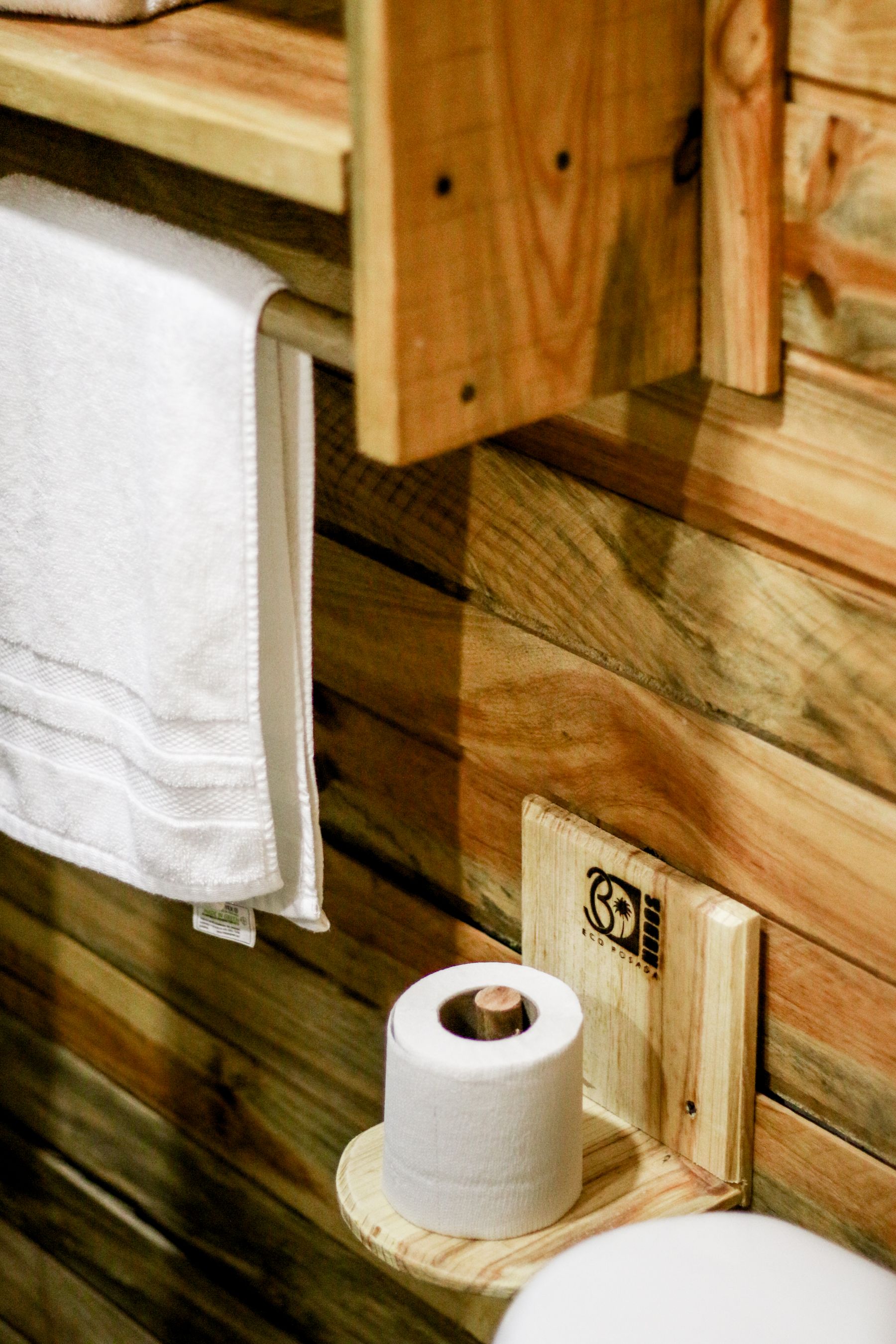
Mix Closed Storage With One Useful Shelf
Use the vanity, medicine cabinet or a shallow cupboard for backups, labels, cleaning supplies and visual noise. Reserve one open shelf for folded cloths, a daily jar or a small plant suited to the conditions. Shelves must sit outside splash, allow towels to breathe and remain reachable without leaning over a bath. A decorative ladder is not a storage solution if towels overlap and never dry.
Choose Personal Objects Without Building a Theme
A small botanical print, handmade cup, repaired stool or ceramic dish can connect the bathroom to the rest of the home. Keep valuable paper, textiles and unsealed frames away from steam and splash. Avoid coordinated signs, birdhouse motifs and collections added only to prove the room is a cottage. One object with real memory or utility is more persuasive than a shelf of newly manufactured nostalgia.
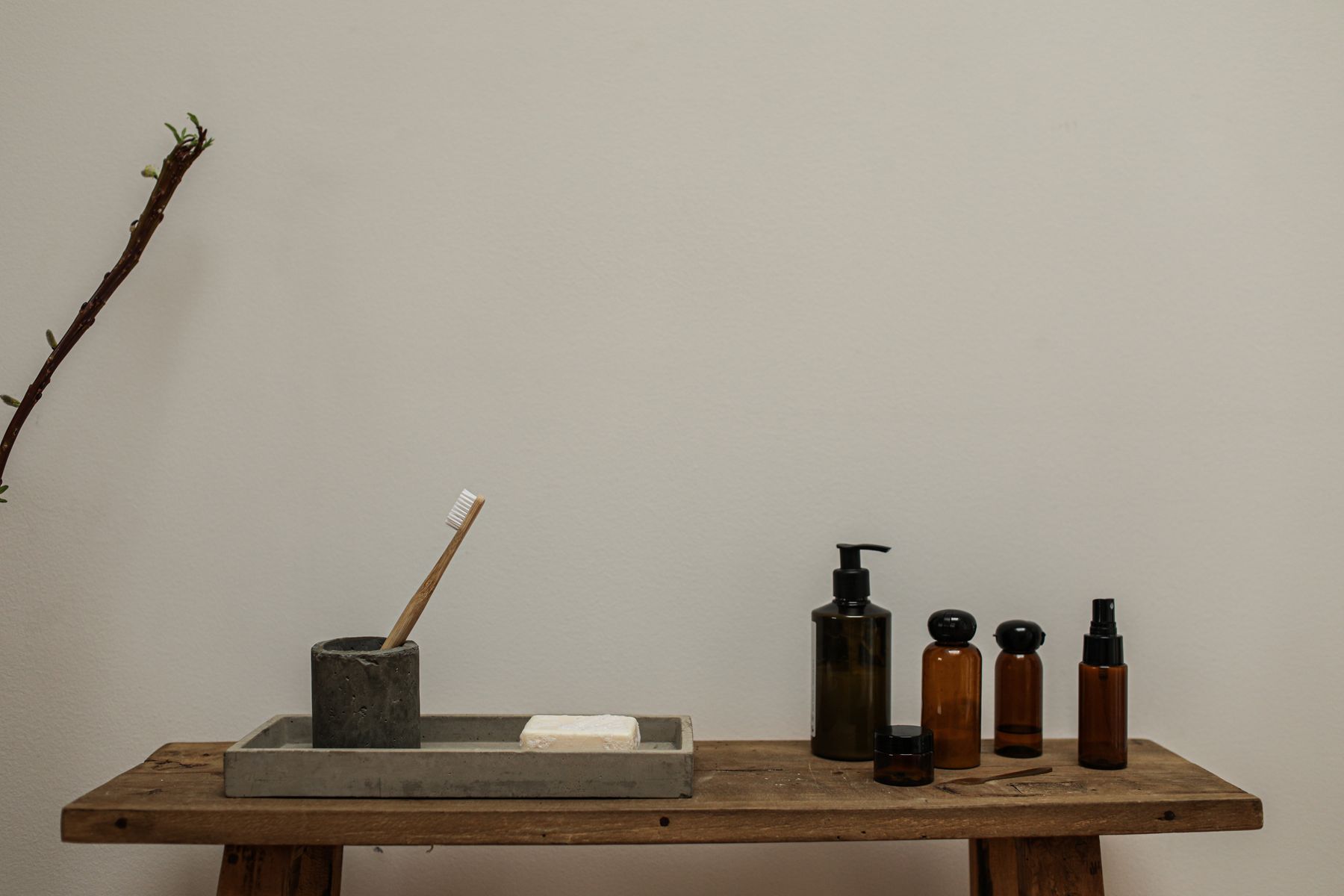
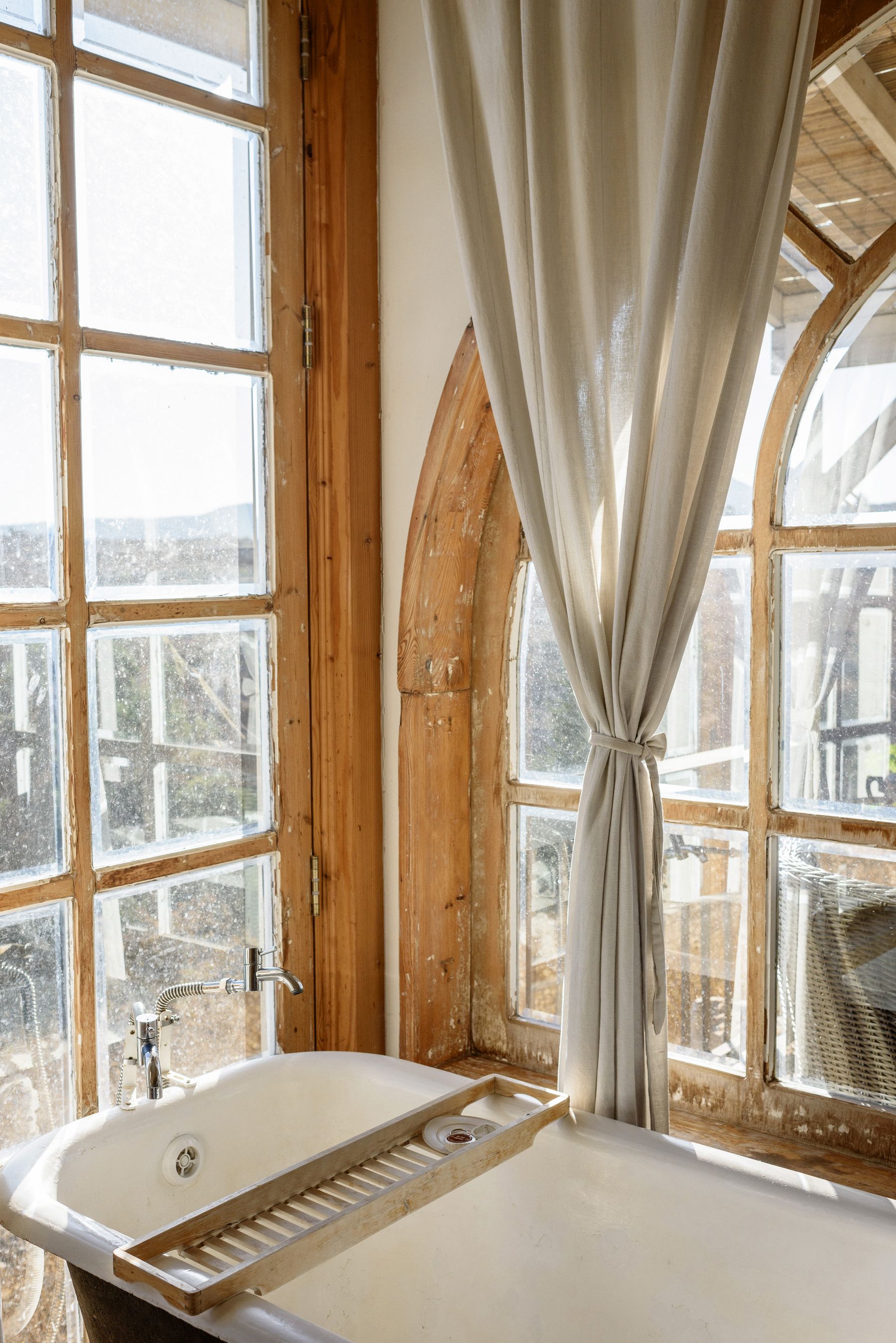
Keep Daylight While Protecting the True Sightline
Test privacy from outside after dark and at standing, seated and bathing heights. A café curtain, bottom-up blind, lower obscured glazing or carefully placed planting can protect the body without blocking the whole window. Where a window meets a bath or shower, resolve waterproofing, sill fall, frame material and ventilation before selecting the decorative treatment. Avoid heavy full-length fabric that traps moisture against a cold pane.
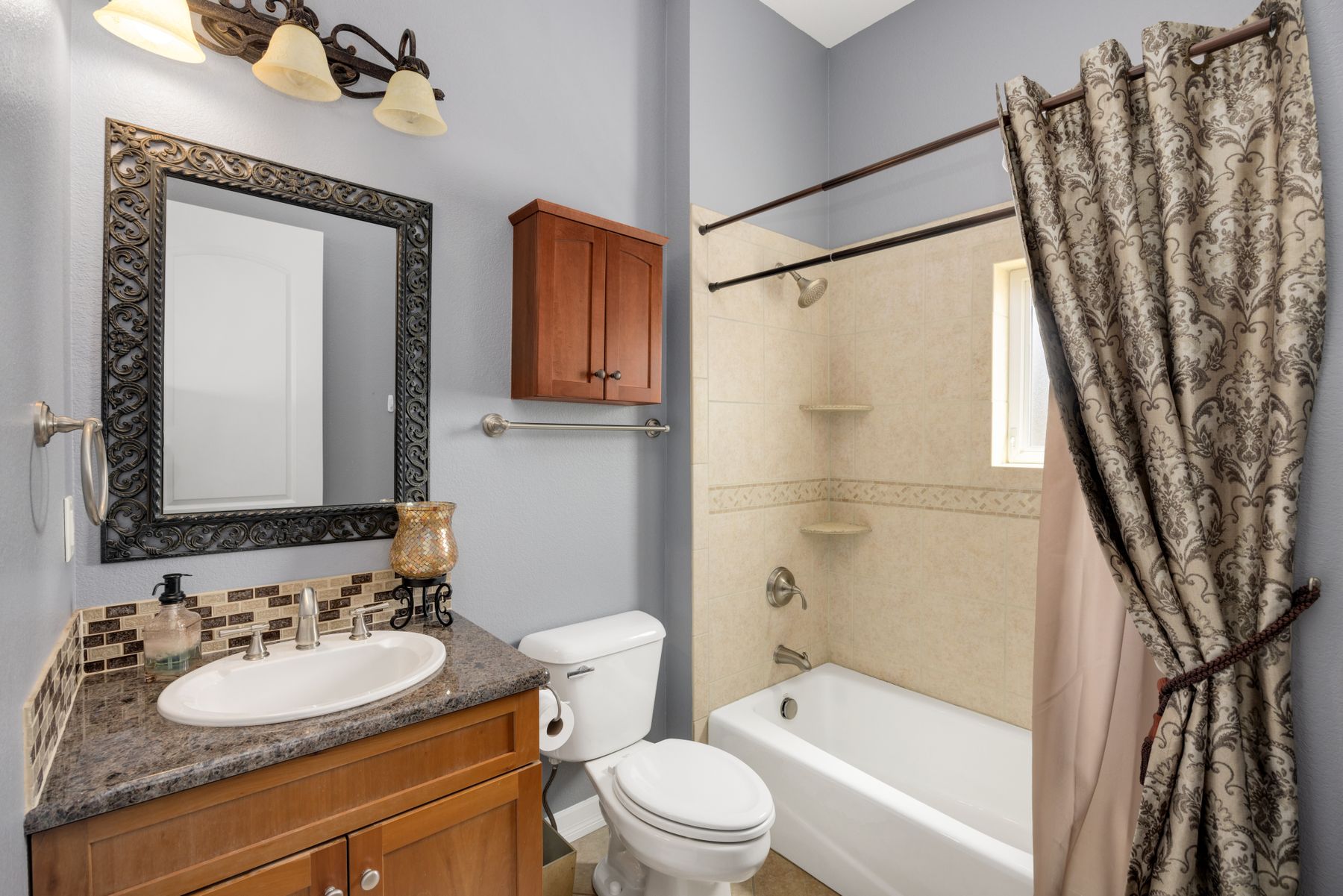
Make a Windowless Cottage Bathroom Glow, Not Glare
Use a warm pale base, a mirror positioned to multiply useful light, and several low-glare sources rather than one harsh ceiling fitting. A glazed tile or satin paint can return some light, but too many glossy planes expose every reflection and water mark. Keep the strongest pattern near the vanity or upper wall where it can be seen, and give the floor and circulation route clear tonal contrast. Extraction is especially important because there is no opening window to assist drying.
Build Cottage Character Without a Full Remodel
If the layout and wet-zone surfaces work, concentrate on reversible or low-disruption changes: repaint dry walls or cabinetry, replace the mirror and light, update compatible hardware, add a tailored curtain and organize visible storage. In a rental, use removable textile, freestanding storage and approved fixings rather than unverified peel-and-stick materials in high humidity. Do not replace functional tile simply because it is plain; a quieter background often improves cottage layering.
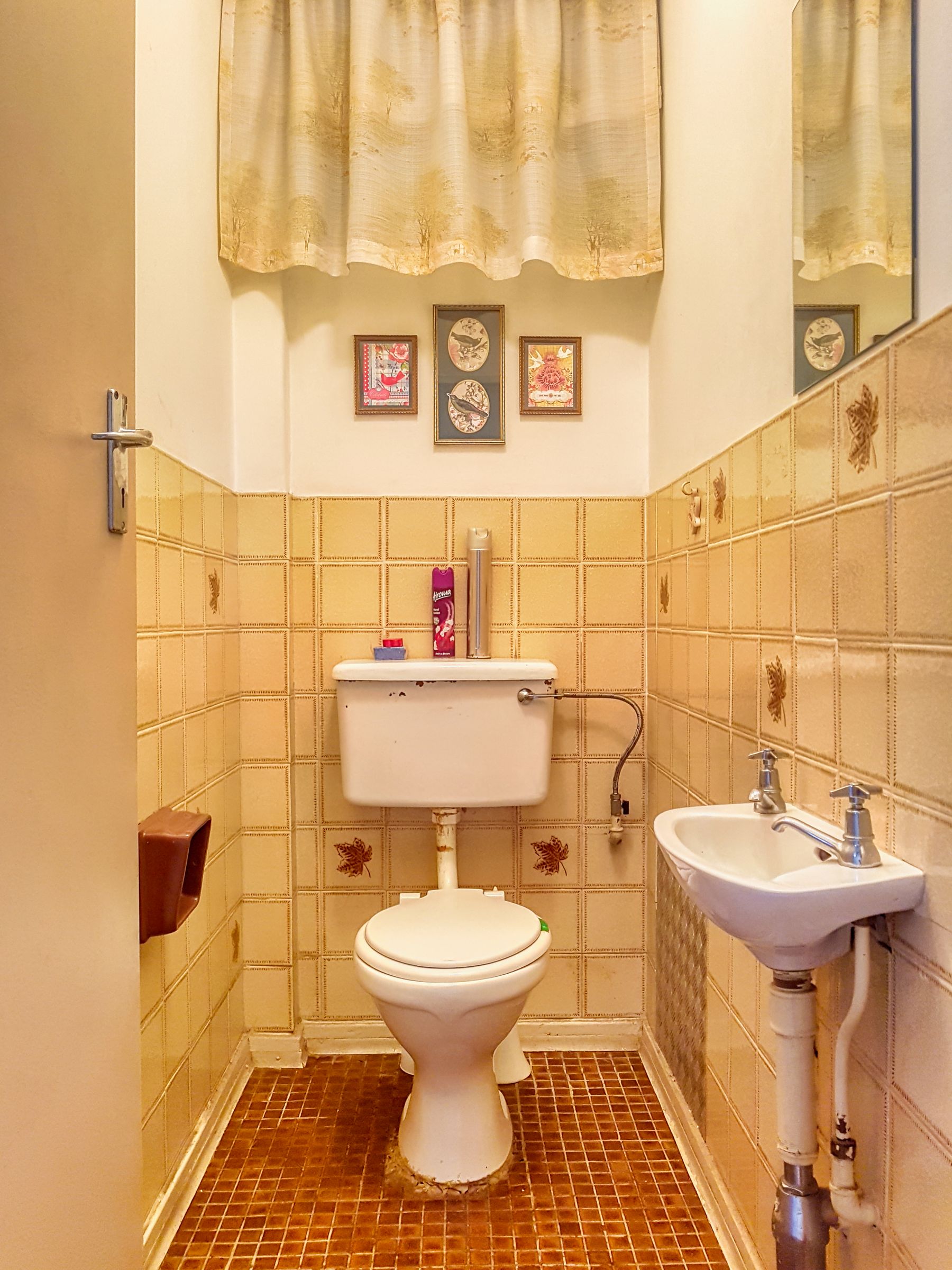
Keep Cottage Softness Legible and Accessible
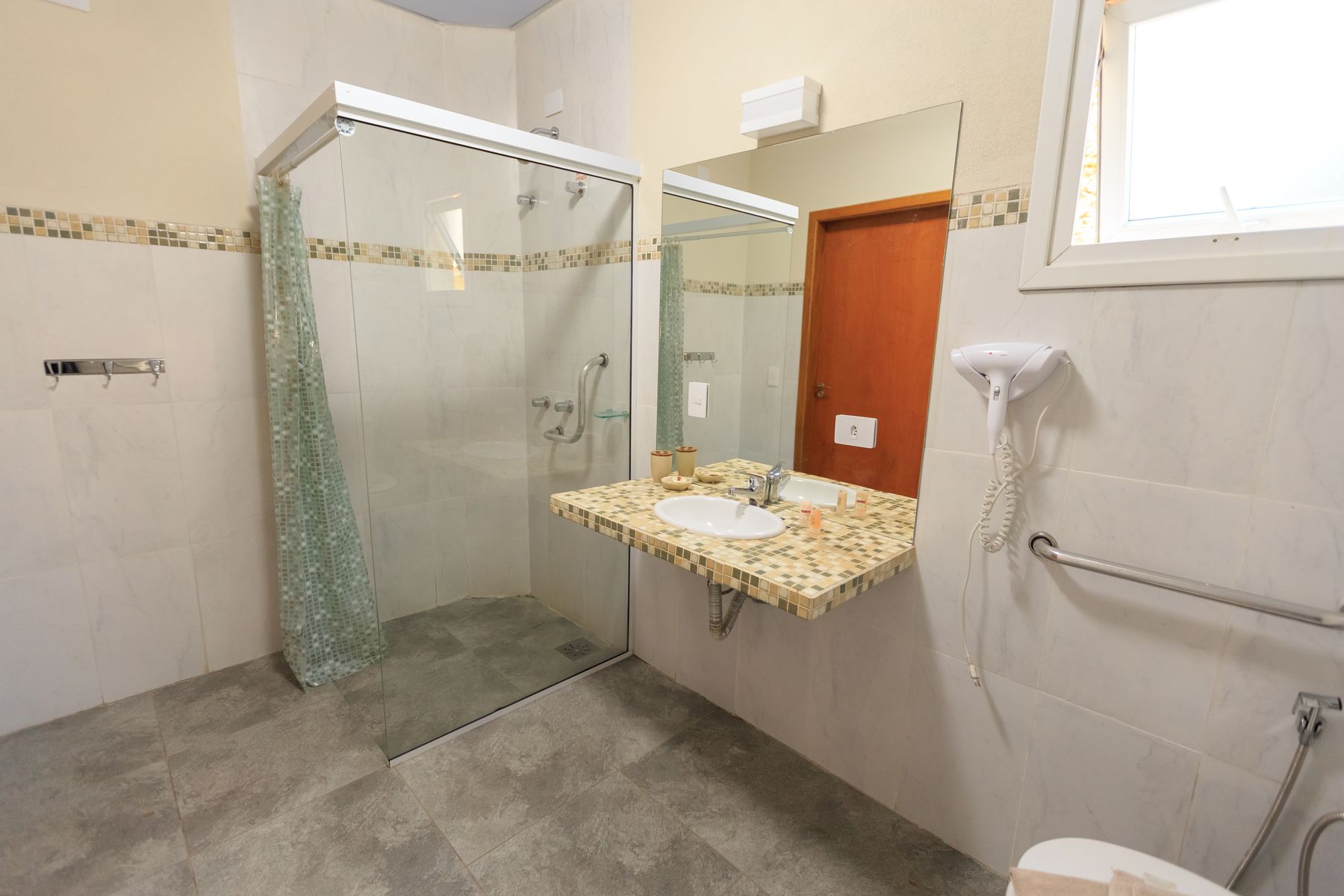
Low-contrast florals and pale fixtures can obscure the basin edge, floor transition and controls. Preserve tonal contrast where hands and feet need guidance, choose wet traction over a purely decorative floor, and provide lever controls, reachable storage and a stable place to sit. Plan wall blocking for future support even if rails are not installed now. Compact furniture must not narrow the clear route or create sharp projections at hip height.
Ventilate for Paper, Timber and Fabric
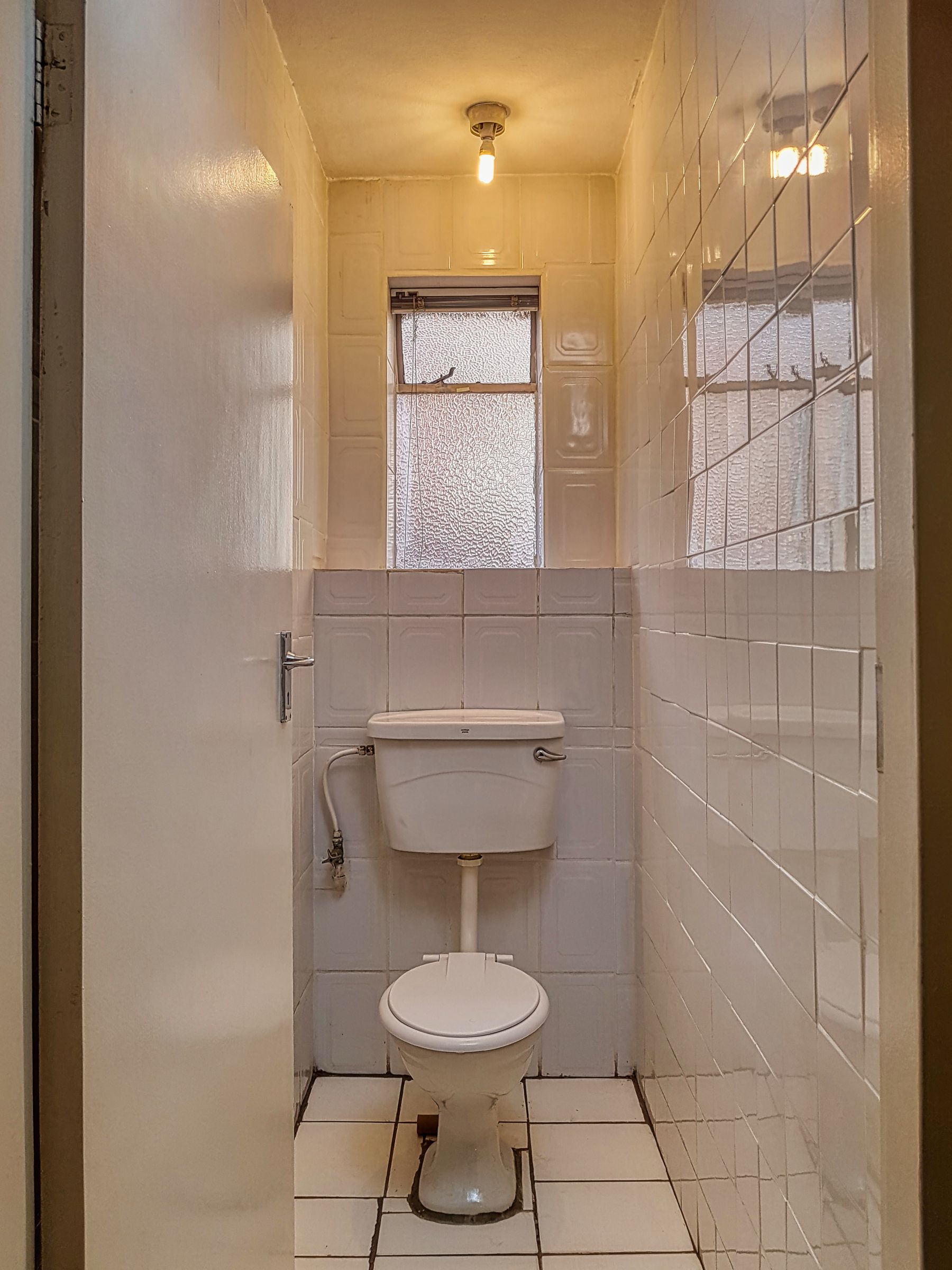
Wallpaper seams, painted boards, timber edges, baskets and curtains reveal humidity problems early. Size and duct extraction correctly, provide make-up air and use a timer or humidity control where appropriate. An opening window can help but is not a dependable substitute for mechanical ventilation. Give towels space around them and keep furniture away from persistently cold walls. The room should dry promptly after use without relying on the door being left open all day.
Separate Patina From Damage
A softened brass finish, small paint touch-ups and mellow timber can add character; mildew, swollen joints, failed sealant and unstable flooring are defects. Decide which materials are allowed to age and which must stay crisp for hygiene or safety. Keep care instructions for wallpaper, living metal, stone and painted wood, and preserve access around freestanding fittings. A finish that needs constant special handling is a poor match for a busy cottage bathroom.
Finish With the Cozy-Not-Crowded Test
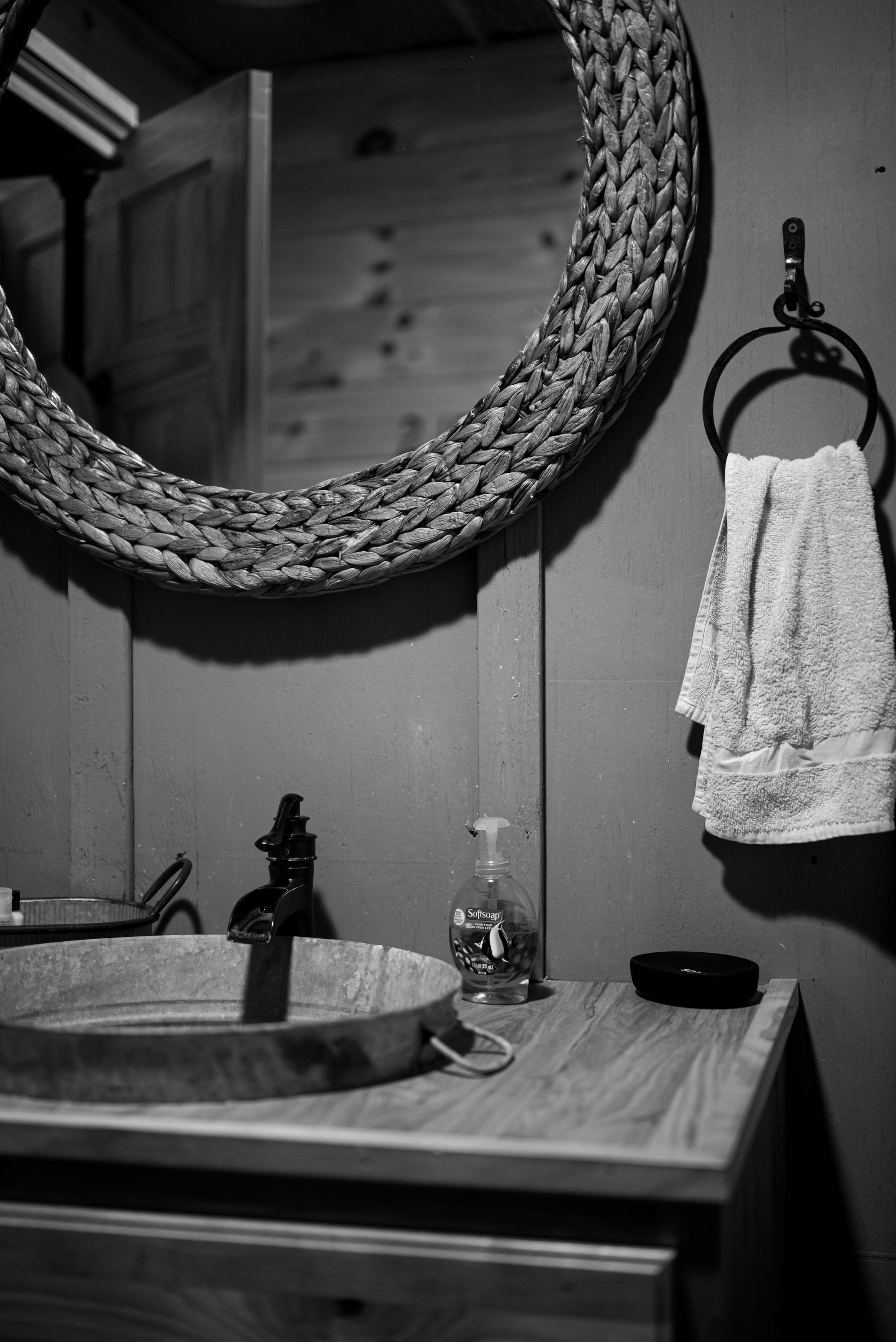
Photograph the room or elevation and mentally remove the extra baskets, small signs, duplicate jars, decorative ladder and second floral pattern. If the result still feels intimate and welcoming, scale, color and materials are carrying the design. If it becomes generic, strengthen one permanent relationship—vanity and wall color, bath and window, wallpaper and paneling—rather than adding more objects. Finally check door swing, towel drying, splash, cleaning and storage with the room fully loaded.