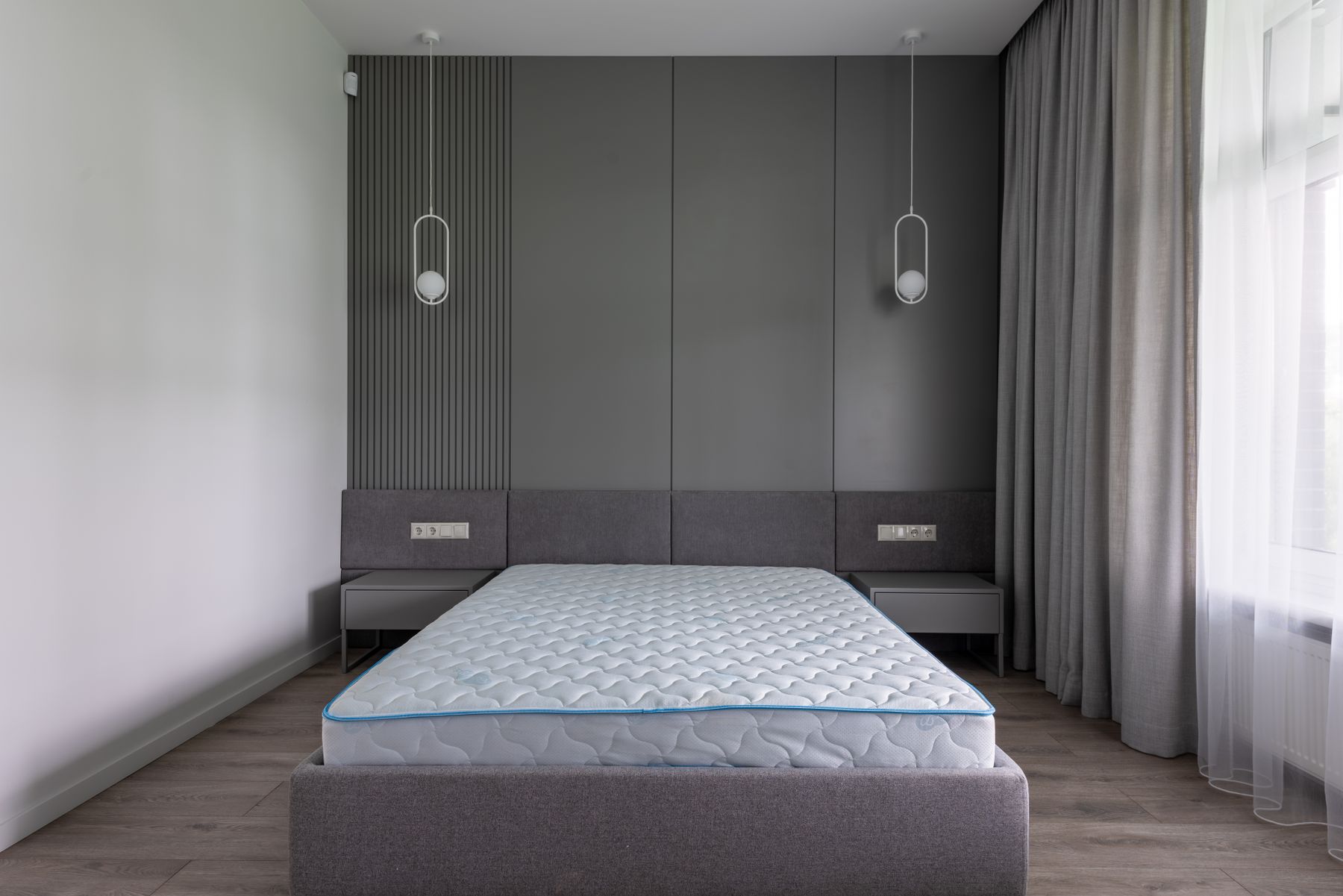
Define a Grey-Led Bedroom
A Grey Bedroom is led by grey on a major plane, bed, storage system or textile field, with enough tonal continuity to feel intentional. That is narrower than a general neutral scheme, which may be led by cream, beige, taupe or brown, and lighter in scope than a Dark Bedroom spanning many deep hues. Charcoal can sit at the darkest end of grey, but a Black Bedroom uses black or near-black as the dominant architectural field. Make that hierarchy explicit before selecting objects: name the lead grey, the supporting grey and the material that brings warmth or clarity.
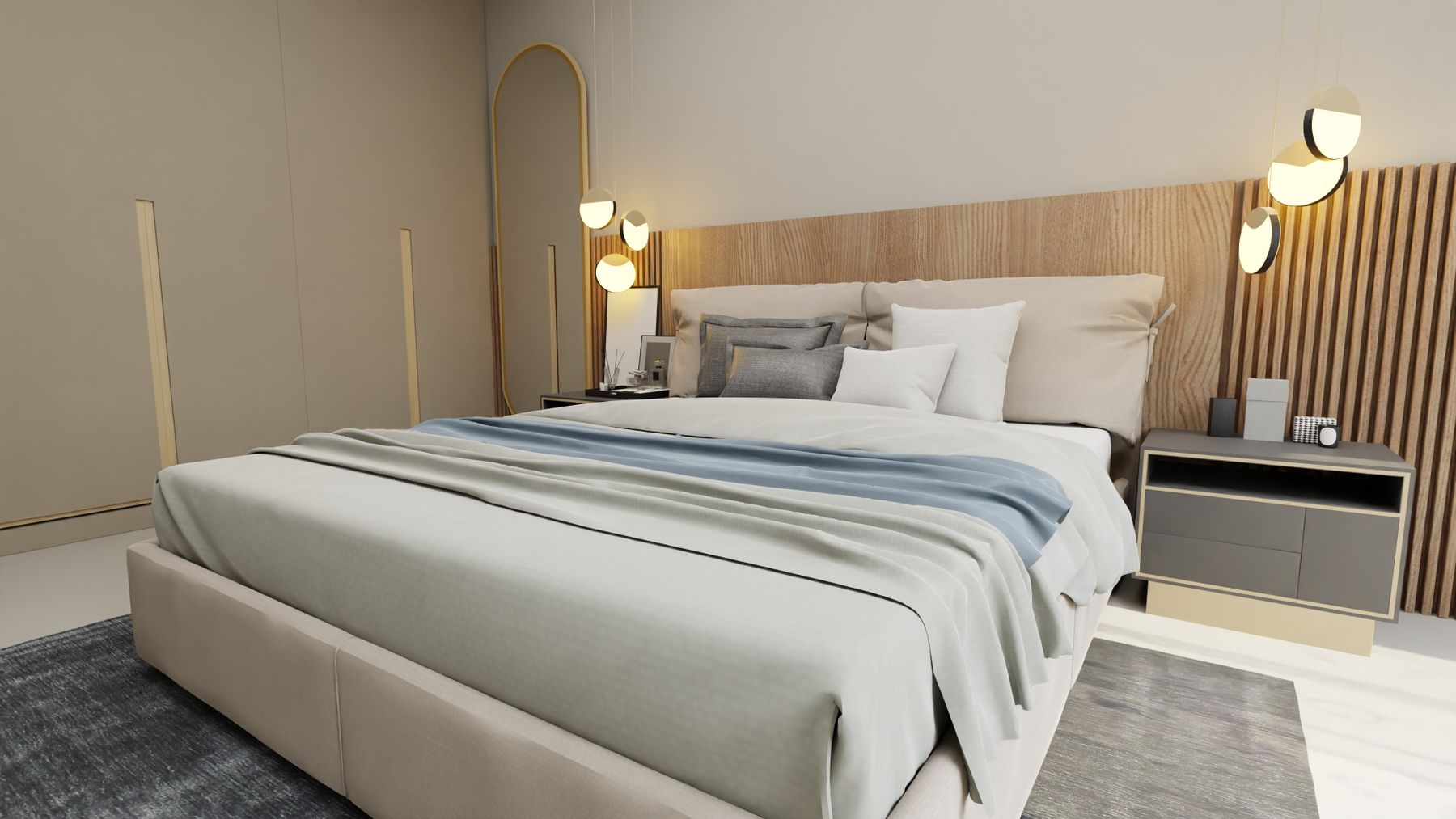
Read Undertones Before You Pick the Grey
Grey can lean blue, green, violet, brown or beige. Those tendencies become more obvious beside fixed carpet, timber, stone and curtains than they do on a paint card. Collect the undertones already present, then paint broad movable boards with the correct primer and finish. Stand them vertically behind the bed, beside the floor and in the darkest corner. Review them in morning light, overcast light and under the actual bulbs. A phone camera may neutralize the cast automatically, so the room—not the photograph—makes the final decision.
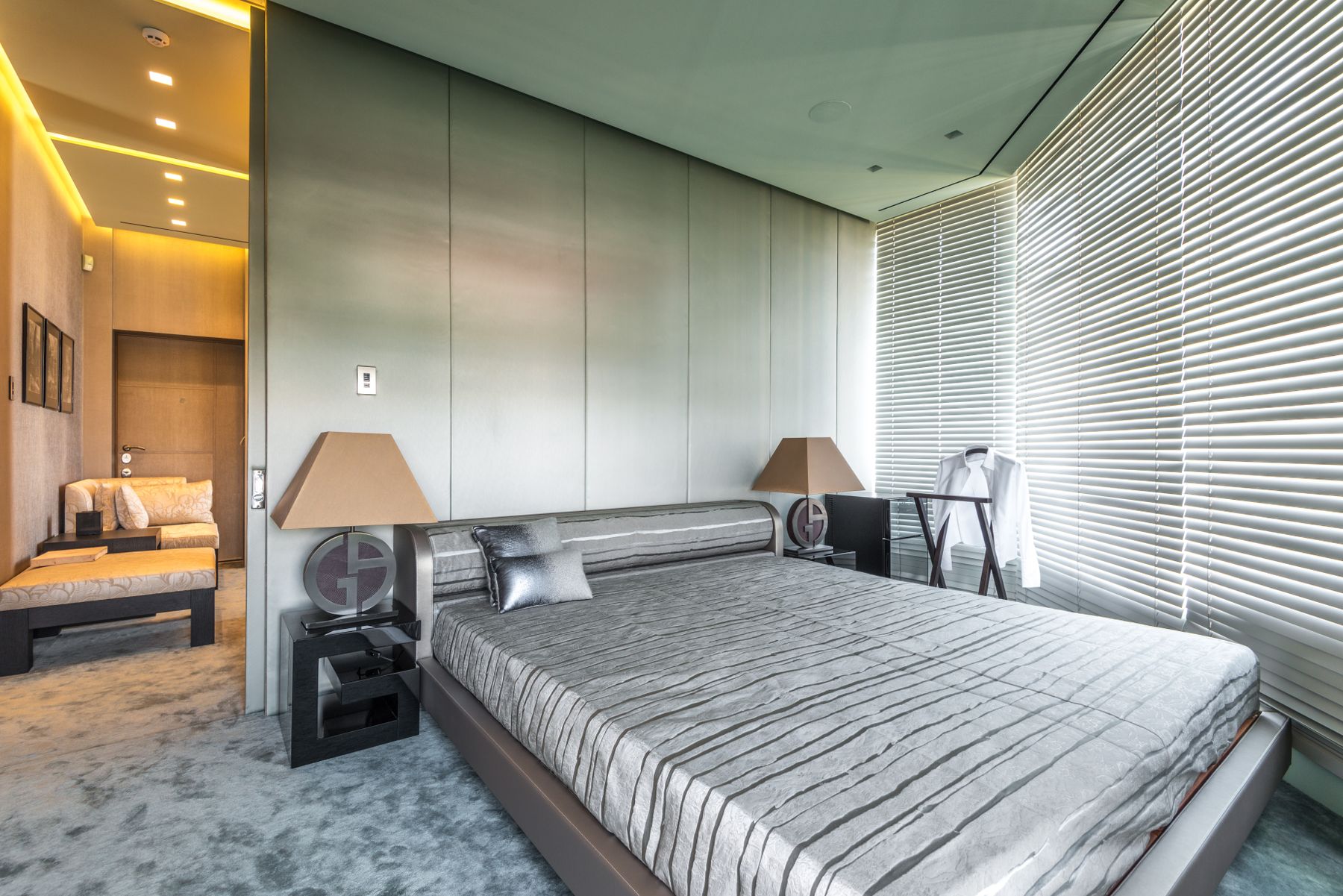
Use Pale Grey as a Quiet Light Reflector
Pale grey can feel airier than mid-grey without the glare of brilliant white, but only when its undertone belongs to the room. Use it on broad walls where daylight can reveal a small amount of shadow, then provide a darker bed edge, timber table or woven rug so the scheme has structure. In a north-facing room, a blue-grey may become icier than expected; in strong warm light, a green or violet cast may surface. Pale does not mean visually blank: subtle plaster, linen and wool can provide enough relief without busy pattern.
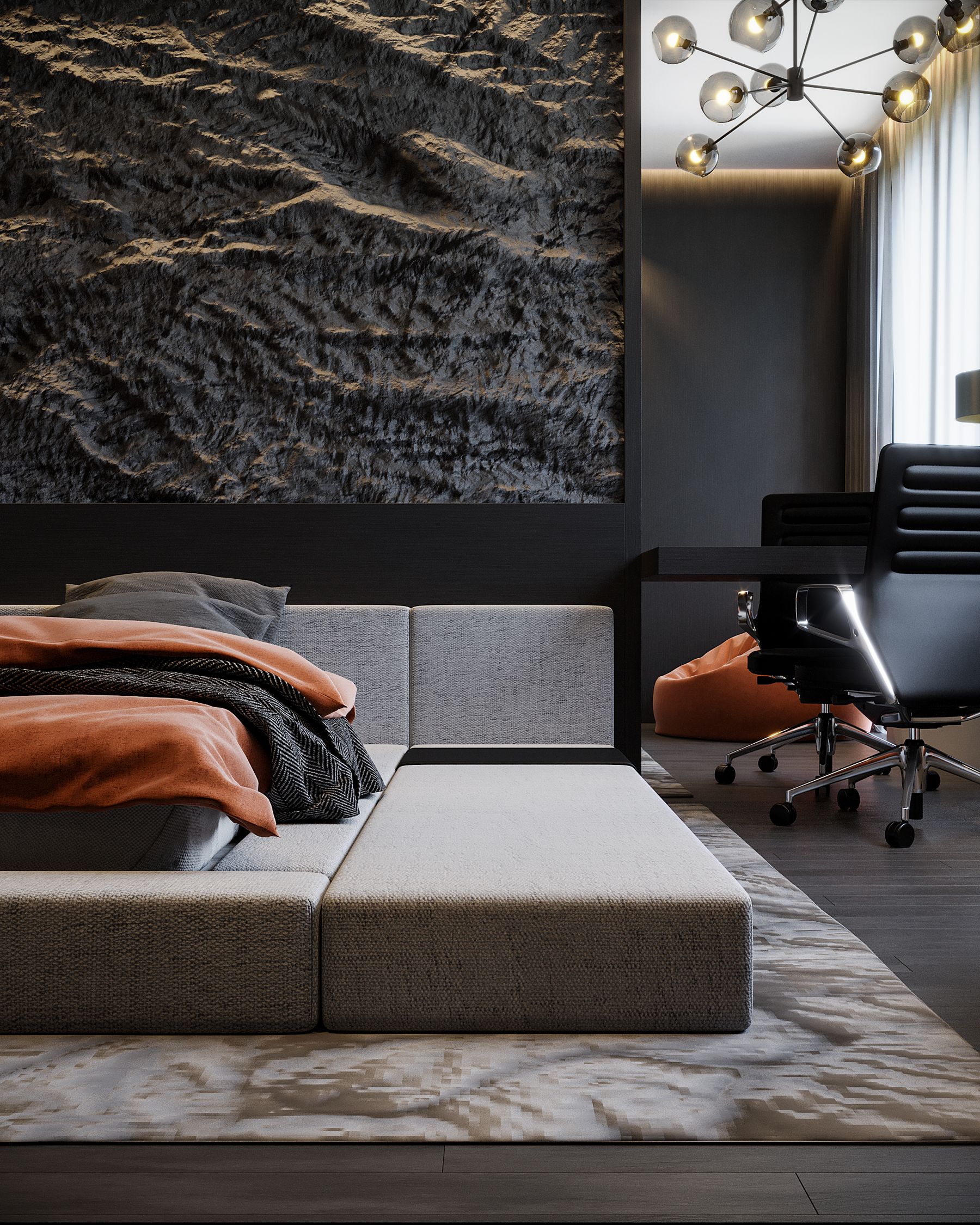
Build a Mid-Grey Room With Value Steps
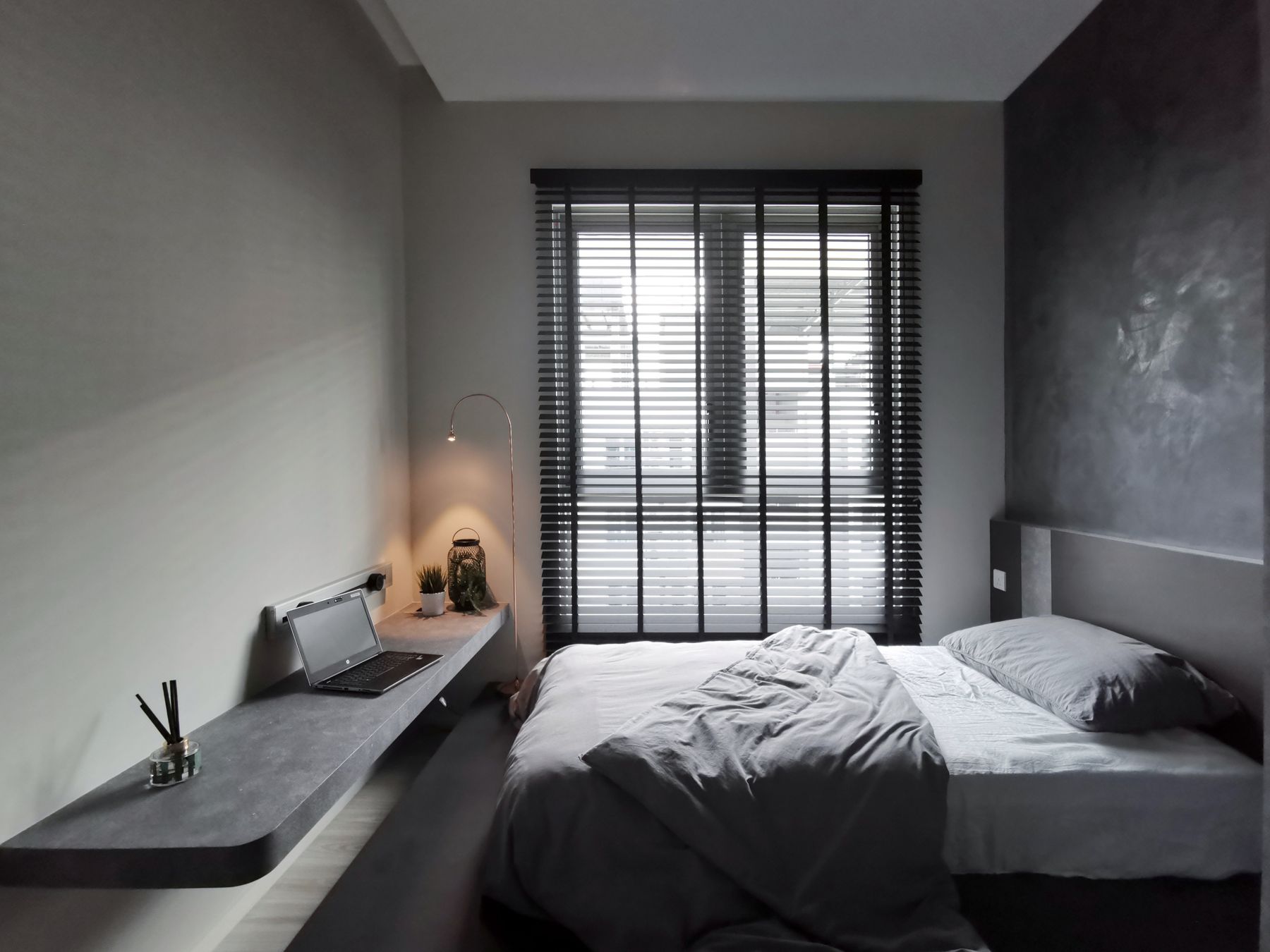
Mid-grey is forgiving, but a room made from identical medium values can lose depth. Assign a darker plane behind the bed, a mid-value bed or wardrobe and one lighter field at the floor, ceiling or bedding. The difference need not be dramatic; a small step becomes visible when the materials have distinct weaves or sheens. Modern Bedroom Ideas offers a broader framework for clean volumes, while a grey-led version uses value rather than ornament to clarify them.
Charcoal and a Continuous Grey Envelope
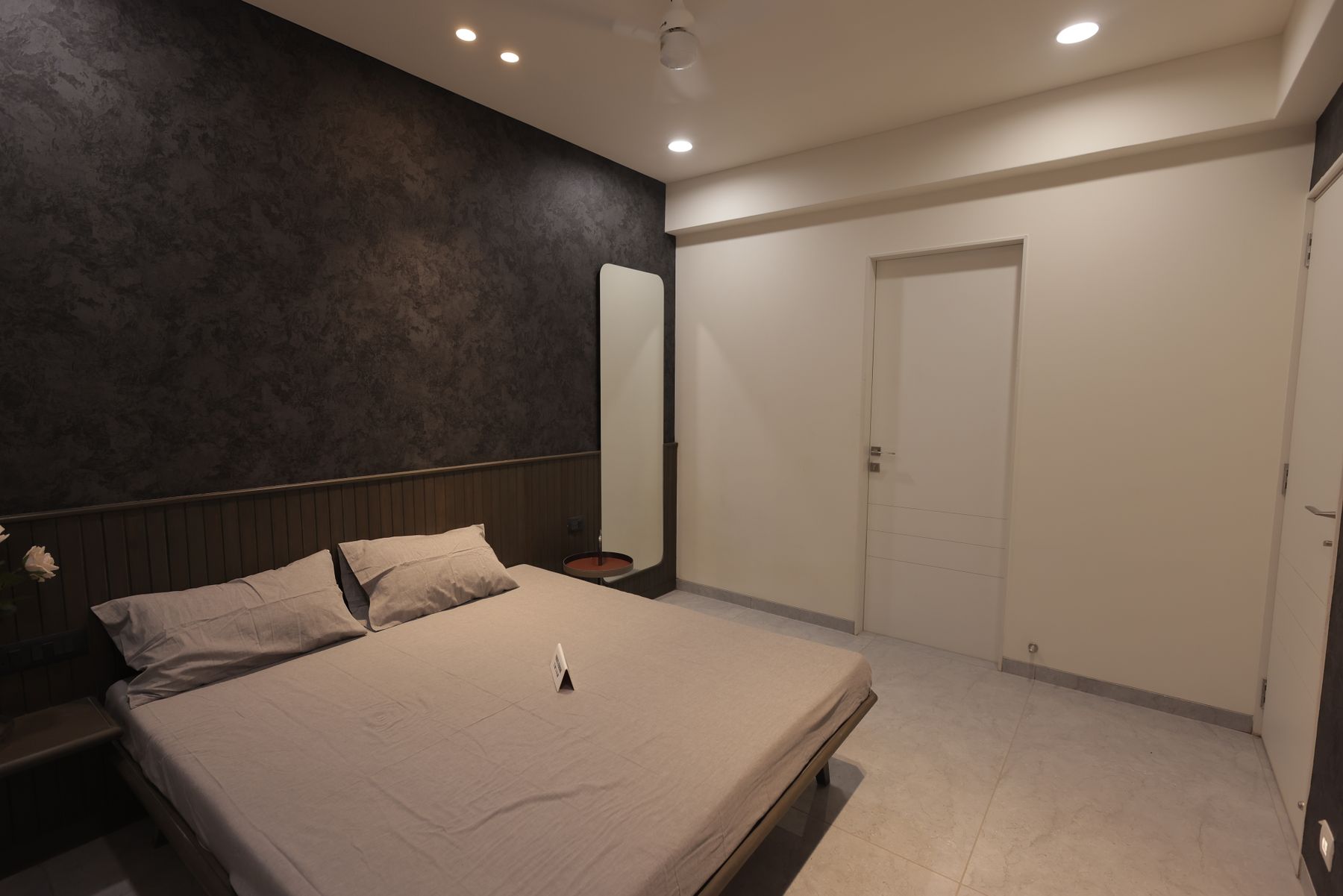
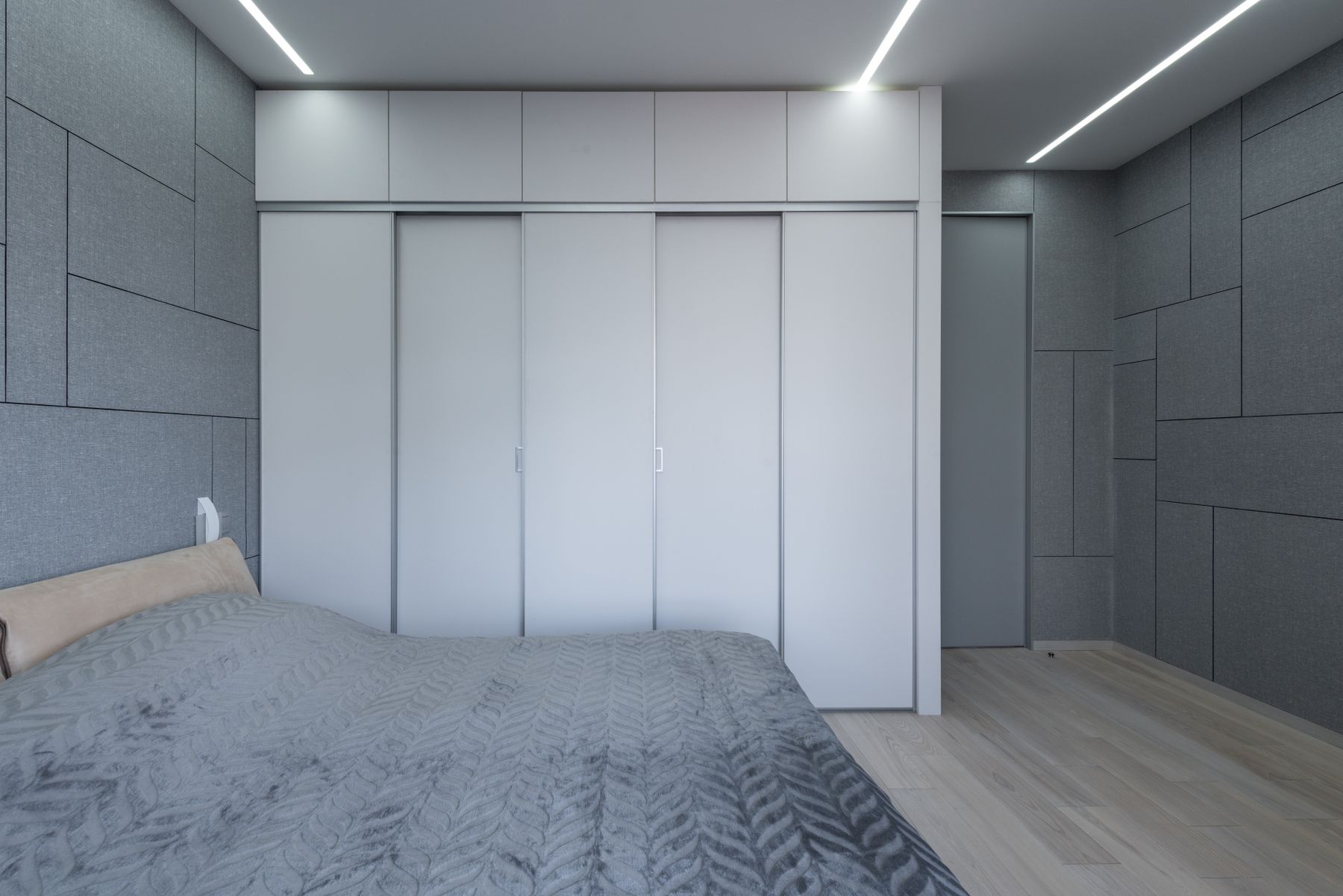
Charcoal gives grey a cocooning role without moving automatically into black. Confirm that the finish still reads as graphite, smoke or deep mineral grey in the room's lowest light. Warm timber, pale wool or muted metal can reveal its undertone. When most surfaces become near-black and the distinction disappears, compare Black Bedroom Ideas. Extending one grey across walls, doors or ceiling can reduce visual fragmentation, but test the whole envelope before committing: corners deepen the shade and different sheens change its appearance. A lighter ceiling or retained pale joinery may provide needed relief. Use controlled light to reveal texture without glare, and preserve clear bed edges, reachable controls and the nighttime route. Color drenching should simplify a useful room rather than obscure its boundaries.
Understand Where Greige Begins
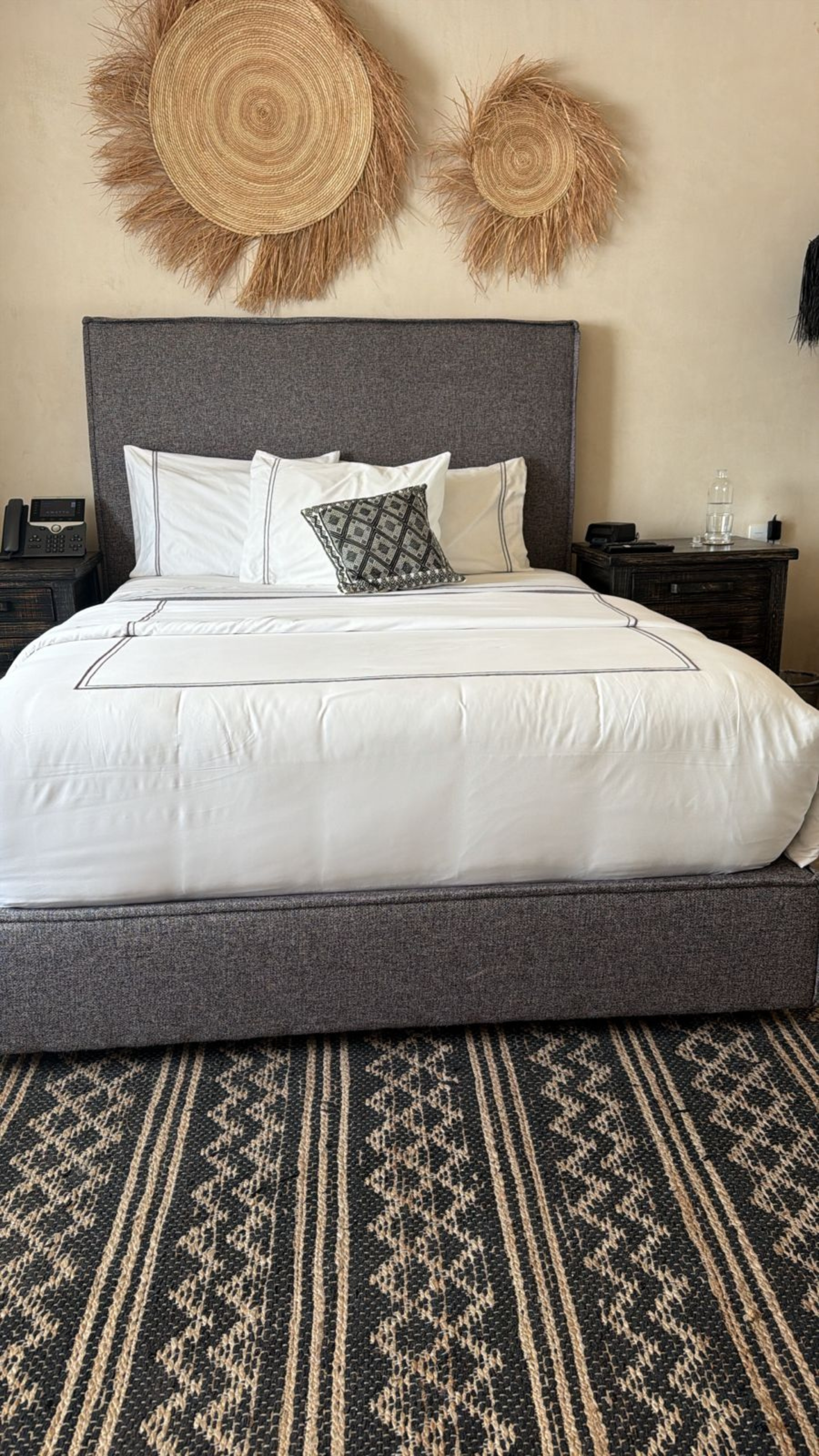
Greige combines beige warmth with grey restraint; it can still lean warmer or cooler depending on light and adjacent materials. Use it when an existing oak floor, cream carpet or stone makes a blue-grey feel detached. Keep one recognizably grey element—such as an upholstered bed, painted wall or rug—if the article's grey intent matters. Do not call every warm neutral greige: taupe usually carries a more evident brown or violet cast. The distinction is practical because each reacts differently beside white trim, natural linen and brass.
Use Blue-Grey or Green-Grey With Restraint
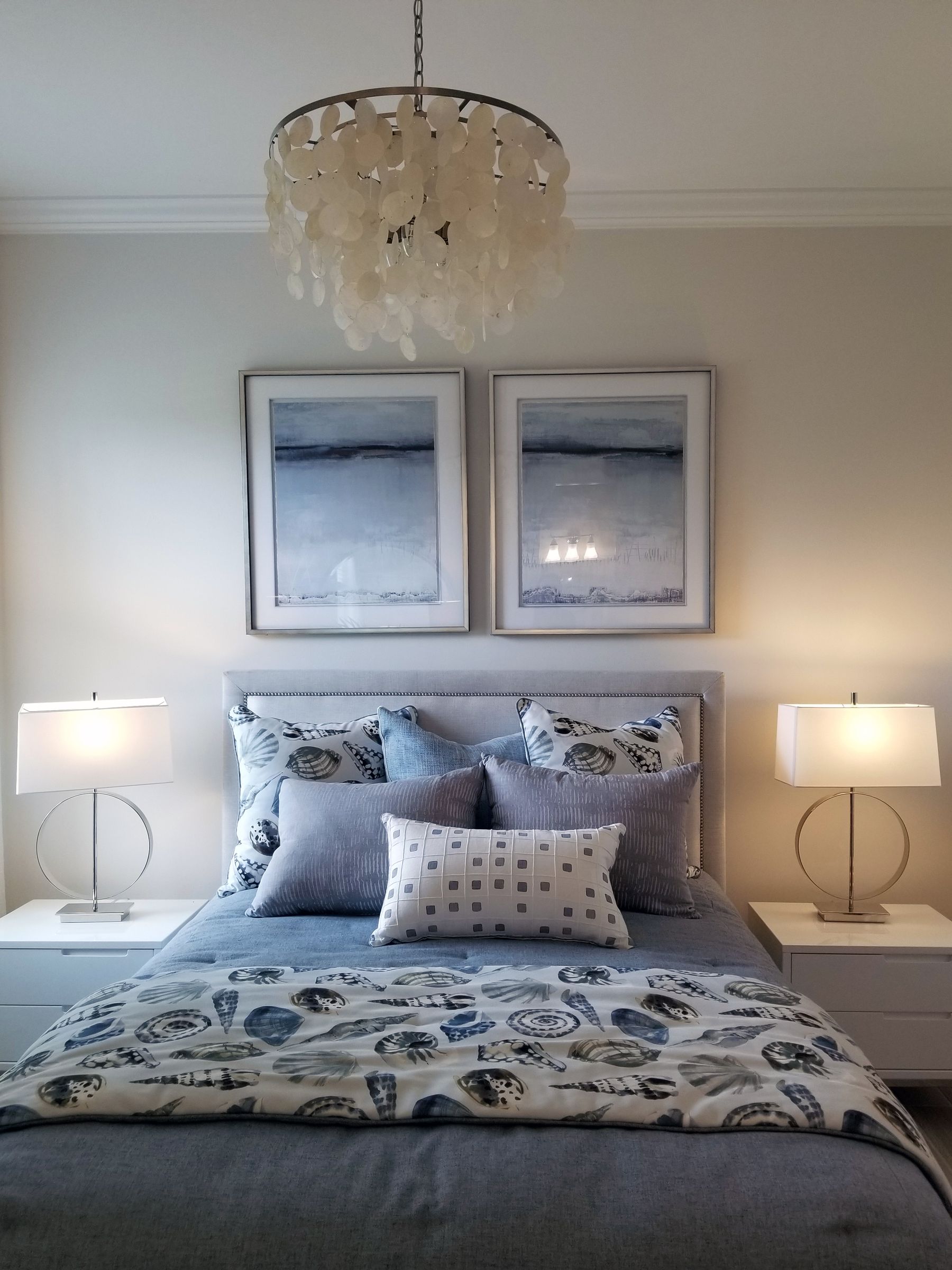
Blue-grey can support crisp metal and cool daylight; green-grey can sit naturally beside timber, linen and foliage. Either one becomes awkward when it is paired with a fixed grey carrying the opposite undertone. Repeat the chosen bias on at least two meaningful surfaces, then keep small accents quieter. Cool greys are not automatically calming, and warm greys are not automatically cozy; comfort depends on value, light, texture and the sleeper's response. Sample the full combination rather than relying on a color name.
Upholstery and Wall Relief for a Grey Bed
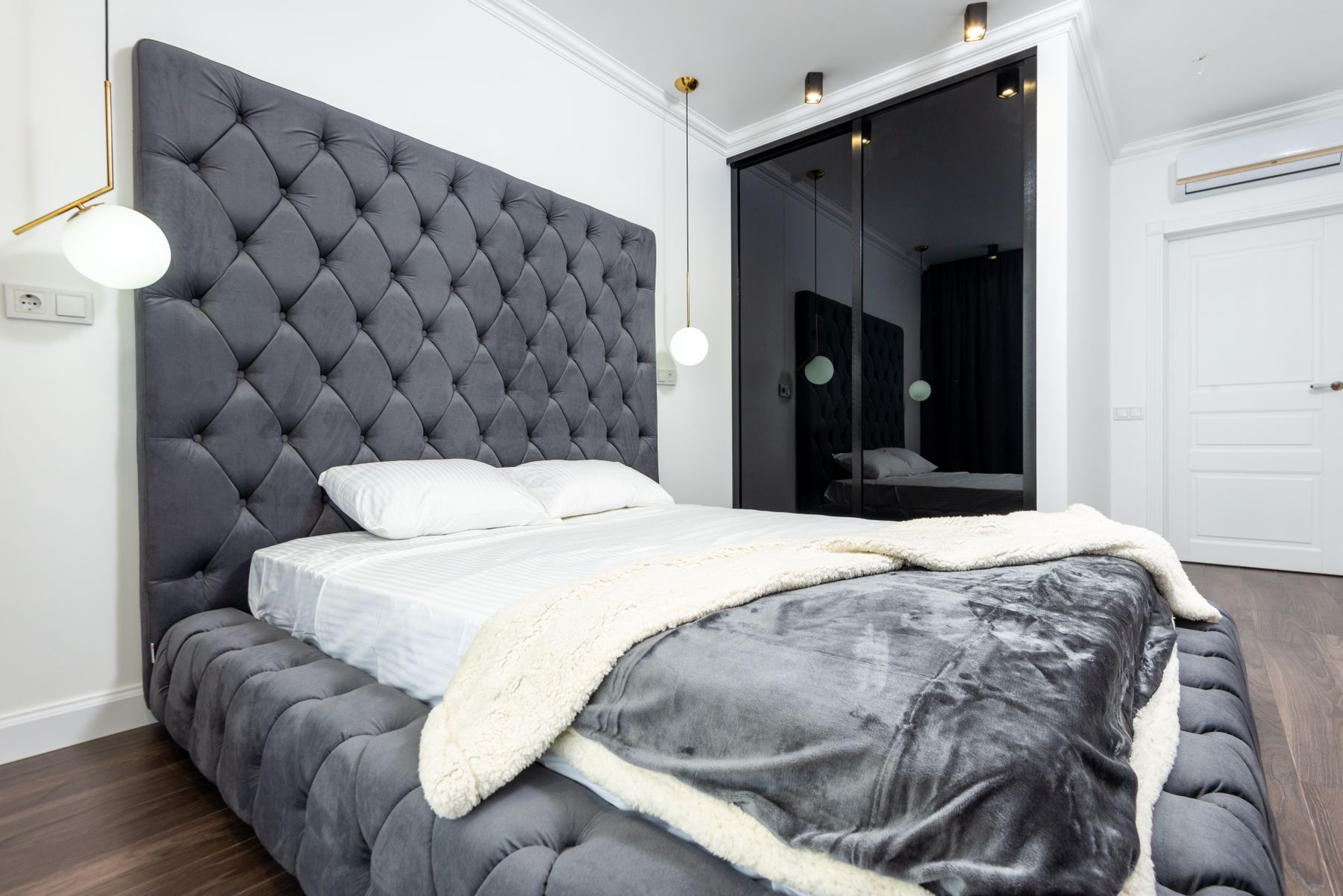
A grey bed or headboard can establish color without requiring grey walls. Choose fabric for abrasion, cleaning, pilling, relevant fire requirements and tactile comfort before shade. Deep channels and bouclé hold dust; smooth woven fabric is easier to vacuum, and removable covers make replacement more practical. Tape the full width and height on the wall, including bedside clearances, and confirm reading support. For relief on the wall, compare paint, plaster or molding against the actual substrate and its repair and cleaning needs. Deep grooves collect dust, and cladding must not conceal a cold or damp wall. Contemporary Bedroom Ideas explores material composition more broadly. Choose one main surface language, then inspect samples under daylight and side lighting instead of adding several competing feature treatments.
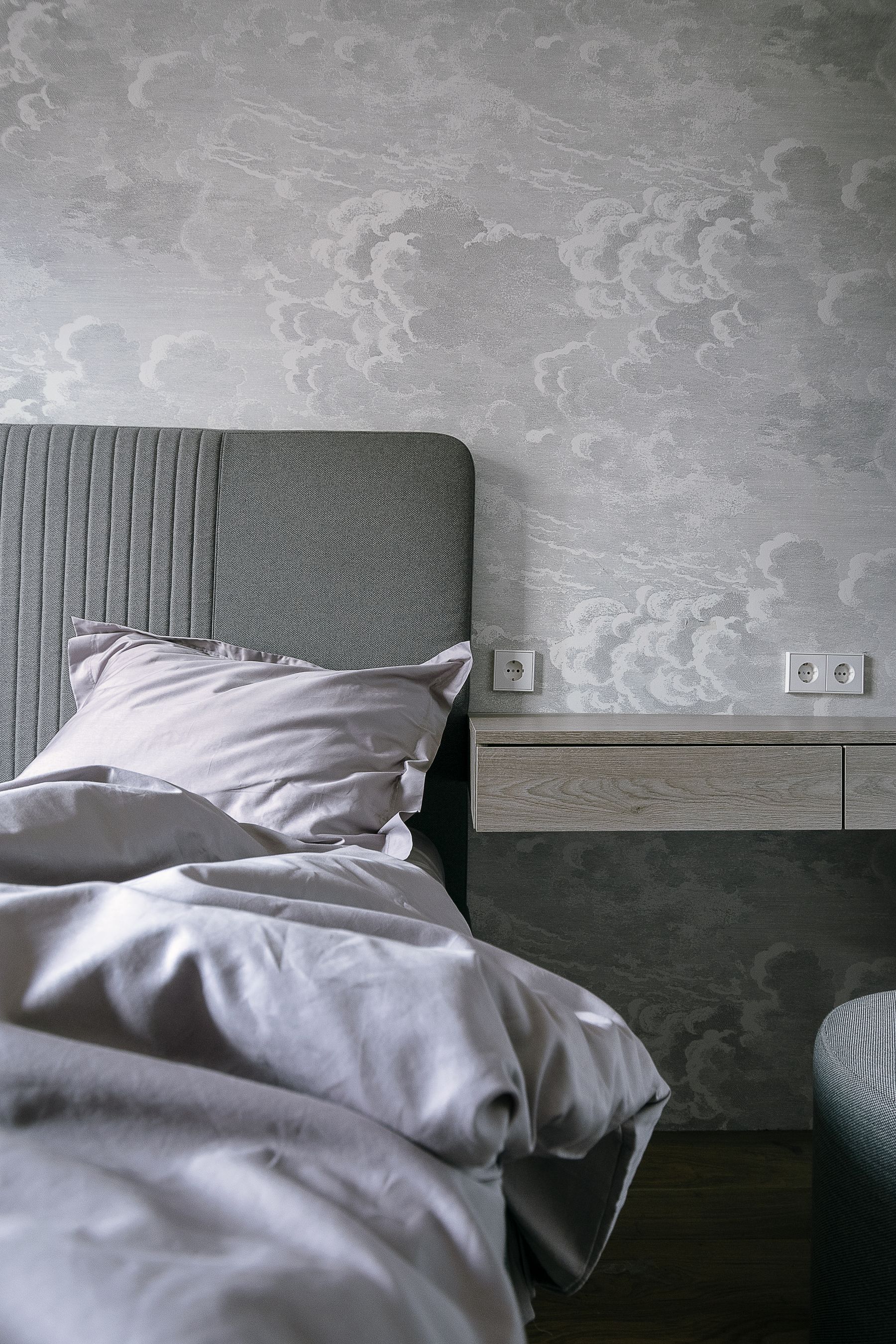
Grey Bedding by Fiber and Loft
Build the bed for temperature and laundering, then use weave and loft to separate nearby greys. Breathable sheets, a seasonally appropriate duvet and one useful blanket generally create more depth than a pile of decorative cushions. Washed linen diffuses light, sateen reflects it and wool holds a softer shadow. Mix dove, pebble and charcoal only when the steps remain visible under the bedside lamp. Keep frequently washed pieces replaceable; exact dye matches are difficult over time, so slight tonal variation should be part of the design.
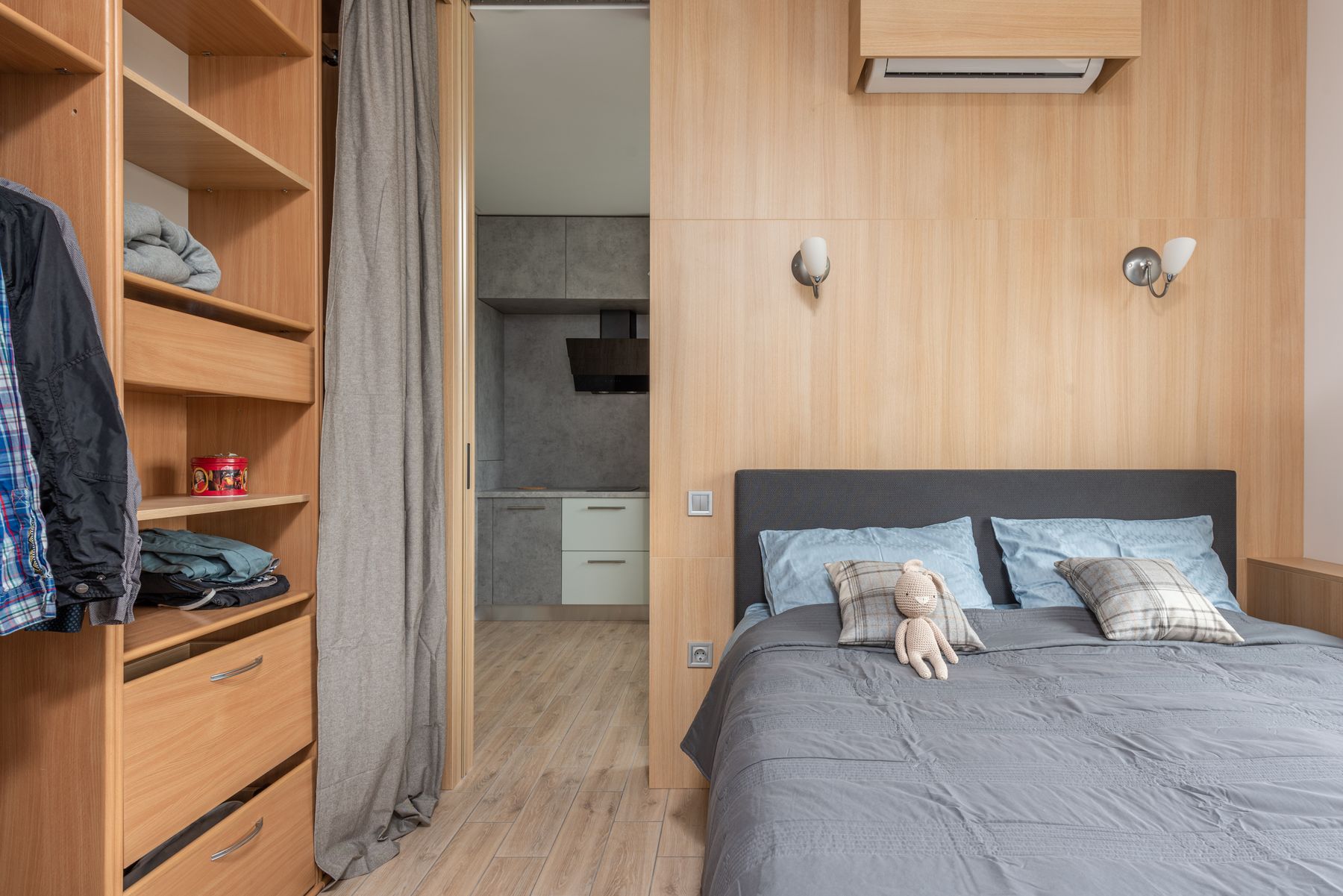
Warm Grey With One Timber Family
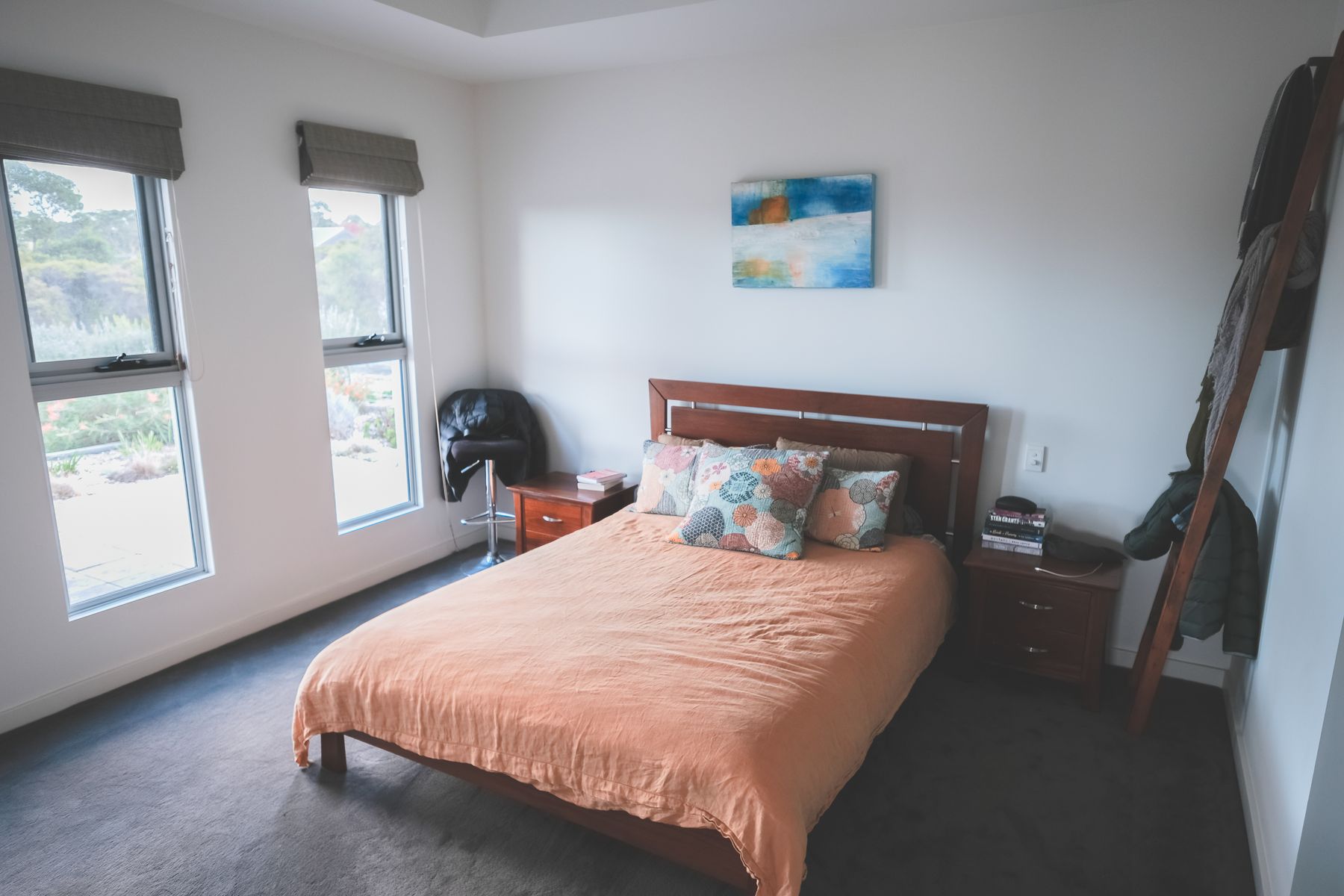
Oak, ash, walnut or cork can give grey a human-scale touch point. Begin with the floor or largest existing timber, then repeat its temperature at the bedside, desk or bench. Pale oak sharpens a charcoal scheme; walnut creates a softer transition; orange stain may expose an unwanted blue undertone. Avoid adding several unrelated species simply to warm the room. Mid-Century Bedroom Ideas offers a more period-specific timber language; grey needs only the material discipline, not the entire style.
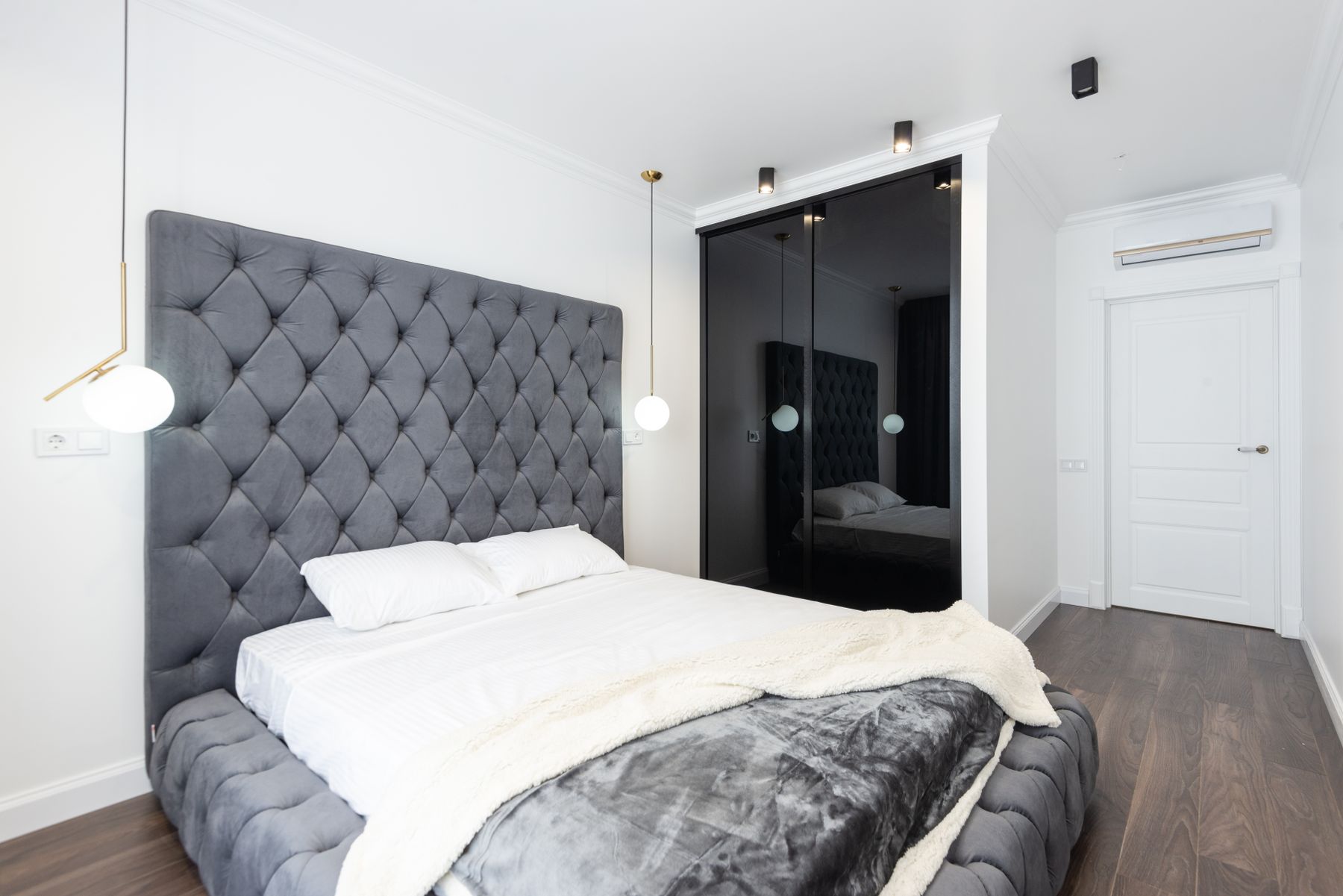
Cream and White as Controlled Relief
Cream softens warm grey; clean white makes cool grey crisper. Select one as the principal light value and use it where hygiene, daylight or edge definition benefits—often bedding, ceiling or a wardrobe interior. Too many brilliant-white rectangles can make a nuanced grey wall look dirty, while yellow cream may clash with blue-grey. If equal black and white contrast becomes the main idea, consult Black and White Bedroom Ideas instead of forcing it into a grey scheme.
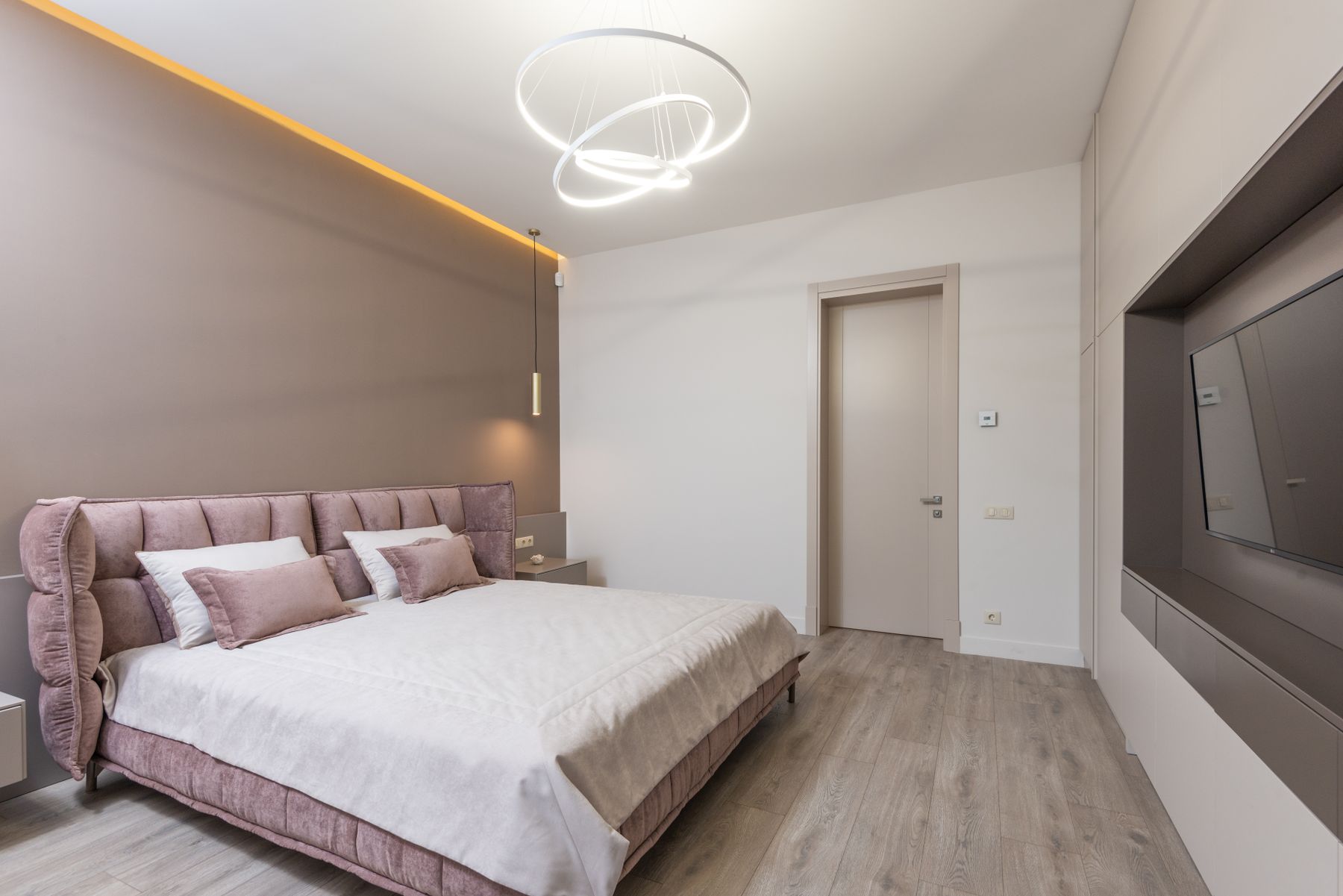
Introduce Accent Color Into a Quiet Grey Base
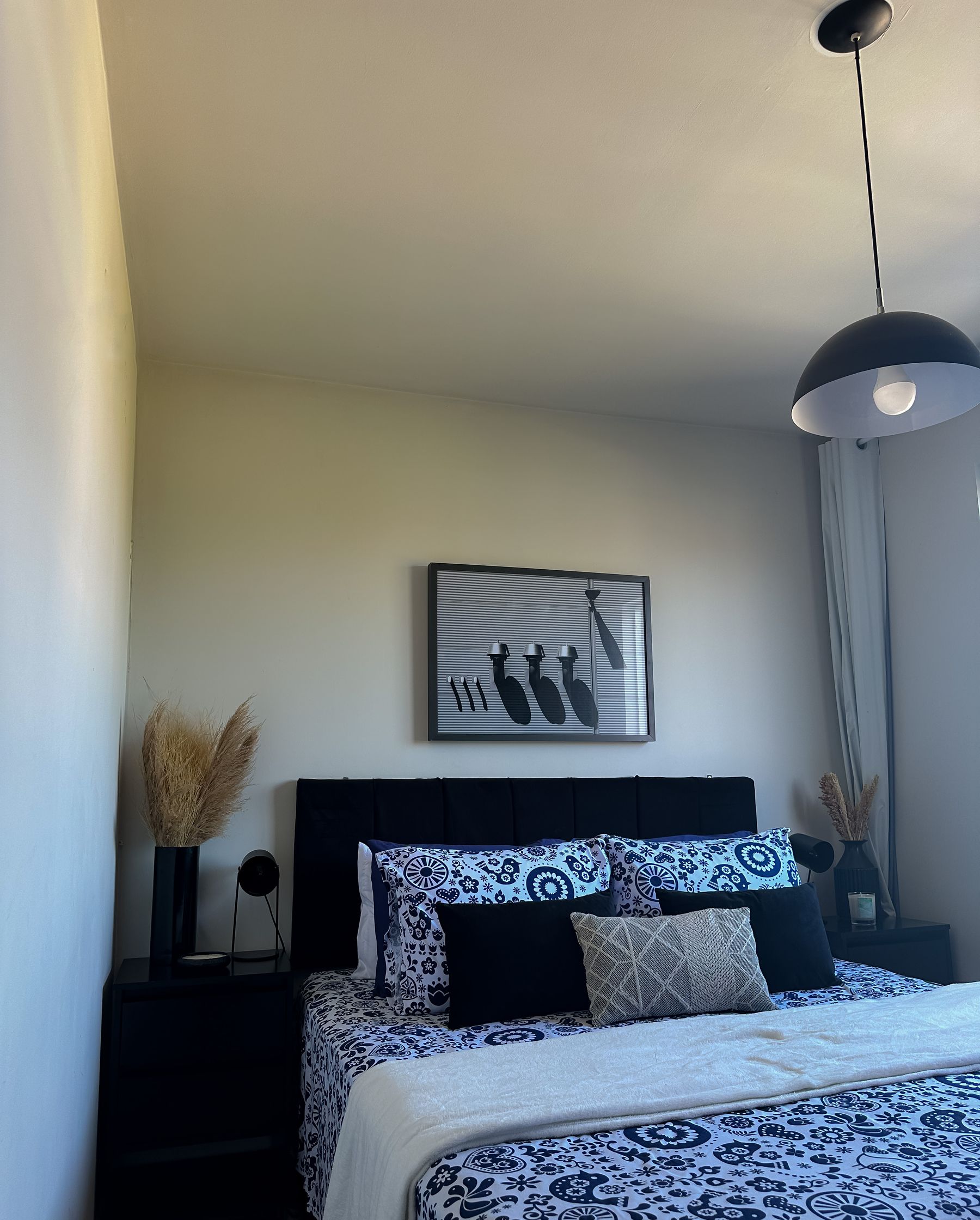
Muted blue and green can extend cooler grey, while blush, ochre, rust or terracotta can warm it. Choose the accent from an existing view, artwork or textile rather than from a generic pairing chart, then repeat it only where balance requires. One blanket, chair or art field is more useful than a trail of matching objects. Test saturated color at night: a warm lamp can turn blush orange and mute blue dramatically. Grey should remain the room's connective field rather than becoming a background for unrelated accent shopping.
Metal Judged by Undertone and Touch
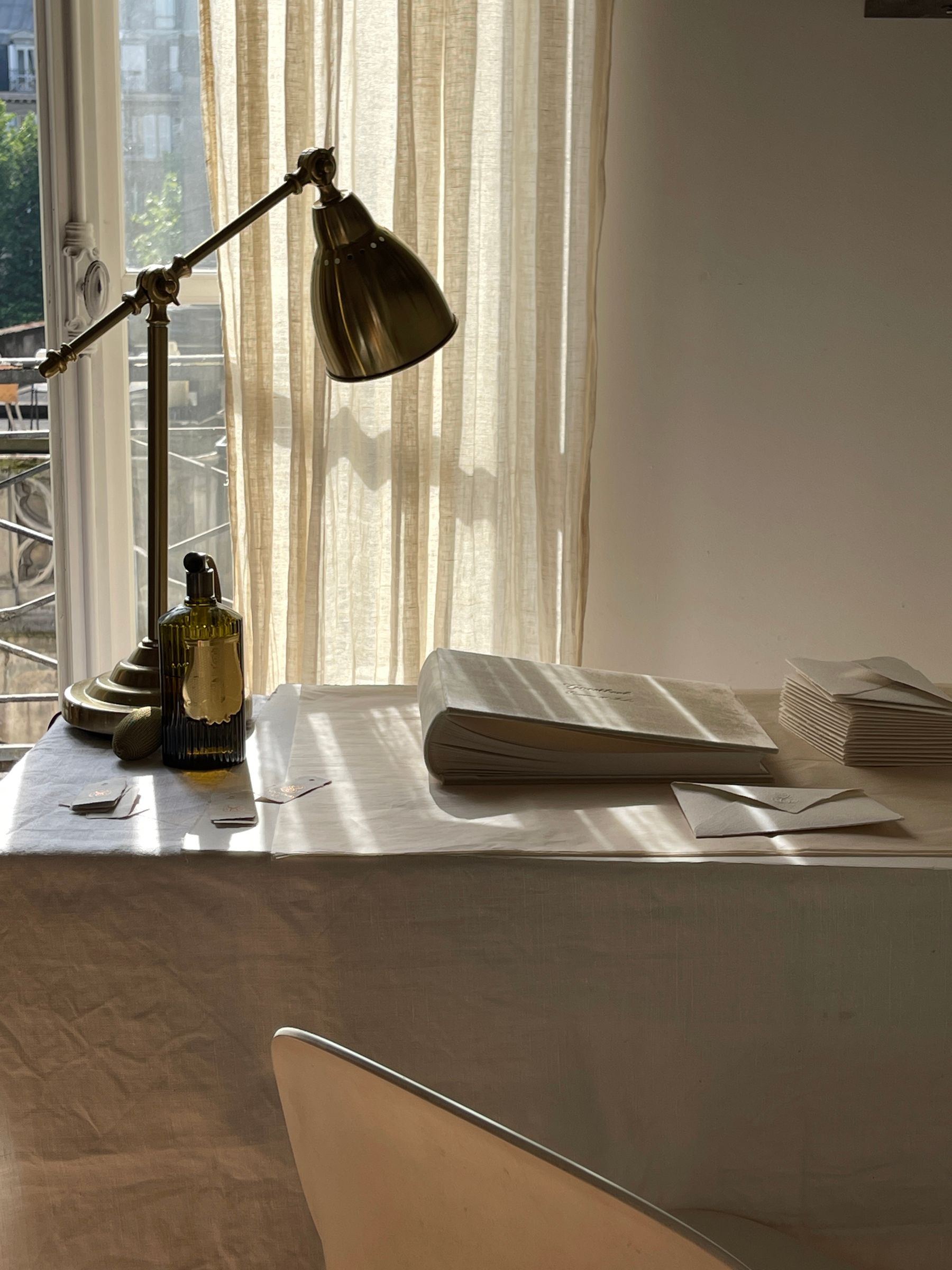
Chrome and nickel sharpen blue-grey; brass and bronze warm greige and brown-grey; blackened steel adds a quiet graphic line. Begin with fixed door, window and wardrobe hardware, then choose one dominant metal temperature. Polished surfaces bring glare and fingerprints; matte black handles can disappear against charcoal storage. Shape and tactile contrast matter more than a perfect finish match, particularly at night. Use metal at real controls, lamps and furniture joints instead of scattering decorative metallic objects.
Layer Light So Grey Does Not Go Flat
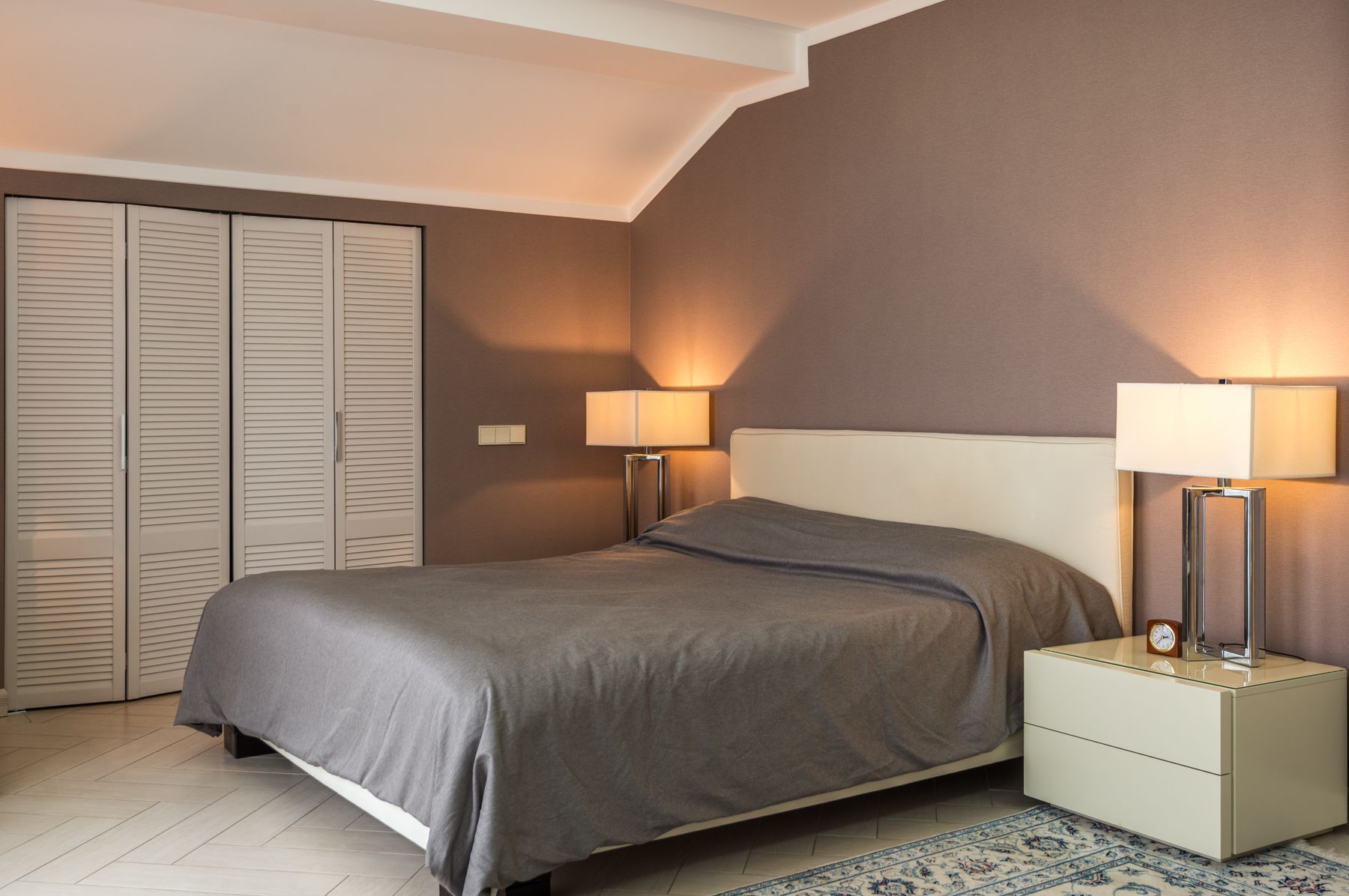
Grey changes character rapidly with color temperature, direction and dimming. Combine ambient light, independent reading light, wardrobe light and a low route rather than relying on one central fixture. Wash a textured wall from the side and keep bright sources outside the direct pillow view. Living Room Lighting Ideas develops beam and control principles; a bedroom also needs a true lights-out state, simple bedside controls and no unnecessary indicator glow. Check whether warm lamps turn a cool grey muddy before finalizing either paint or bulb.
Daylight and Curtains as Color Tools
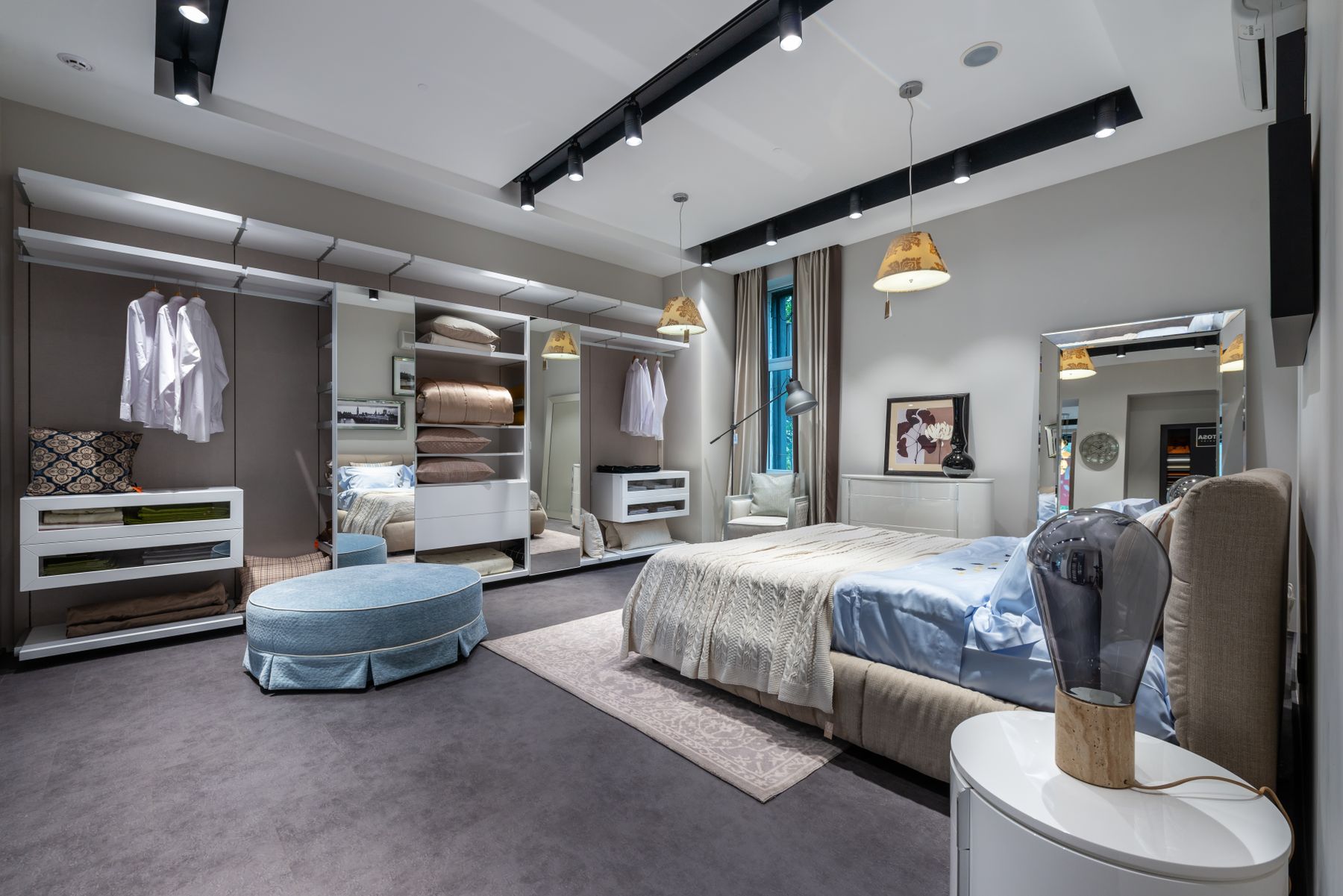
Window direction changes grey more than a product name suggests. Use separate layers for glare, privacy, thermal control and blackout so the daytime color is not sacrificed for sleep. Measure stack-back to keep glass clear when coverings open. Grey curtains can extend the wall, but an exact mismatch may look accidental; a related lighter or darker value is often more convincing. Inspect condensation and cold corners behind heavy fabric, because tonal surfaces can conceal early moisture marks.
Resolve Grey Carpet Against Grey Walls
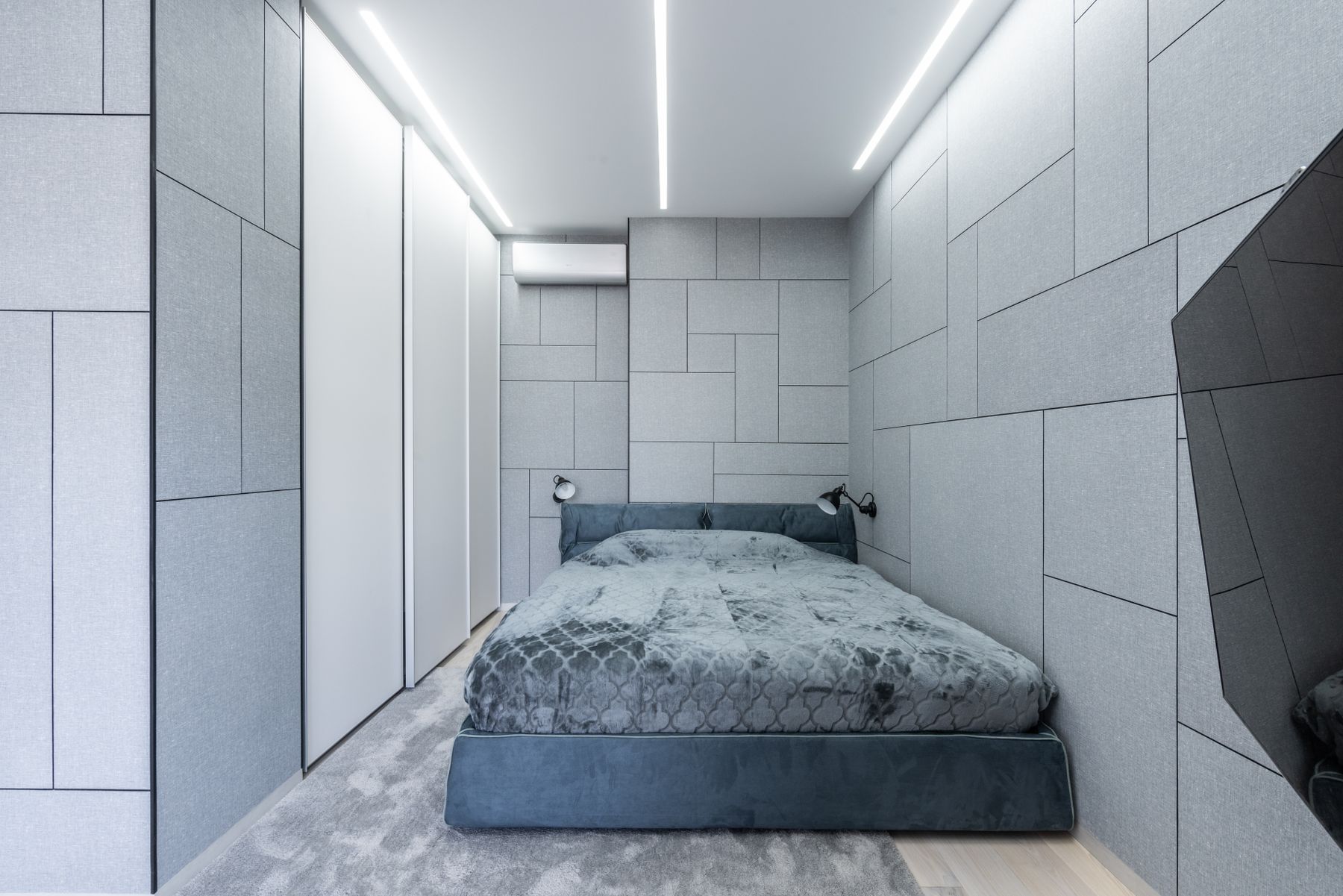
Grey carpet is a fixed color field with its own blue, green, violet or brown undertone; matching it by name is unreliable. Compare wall boards flat against the pile in several directions because fibers change with light and vacuuming. A rug can bridge conflicting values, improve acoustics and make the bed edge clearer, but its size, fiber and underlay must suit doors, allergies and cleaning. The practical tests in Living Room Rug Ideas remain useful around a bedroom's bare-foot route.
Integrate Wardrobes Without Creating a Grey Block
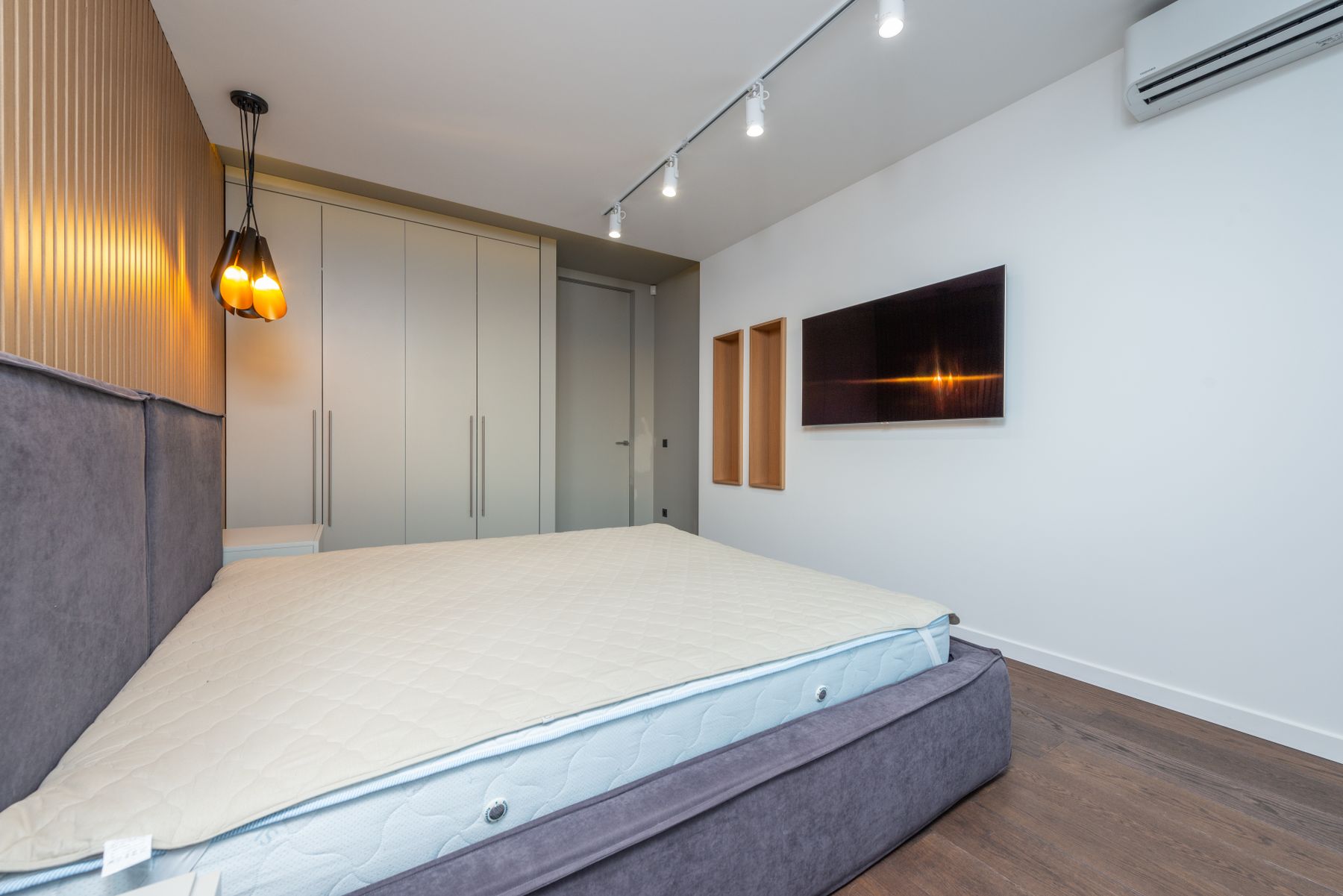
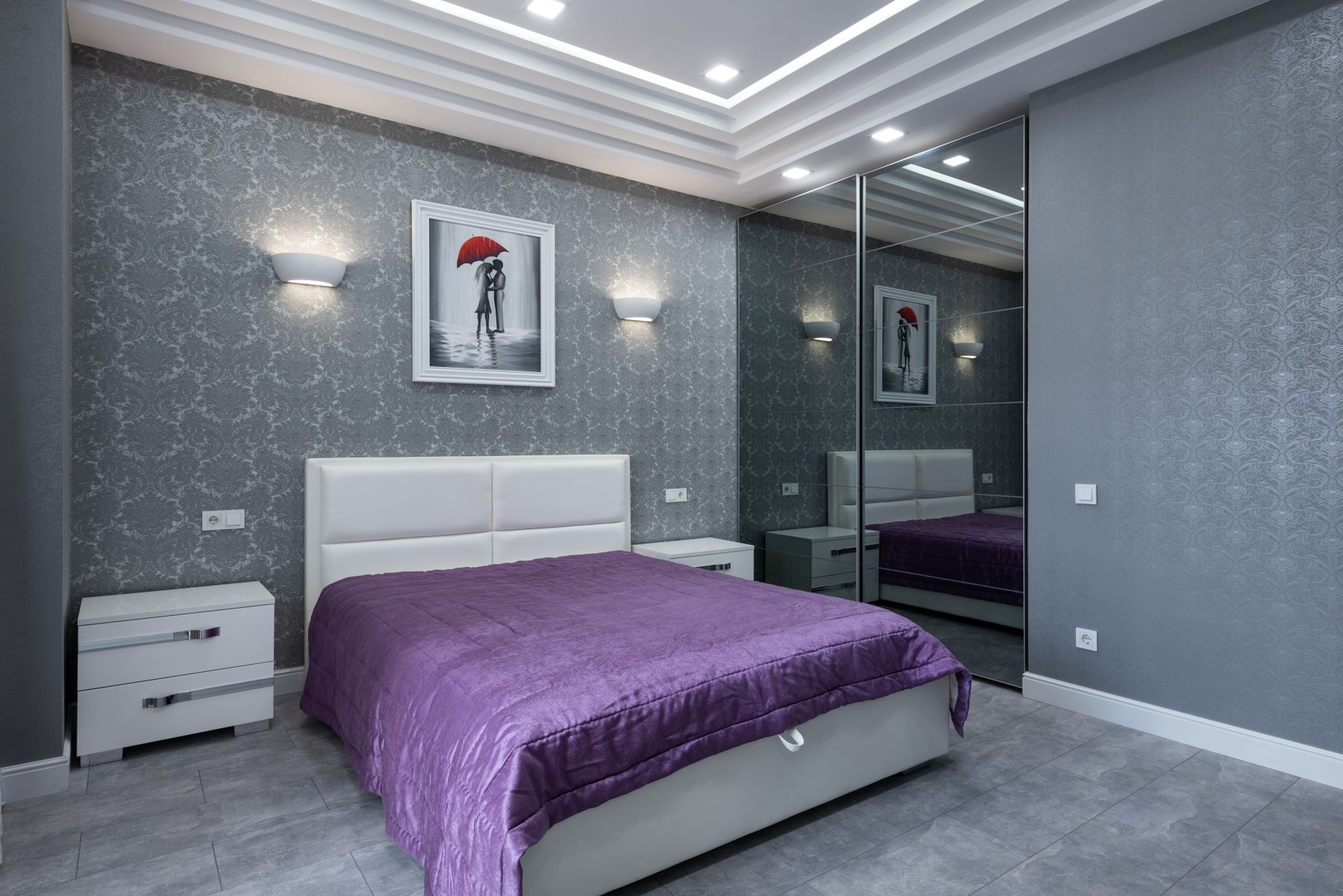
Grey wardrobe fronts can read as architecture, but a long flat run needs joint rhythm, graspable hardware and interior light. Inventory clothing and luggage first, then set shelf spacing and hanging depth. A lighter interior makes dark garments easier to find; a mirrored panel may serve dressing but should not reflect lamp glare into the bed. Matte fronts hide some reflections but reveal rubbing, while gloss shows fingerprints. Confirm door swing, drawer extension and ventilation before choosing the exact grey.
Mirrors for a Useful View
A mirror redirects a view and existing light; it does not generate brightness. Position it for dressing, to return a calm window view or to clarify a narrow route, and check it from both the doorway and pillow. Smoked glass may suit charcoal but reduces clarity. Full-height panels need safe fixing, clear approach space and edges protected from impact. One purposeful mirror is usually stronger than many small reflective accessories that scatter glare across a quiet grey palette.
Edit Art and Plants Against Grey
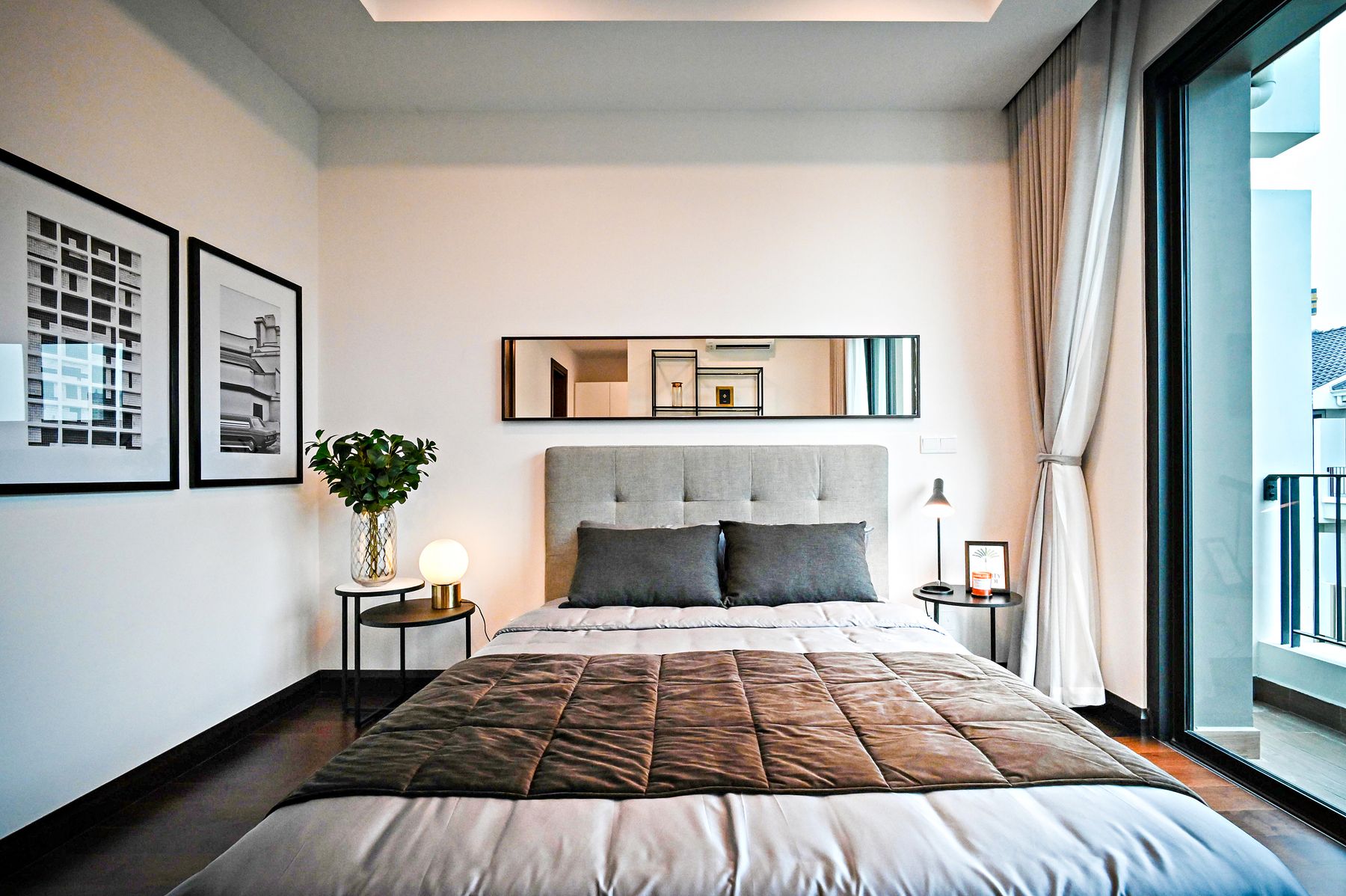
Grey can make art and foliage unusually visible, so choose them for meaning, scale and real growing conditions rather than as compulsory color fixes. Test the complete frame dimensions; avoid heavy glass directly above the sleeper and control reflected lamp glare. Match plants to window direction, distance, humidity and care routine, then protect paint and furniture from water rings. One healthy plant or one significant artwork gives more character than a collection of weak accents chosen only to make grey feel less grey.
Plan a Small Grey Bedroom With Readable Edges
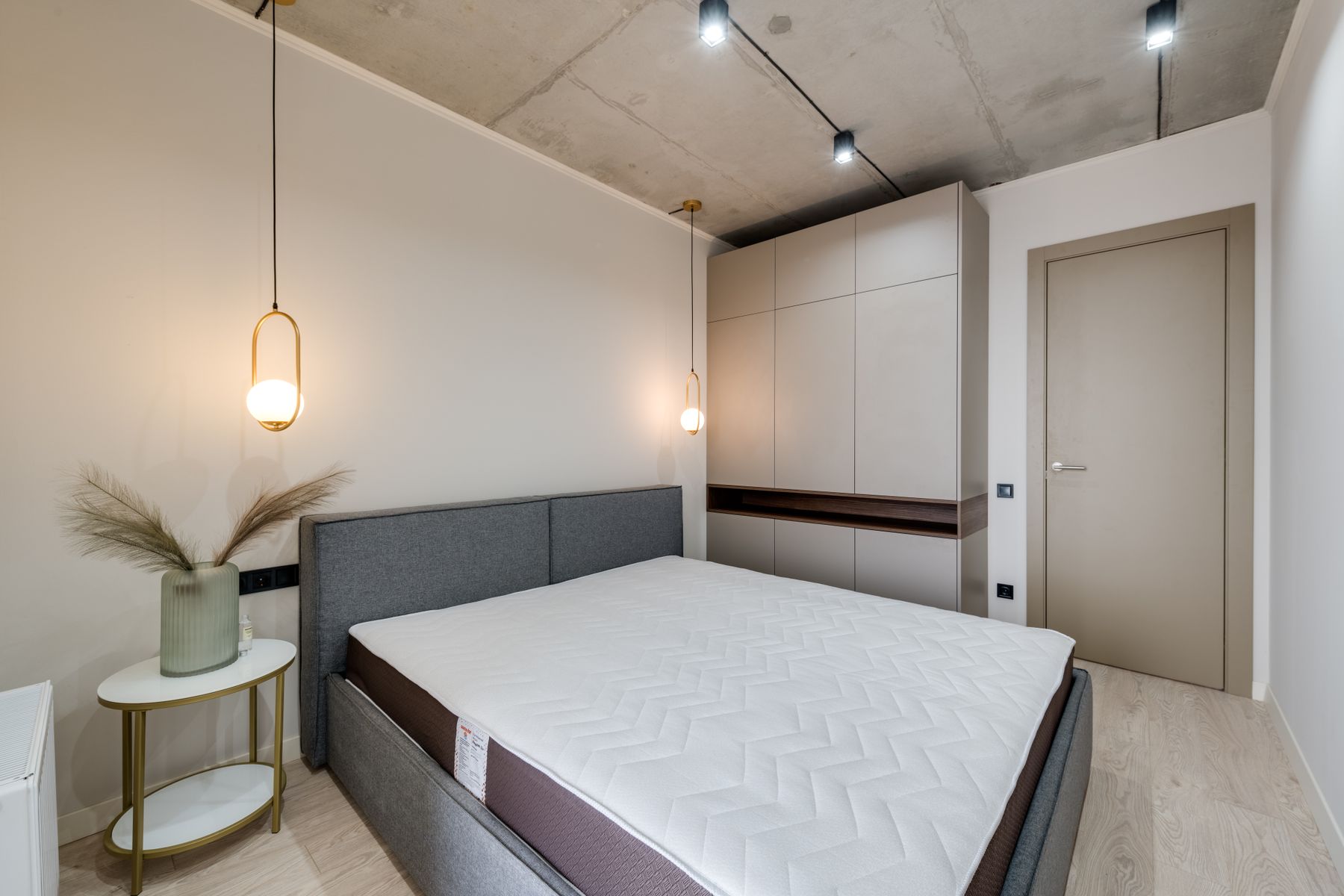
Pale grey does not rescue a crowded plan, and charcoal does not automatically shrink it. Preserve window operation, bedside reach and the active footprint of doors and drawers before choosing value. Small Bedroom Ideas covers clearances and storage in detail. A continuous grey wardrobe may reduce fragmentation, while lighter bedding can reveal the bed edge. For low-vision legibility, maintain value or tactile contrast at handles, switches, steps and the bathroom route; avoid low grey benches that disappear against grey carpet. Keep controls reachable from the bed and lighting simple to operate. Test the route at minimum night light with the actual user and their visual needs. A bright photograph cannot certify accessibility: grey belongs on the largest plane, the bed or cabinetry only after movement, operation and important boundaries work.
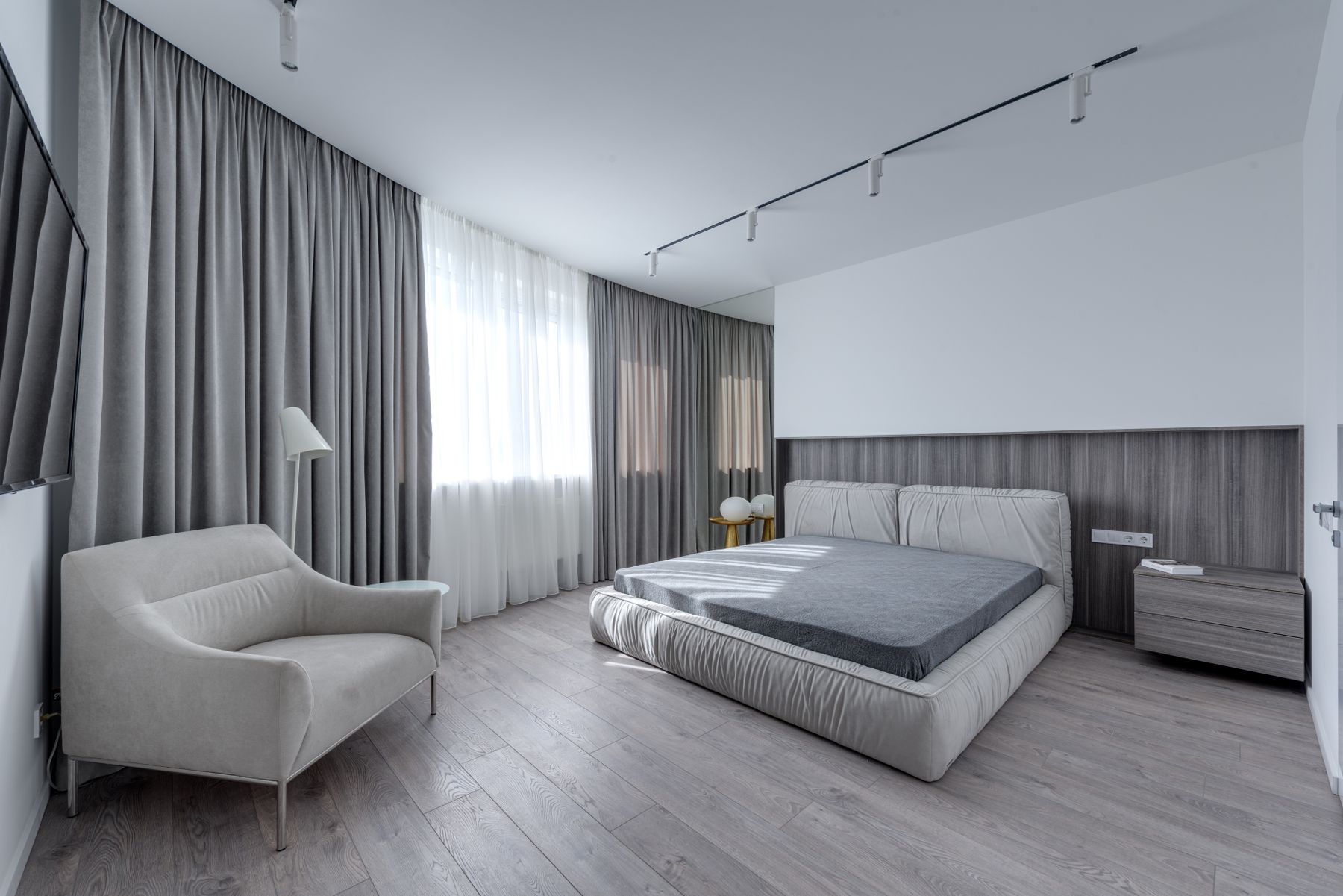
A Large Grey Bedroom Needs a Center
In a large room, repeating grey furniture around the perimeter can make the center feel vacant. Anchor the bed with a broad headboard, rug or paneled field, then give seating, dressing or work a separate purpose and light scene. Use related greys to connect the zones without buying a matching suite. Large Bedroom Ideas develops scale and zoning; the grey palette should reinforce that plan by making primary and secondary areas legible.
Give the Grey Bedroom Workspace an Evening Reset
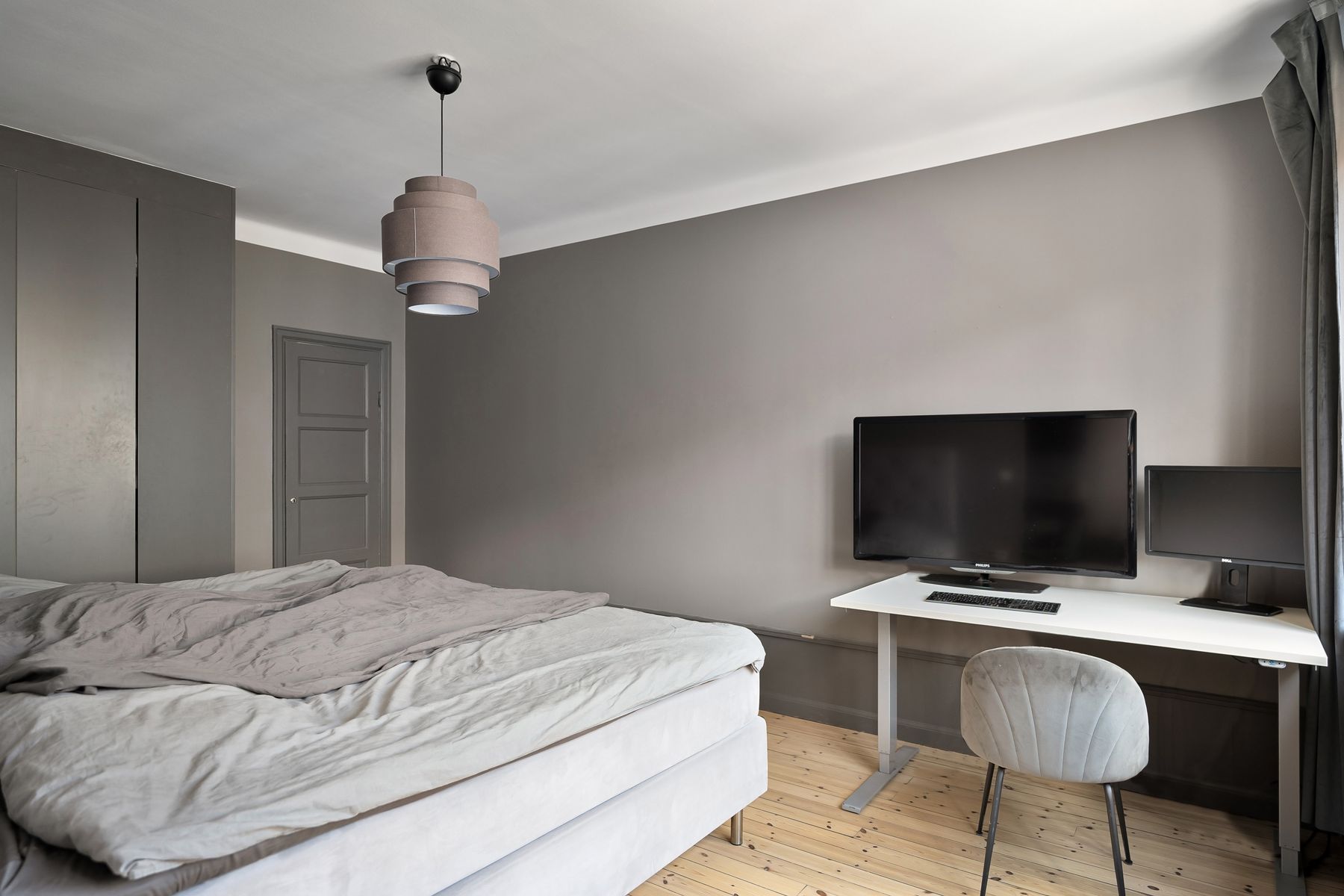
A grey workspace can visually recede, but the desk still needs correct depth, glare control, power and a chair route that does not block the bed. Use a task light with independent control and position the screen away from window reflections. Store work material behind a door or in one closed box so the room can return to sleep. Minimalist Bedroom Ideas offers a useful reduction framework; in a grey room, minimal should mean fewer unresolved functions, not empty styling.
Adapt Grey for a Rental
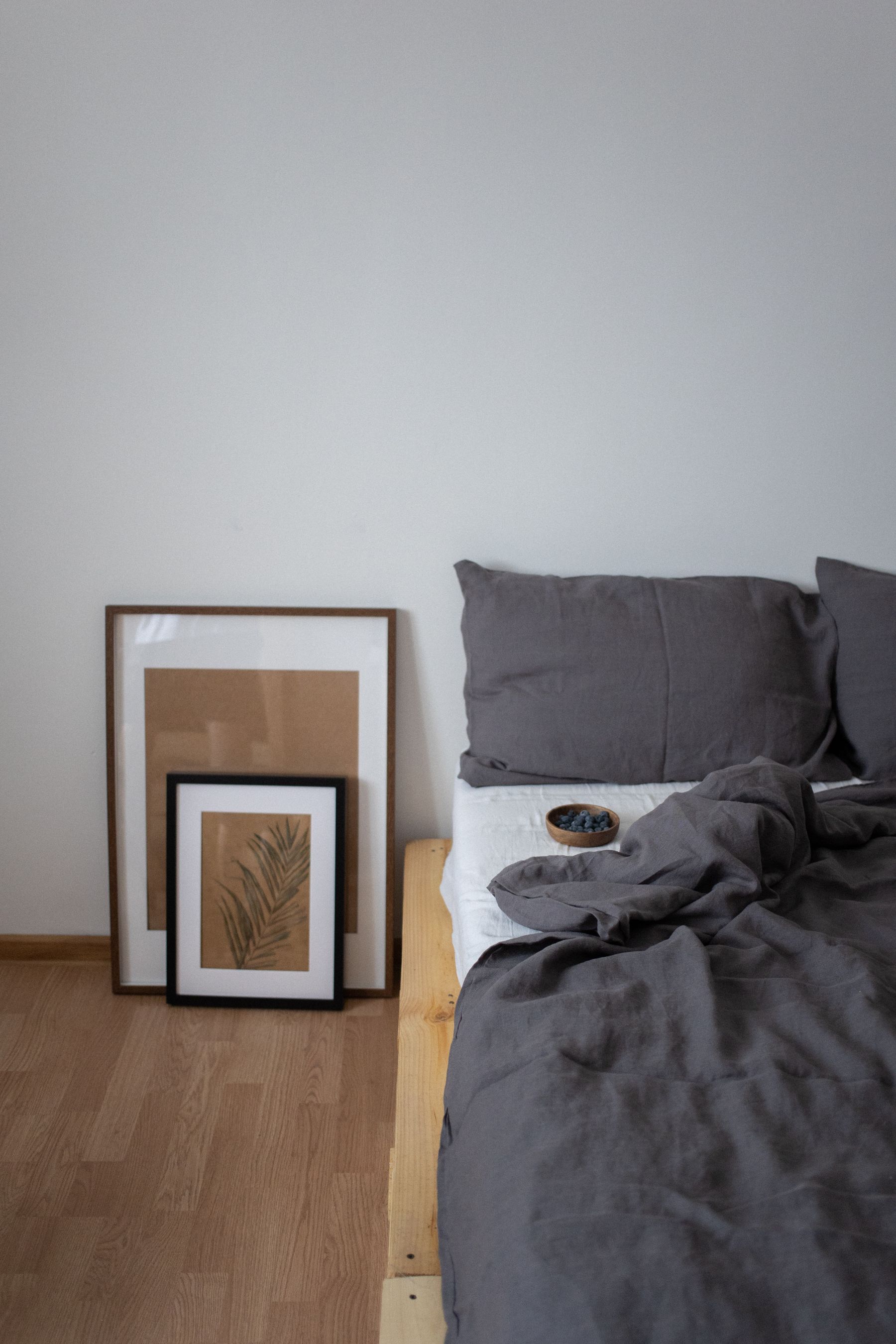
In a rental, build grey through the largest reversible elements: curtains, washable bedding, a rug, freestanding headboard and removable shades where permitted. Obtain written approval before painting or fixing heavy panels, and store original hardware. Do not cover moisture damage or unsafe wiring with a decorative feature. A movable grey board behind the bed can test the effect and act as a temporary backdrop, but it must be stable, fire-conscious and clear of sockets and heaters.
Maintain Grey Surfaces Without Chasing Perfection
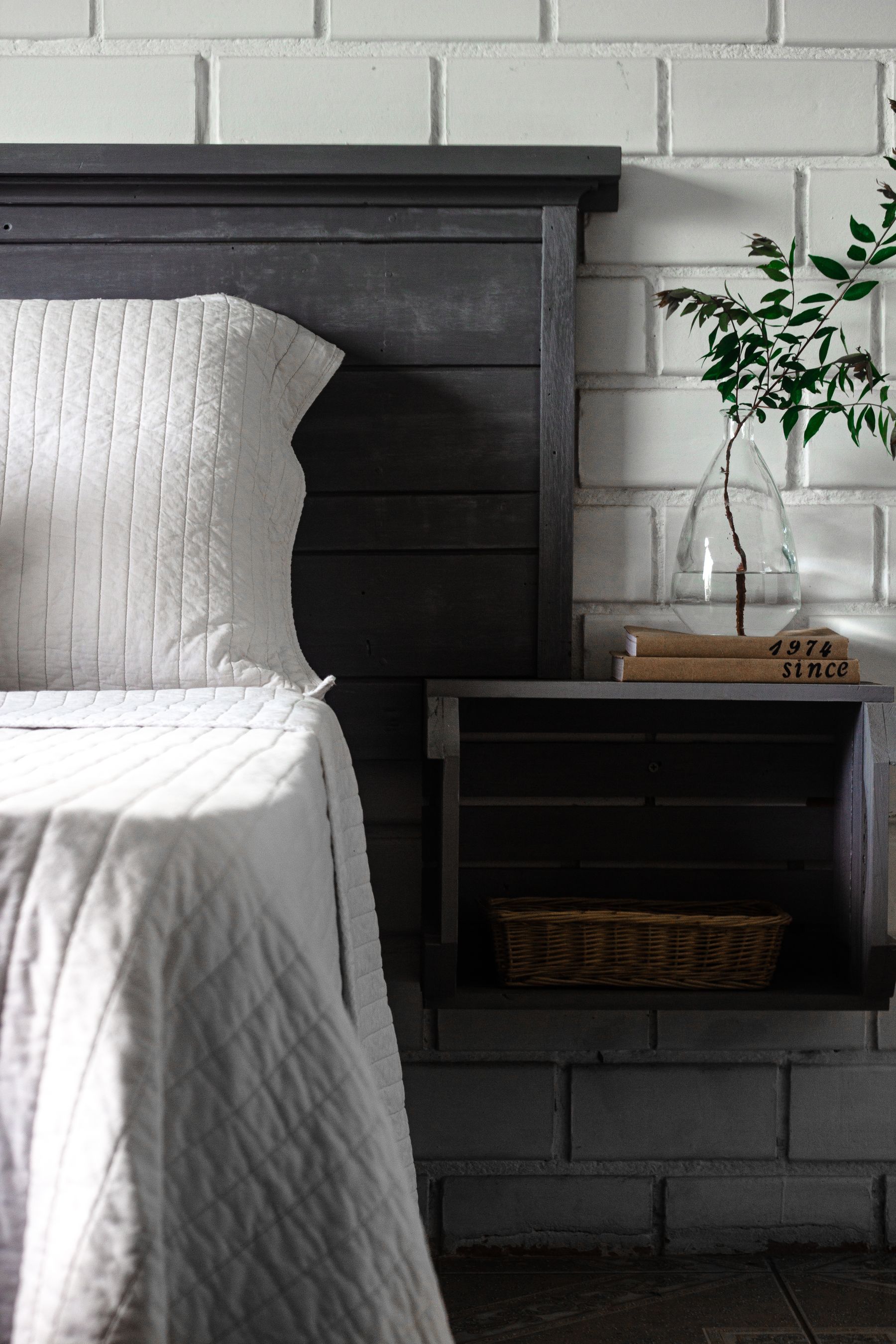
Mid-grey may disguise some dust, but it can still reveal pale lint, dark hair, water marks, rubbing and detergent residue. Record paint brand, color, finish and batch; keep a labeled touch-up amount; follow fabric and carpet care instructions. Vacuum upholstered channels with the correct tool, clean mirrors without overspray and avoid aggressive spot treatment that creates a visible patch. Select materials that can look acceptable between normal cleaning cycles. The goal is a room that ages coherently, not a display requiring constant correction.