Define Traditional Without Turning the Room Into a Period Set
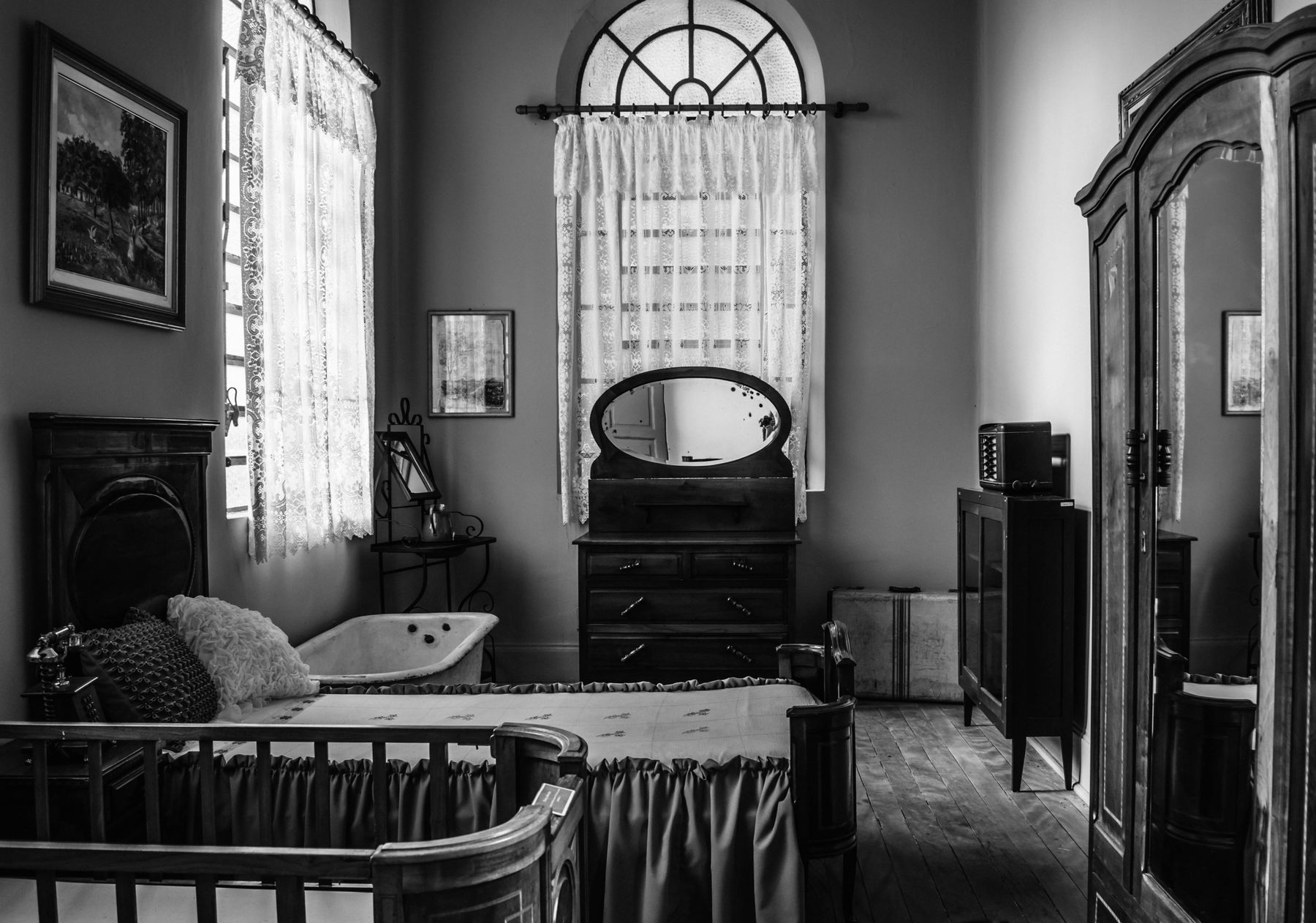
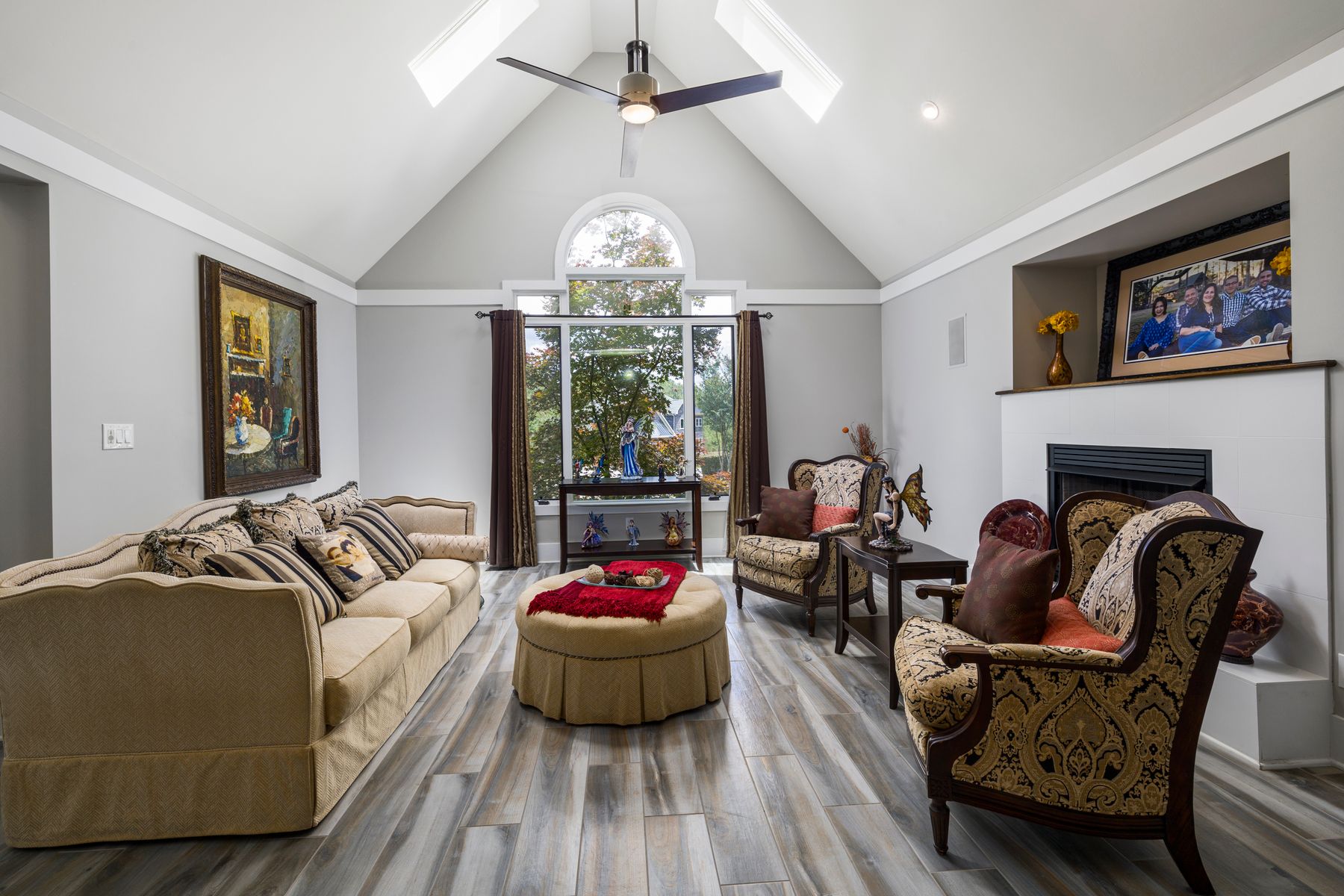
Traditional describes an approach built on recognizable forms, balanced placement, craft and continuity. It may borrow Georgian symmetry, Victorian pattern or Colonial furniture, but it does not need to reproduce one era. Vintage is primarily about older pieces and patina; [vintage bedroom ideas](/bedroom/vintage-bedroom-ideas/) explains condition and care. Victorian is a narrower period direction, Classic is the broader language of proportion and restraint, and Eclectic deliberately mixes visibly different styles. A traditional room can contain inherited and new pieces as long as the composition feels related, useful and settled. [English Bedroom Ideas](/bedroom/english-bedroom-ideas/) is the stronger destination when British pattern, antiques and collected domestic character lead.
The Working Room Comes Before Styling
Mark the door swing, bed access, wardrobe opening, radiator, window operation and nighttime route before committing to substantial furniture. Traditional beds, armoires and dressers are often deeper or taller than streamlined alternatives, so inherited assumptions about what will fit are unreliable. Allow space to change bedding and reach switches, and check that drawers open without colliding. A visually modest plan with reliable clearances is a stronger foundation than an impressive bed squeezed between unusable tables.
Use Symmetry as Balance, Not a Showroom Formula
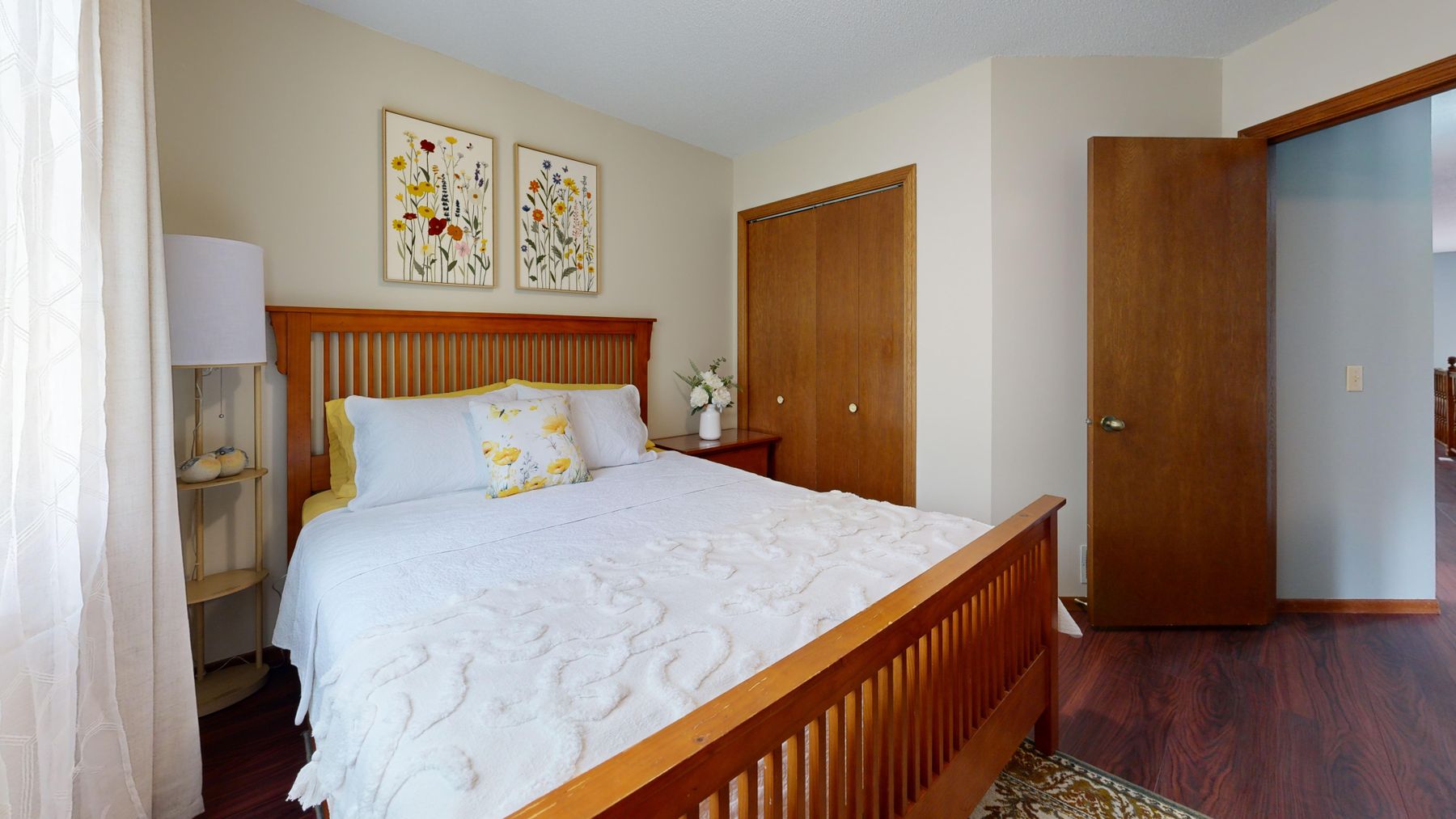
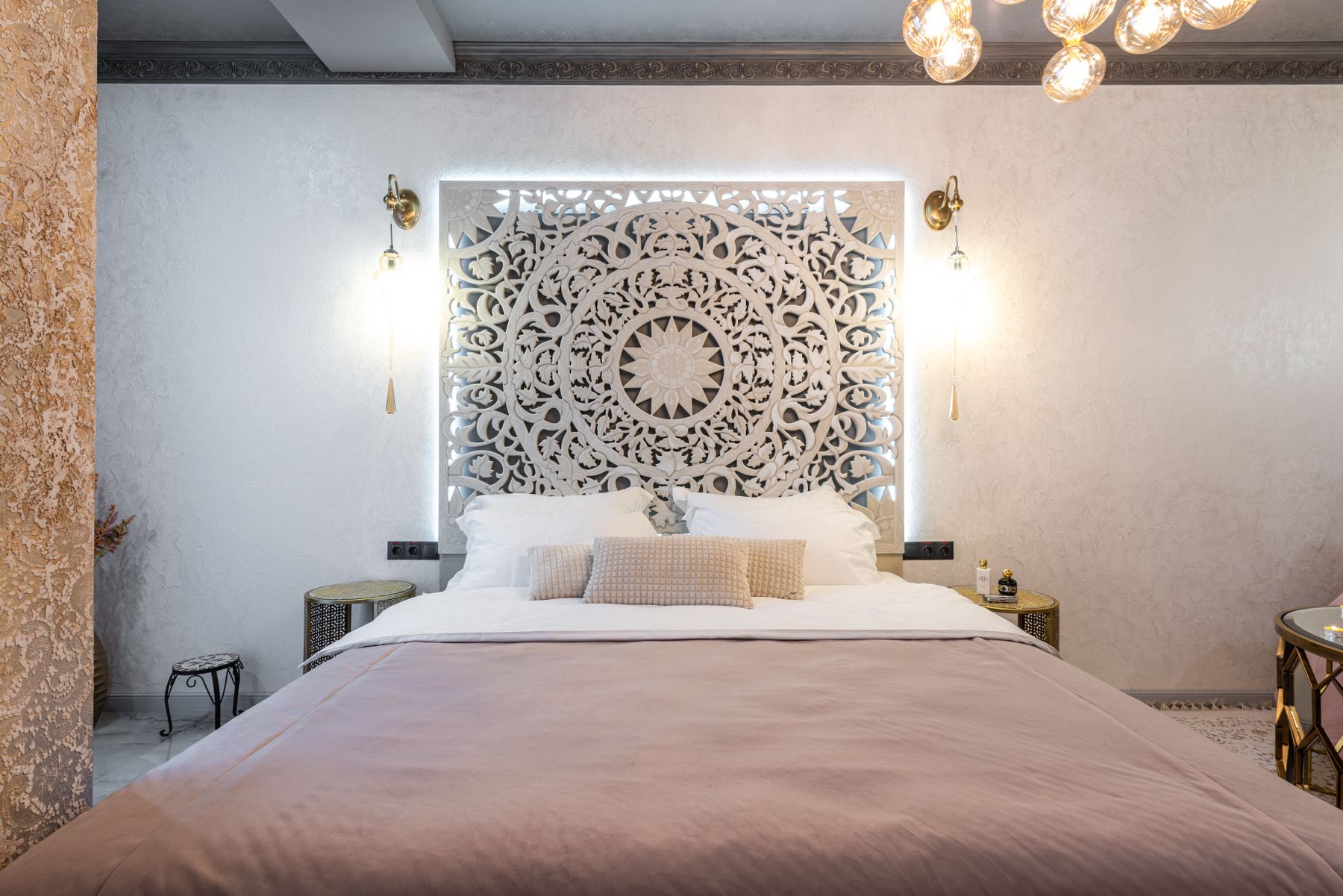
Centering a bed and providing equivalent light on both sides creates calm, but equal function does not require identical objects. Two tables can differ when their tops align and their visual weight feels comparable; a lamp and wall light can balance if their pools of light serve the same task. Keep one or two axes strong and let smaller details vary. Perfect mirroring across furniture, art, cushions and accessories can make a private bedroom feel like a staged furniture display rather than a lived-in room.
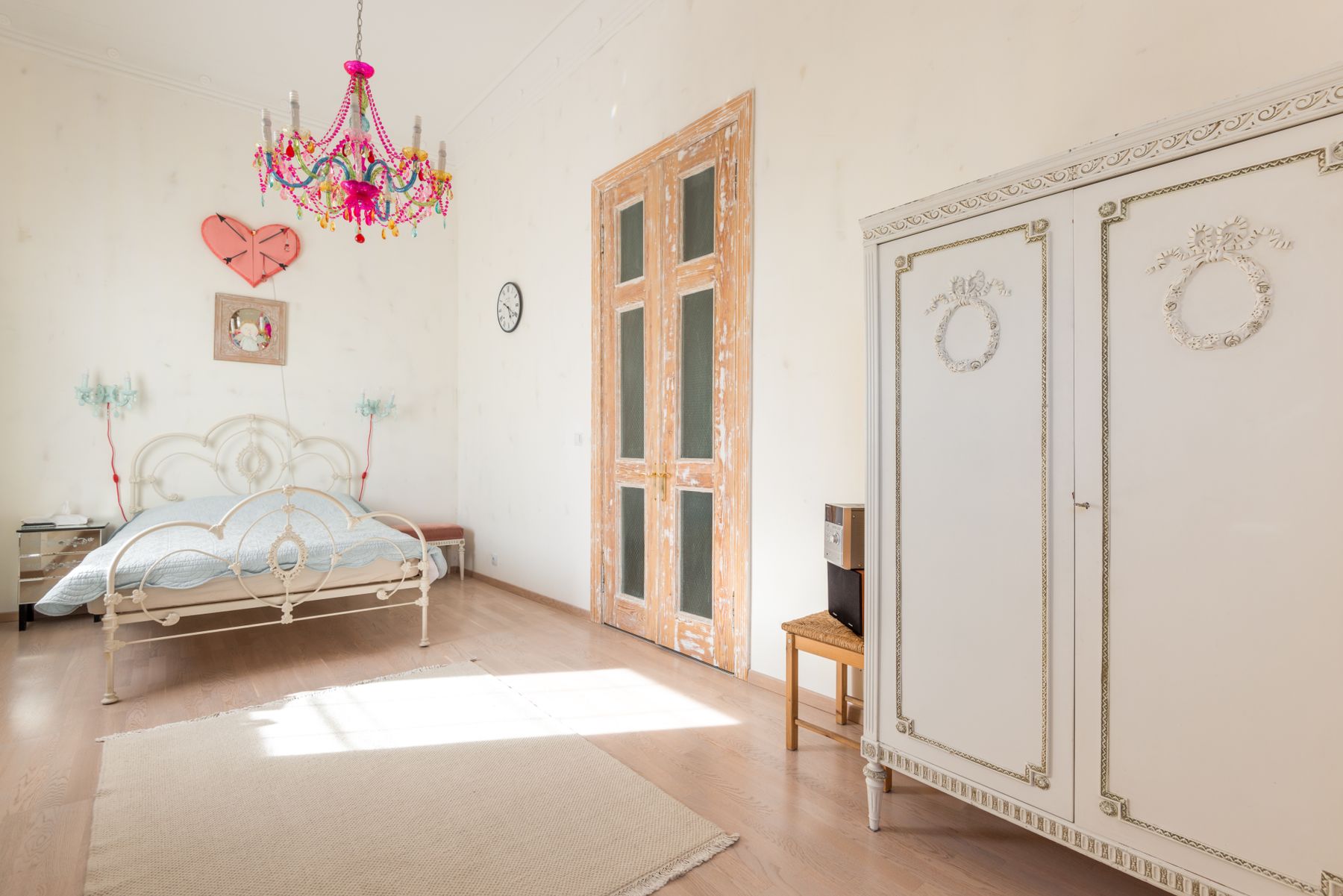
Choose the Bed Silhouette That Sets the Tone
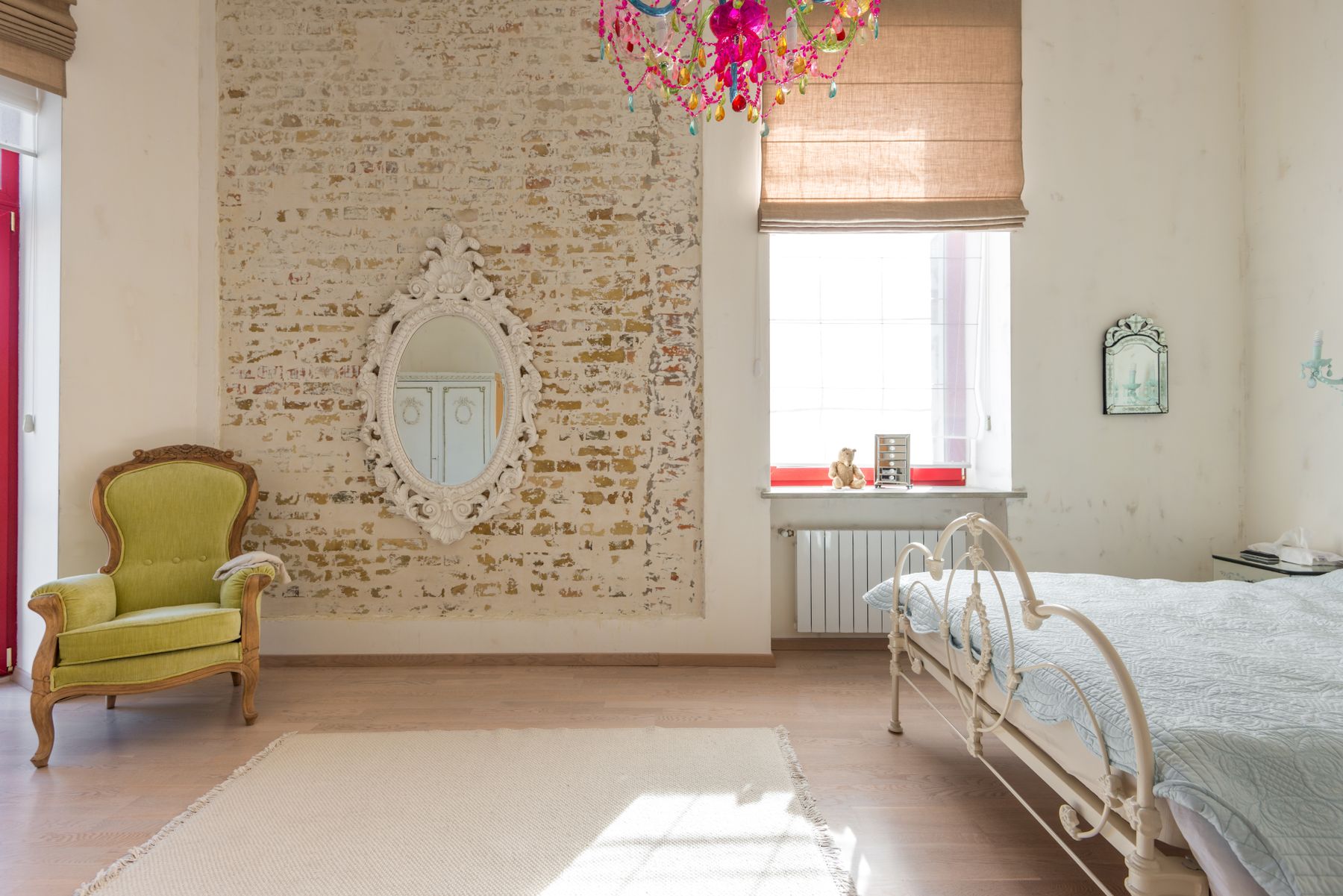
A carved wood bed brings architectural weight; an upholstered headboard offers softness and reading support; an iron frame feels lighter; a four-poster defines volume. Choose according to room height, mattress depth, cleaning access and the user's need to sit up or transfer—not only the photograph. When the bed is ornate, plain bedding and simpler tables prevent every element from competing. If the desired result is current and tailored rather than historical, compare [contemporary bedroom ideas](/bedroom/contemporary-bedroom-ideas/) before selecting an oversized tufted headboard.
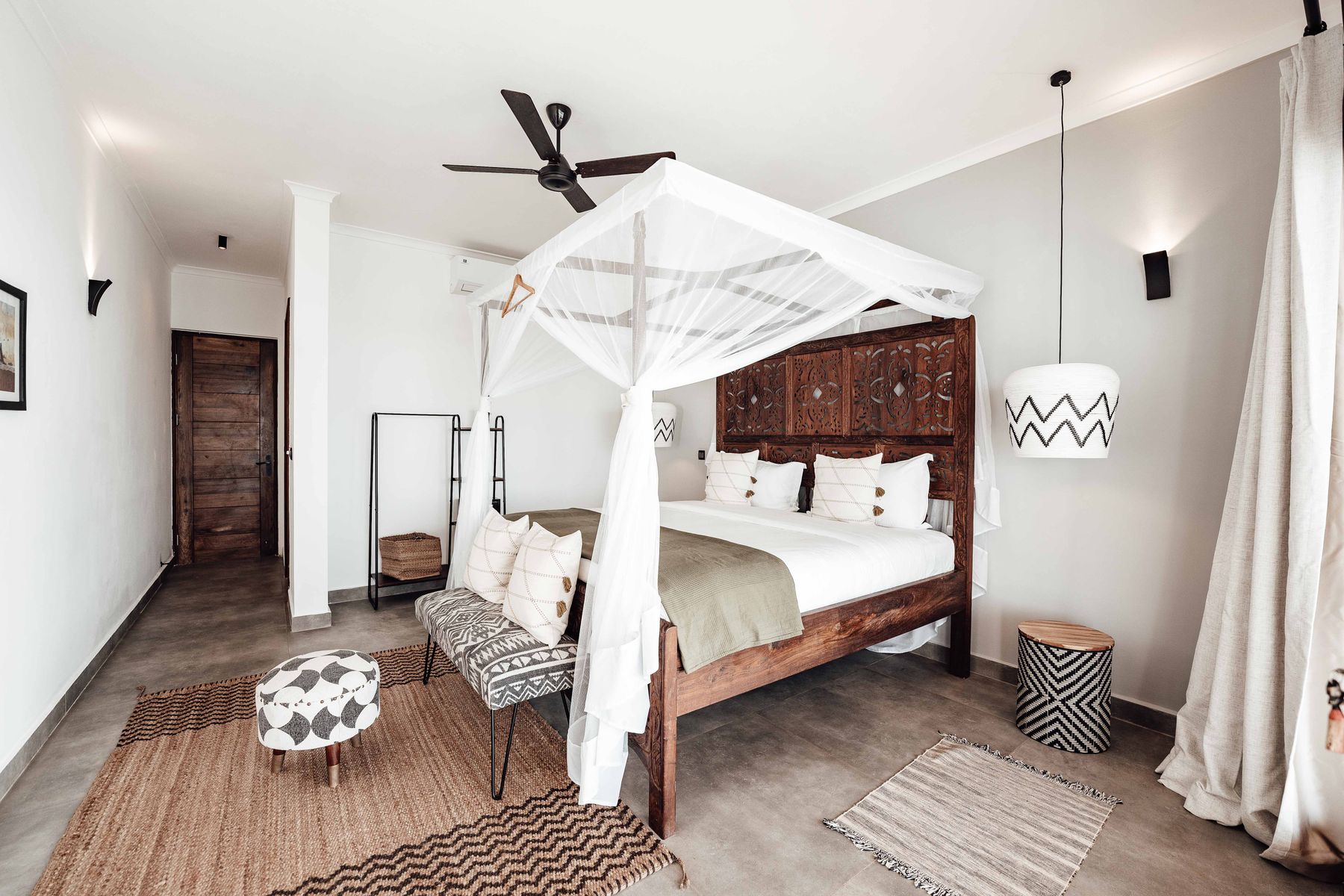
Test a Four-Poster Against the Ceiling and Routes
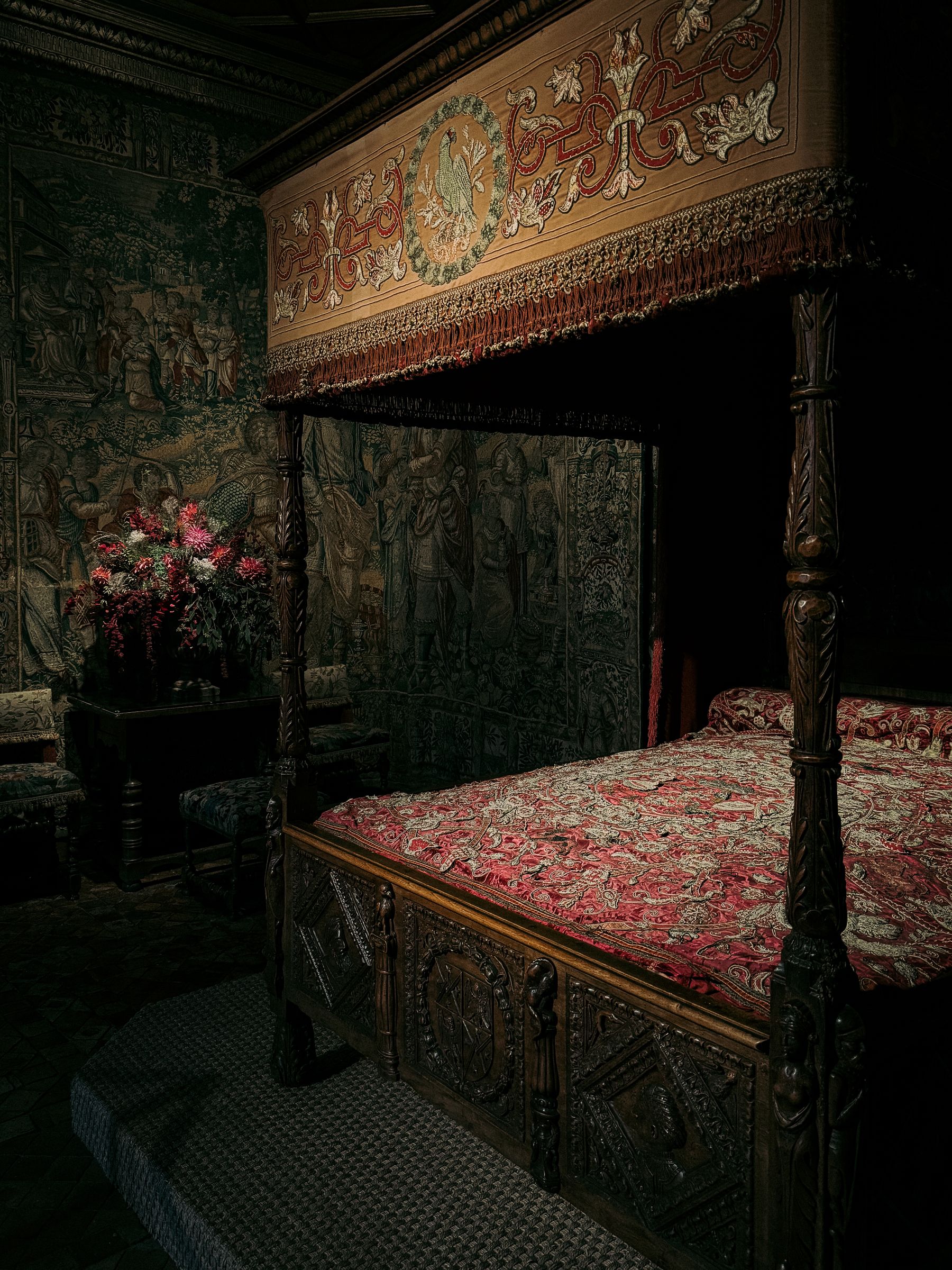
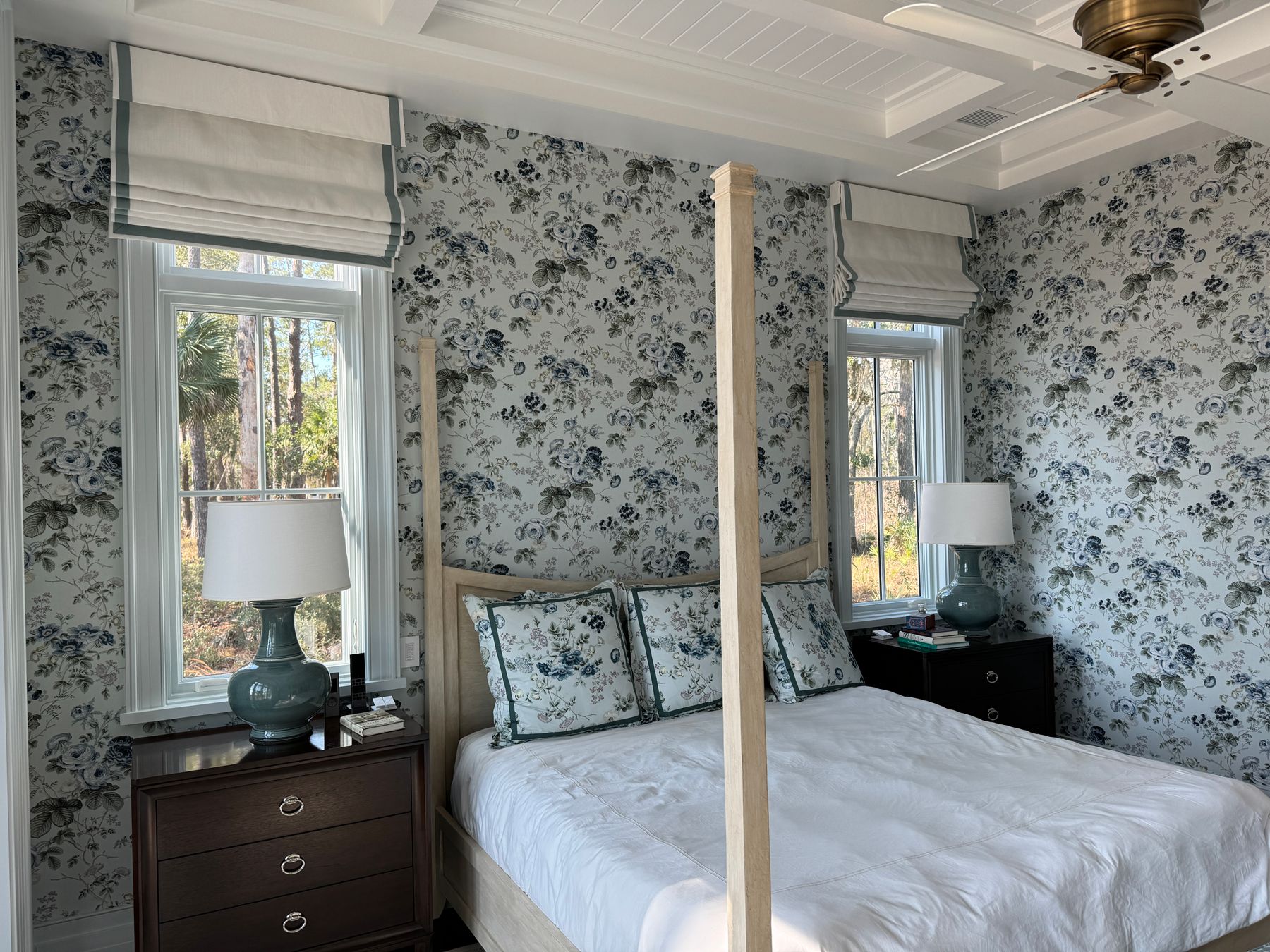
A four-poster can make an ordinary box room feel composed, but posts must clear fans, pendants, sloped ceilings and the user's path around the mattress. Tall dark frames advance visually, so check the view from the doorway and bed rather than relying on a plan. Canopy fabric adds dust, heat and washing requirements; it is optional, not the proof of the style. In a lower room, slim posts or an open-frame version provide the vertical rhythm without creating a roof over the bed.
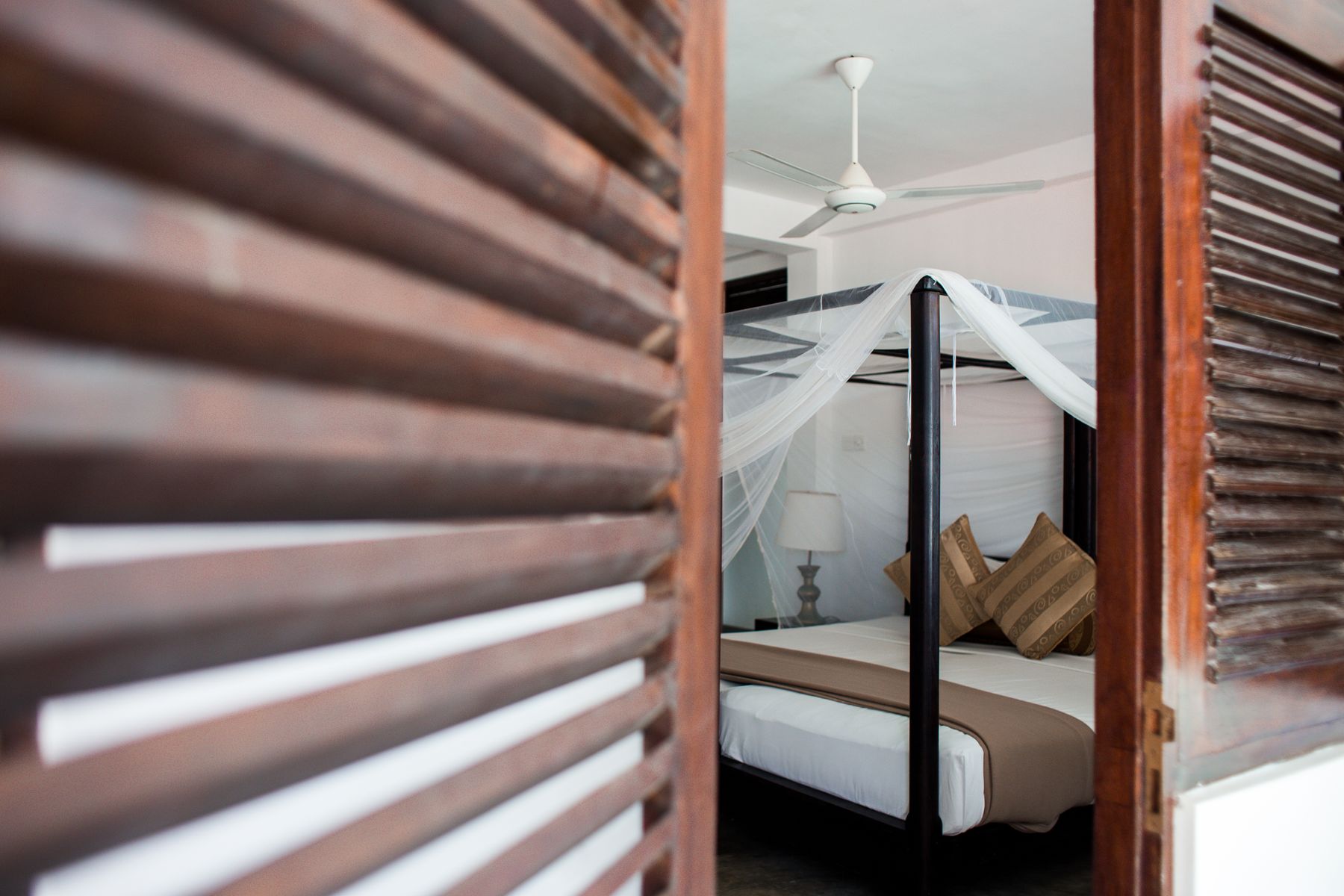
Let Architecture Do Some of the Decorating
Existing cornices, paneled doors, shutters, fireplaces and deep window reveals can establish the traditional vocabulary more convincingly than applied ornaments. Repair and reveal sound original fabric before adding imitation molding. New trim should align with the room's ceiling height, openings and baseboards; underscaled strips on a tall wall often look decorative rather than architectural. In a plain room, one measured intervention such as a chair rail or paneled bed wall is usually stronger than unrelated trim on every surface.
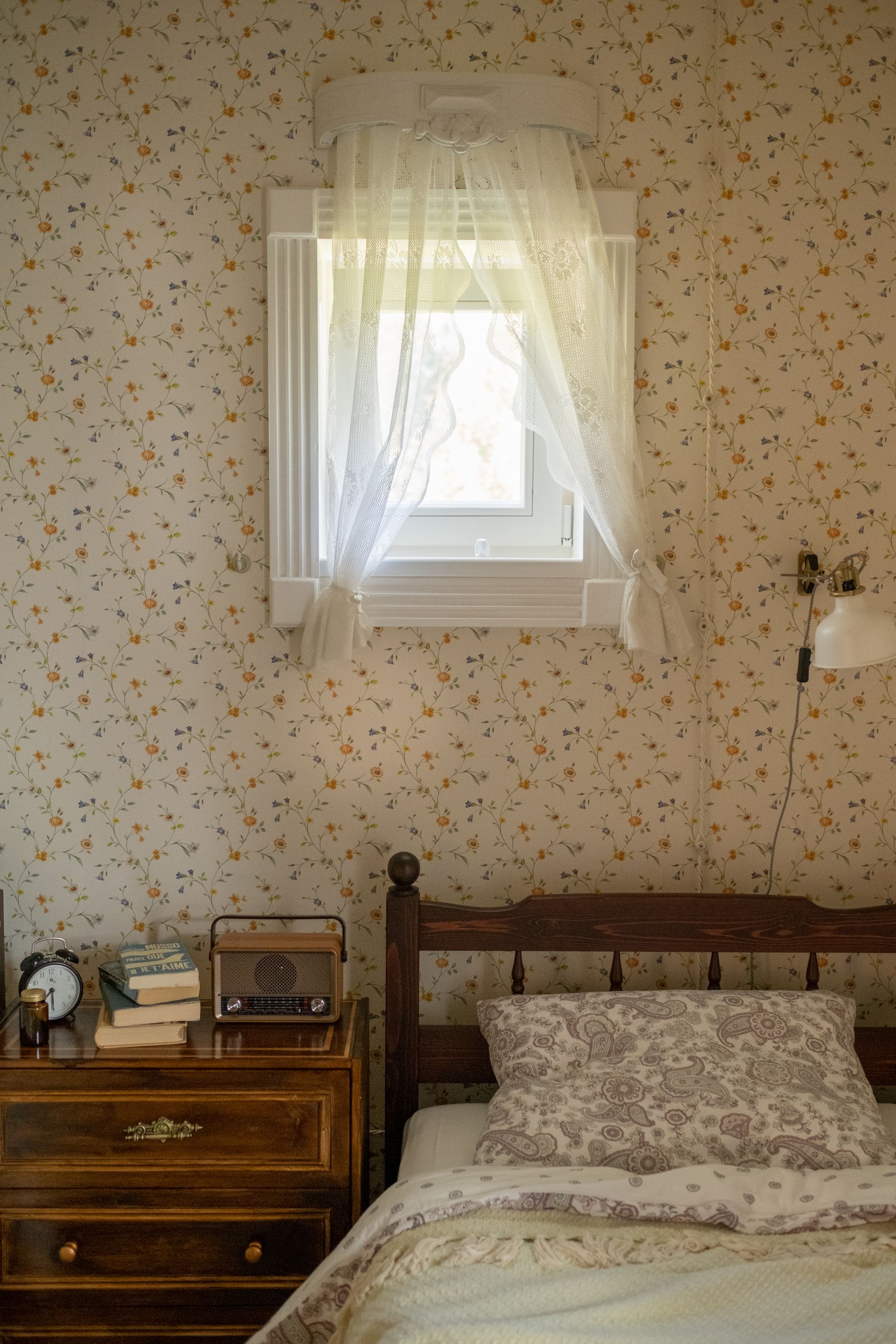
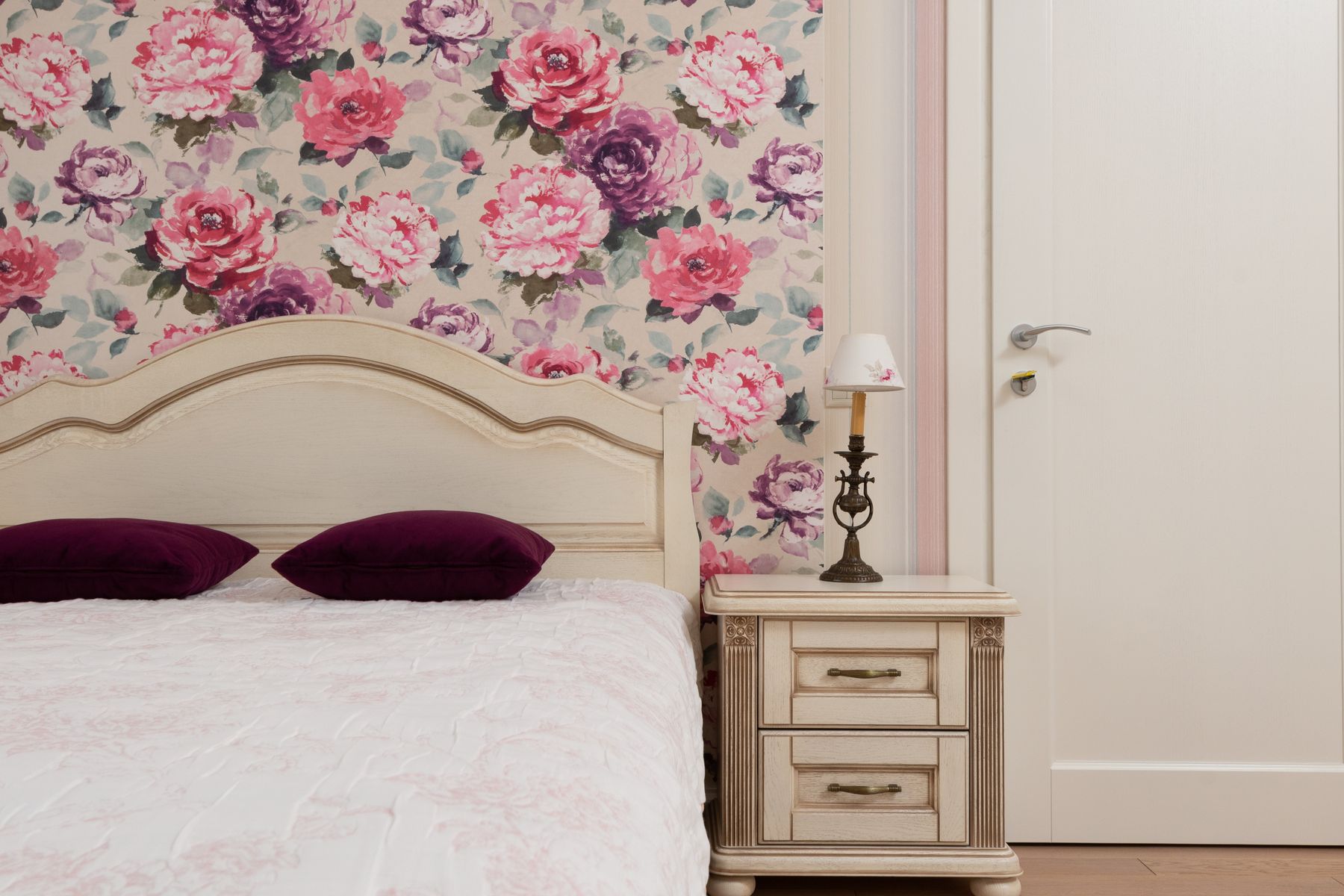
Wallpaper With a Pattern Hierarchy
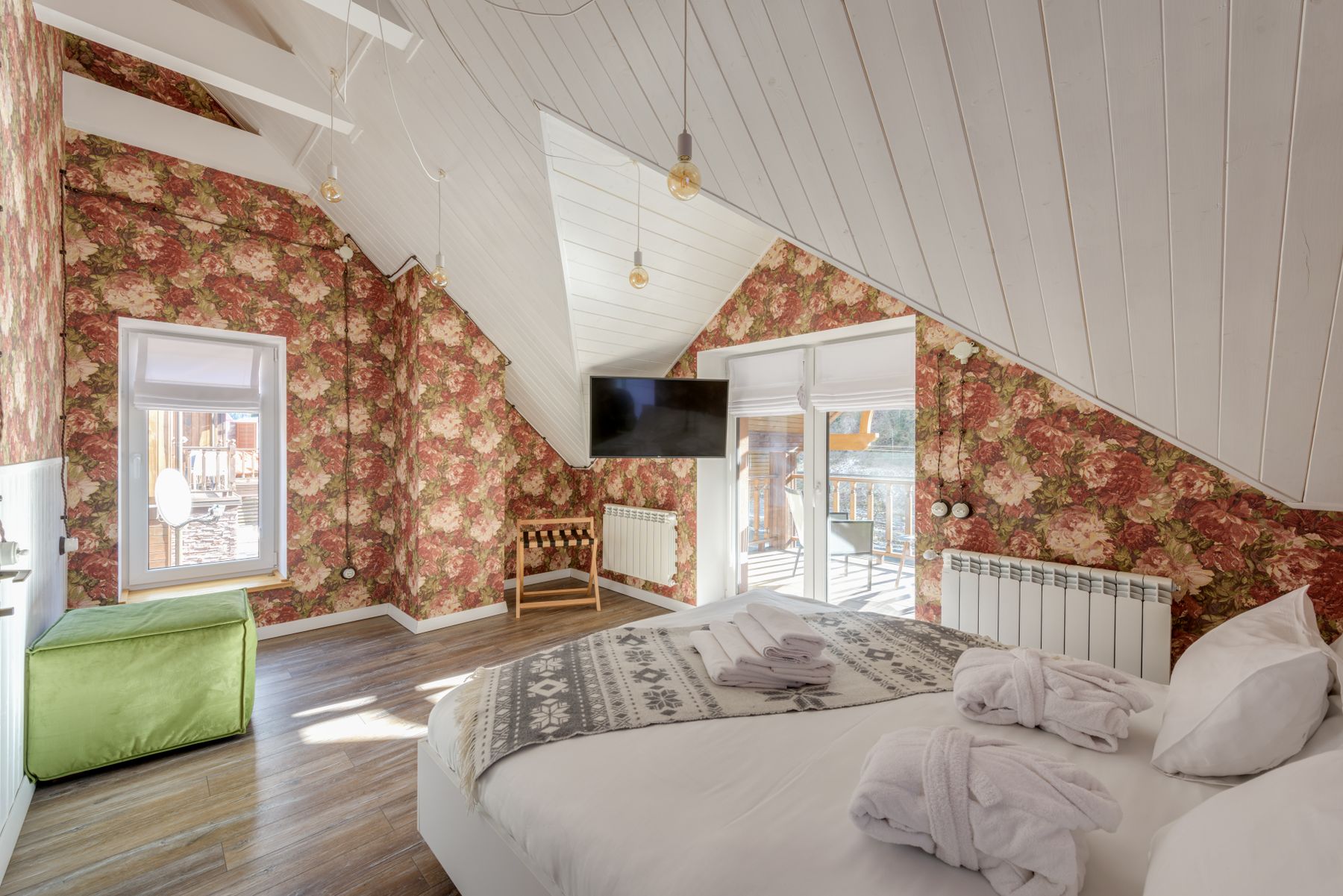
Floral, stripe, damask and trellis patterns all belong in traditional rooms, but one should lead. A small repeat can wrap a compact room evenly; a large motif needs enough uninterrupted wall to be read. Pull one quiet ground color into bedding or paint, then use solids between patterned planes. Sampling is essential because repeat scale, daylight and seams change the effect. If wallpaper covers every wall, reduce pattern on curtains and upholstery rather than trying to coordinate three equal statements.
A Fresh Traditional Palette
Traditional does not require beige, burgundy and dark brown. Chalky blue, olive, warm white, plaster pink and clay can sit beside familiar wood and brass while making the room feel current. Begin with the fixed floor and largest furniture, identify their undertones, then select a wall field and two smaller textile colors. Rich red, navy or green work best when grounded by enough quieter area. Avoid cooling every wall to fashionable gray if the furniture is warm; the mismatch can make good wood look orange.
Coordinate Wood by Undertone and Visual Weight
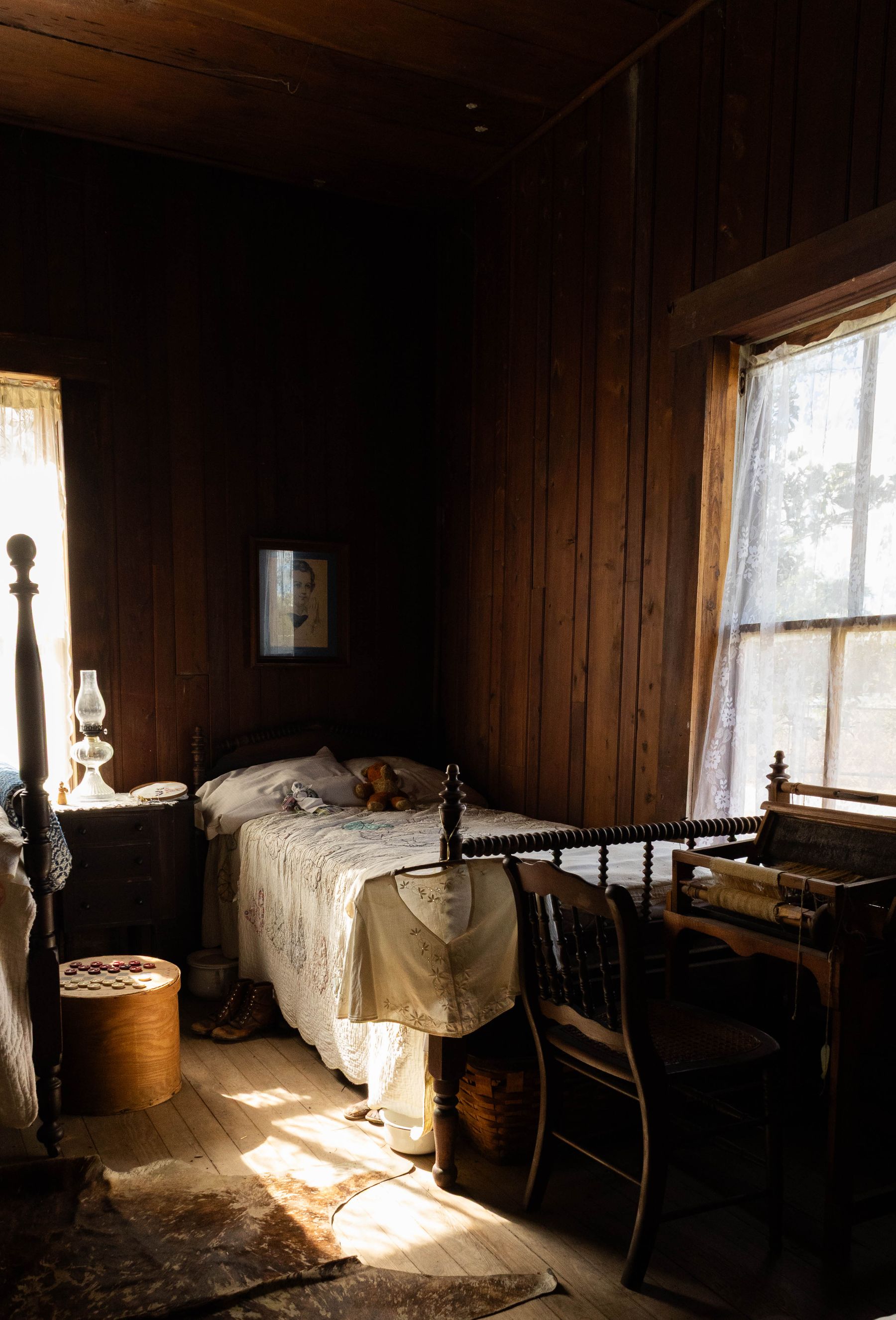
Traditional furniture often brings several woods into one room. They need not match, but their red, yellow, gray or neutral undertones should relate and one should be dominant. Separate a dark bed from a dark floor with a rug, and keep lighter tables from looking accidental by repeating their tone in frames or a chair. Preserve valuable finishes rather than stripping everything to one color. Wax, veneer and solid timber also demand different care, so identify the construction before treating scratches.
Edit a Matching Furniture Suite
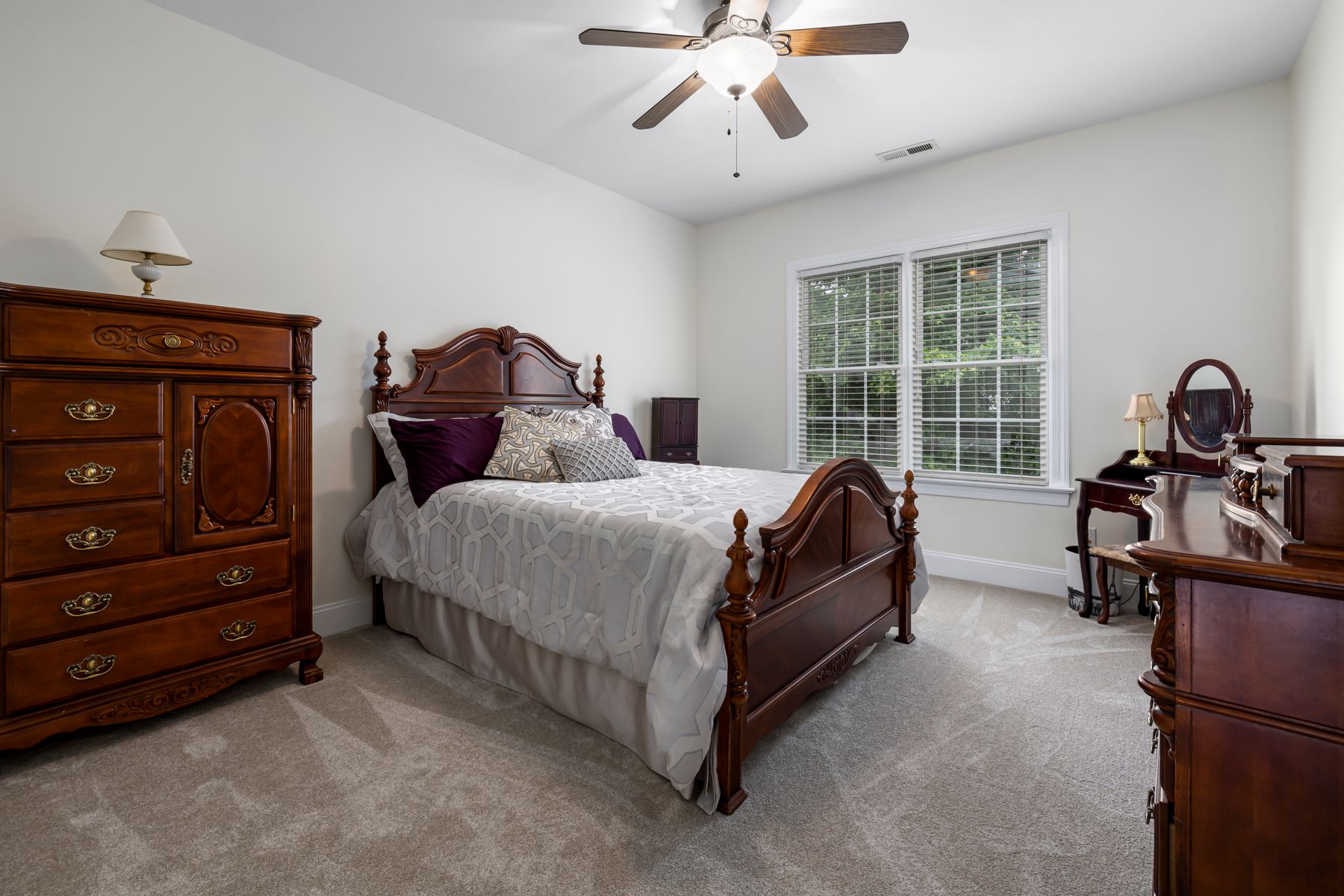
A coordinated suite guarantees related finish and scale, but using every available piece can make the room heavy and commercial. Keep the bed and best storage item, then consider quieter bedside tables, a painted chair or a different mirror. If an existing suite must remain, vary the textiles and lighting and leave some surfaces clear. Do not separate a historically significant set casually, but ordinary mass-produced furniture can be edited around function. The objective is continuity, not proof that every item came from one catalogue page.
Equal Function at Both Bedside Positions
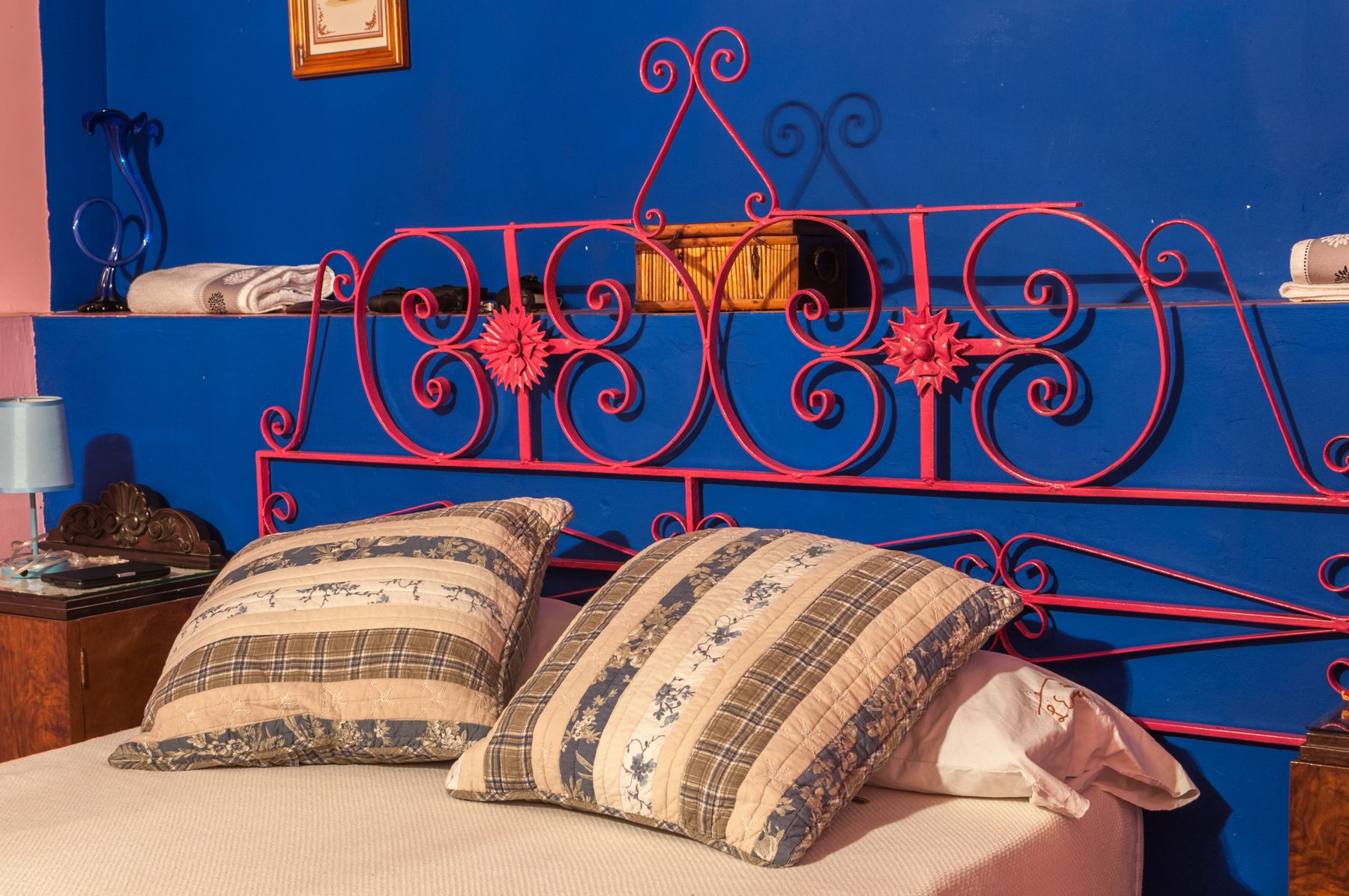
Each sleeper needs a reachable light, stable water surface, charging and suitable storage. Matching tables are an easy traditional move, but different pieces can balance through top height, depth or repeated lamps. Check drawer and door clearance against bedding and curtains, and route cables away from feet. A tall chest may visually balance a lower table only if its useful surface remains reachable. Shared rooms feel ordered when needs are equal, even when the furniture is not mirrored.
Bedding Built Around Comfort and Laundering
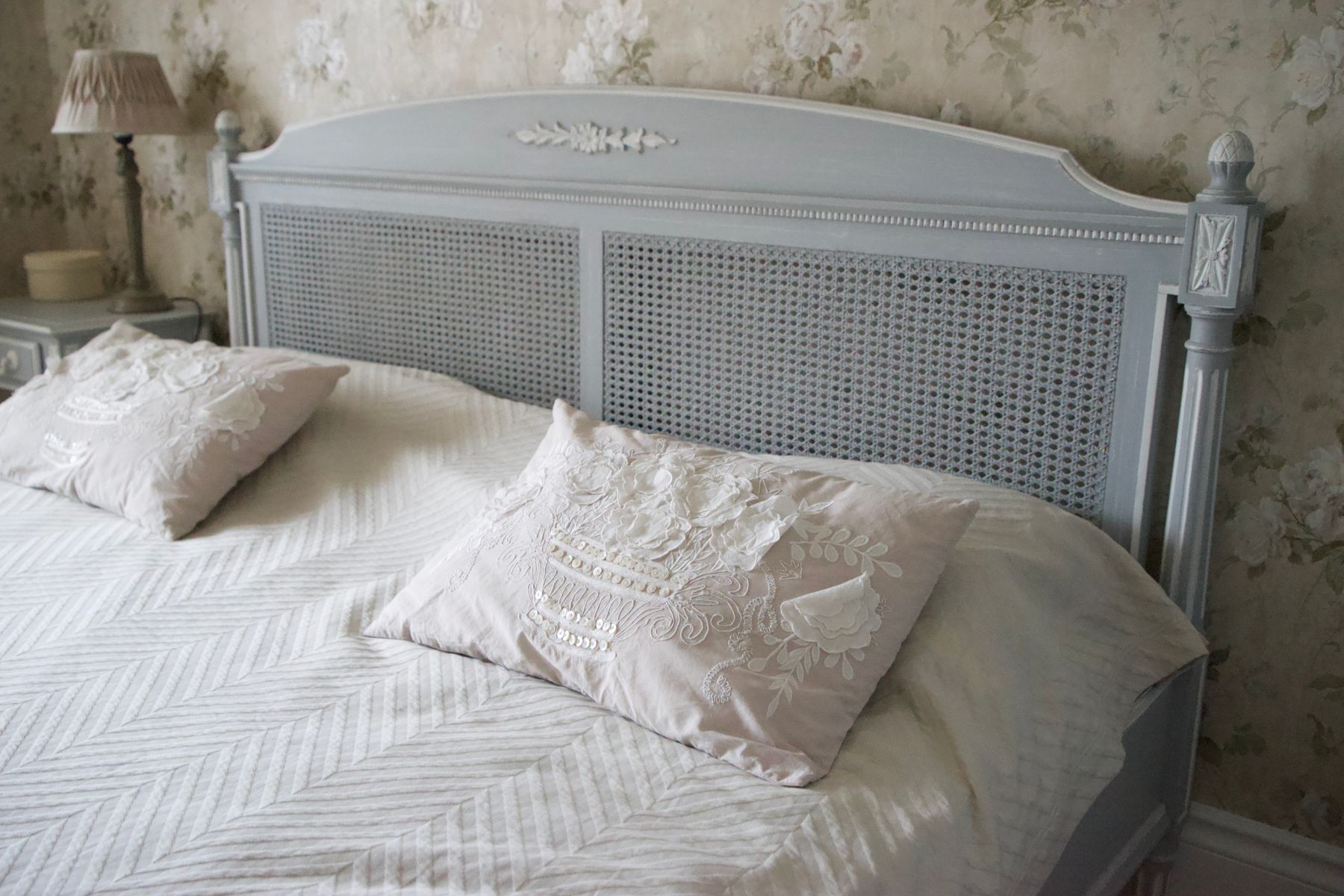
Begin with breathable sheets and the warmth the sleeper actually needs, then add one coverlet or quilt and a limited decorative layer. Embroidery, piping and matelassé introduce craft without requiring many pillows. Coordinate motifs by scale and ground color rather than purchasing an entire set. Store spare cushions off the floor and make sure every layer has a realistic cleaning route. The bed should be restorable in minutes on an ordinary morning, not rebuilt like a display after every night.
Curtains for Architecture, Darkness and Upkeep
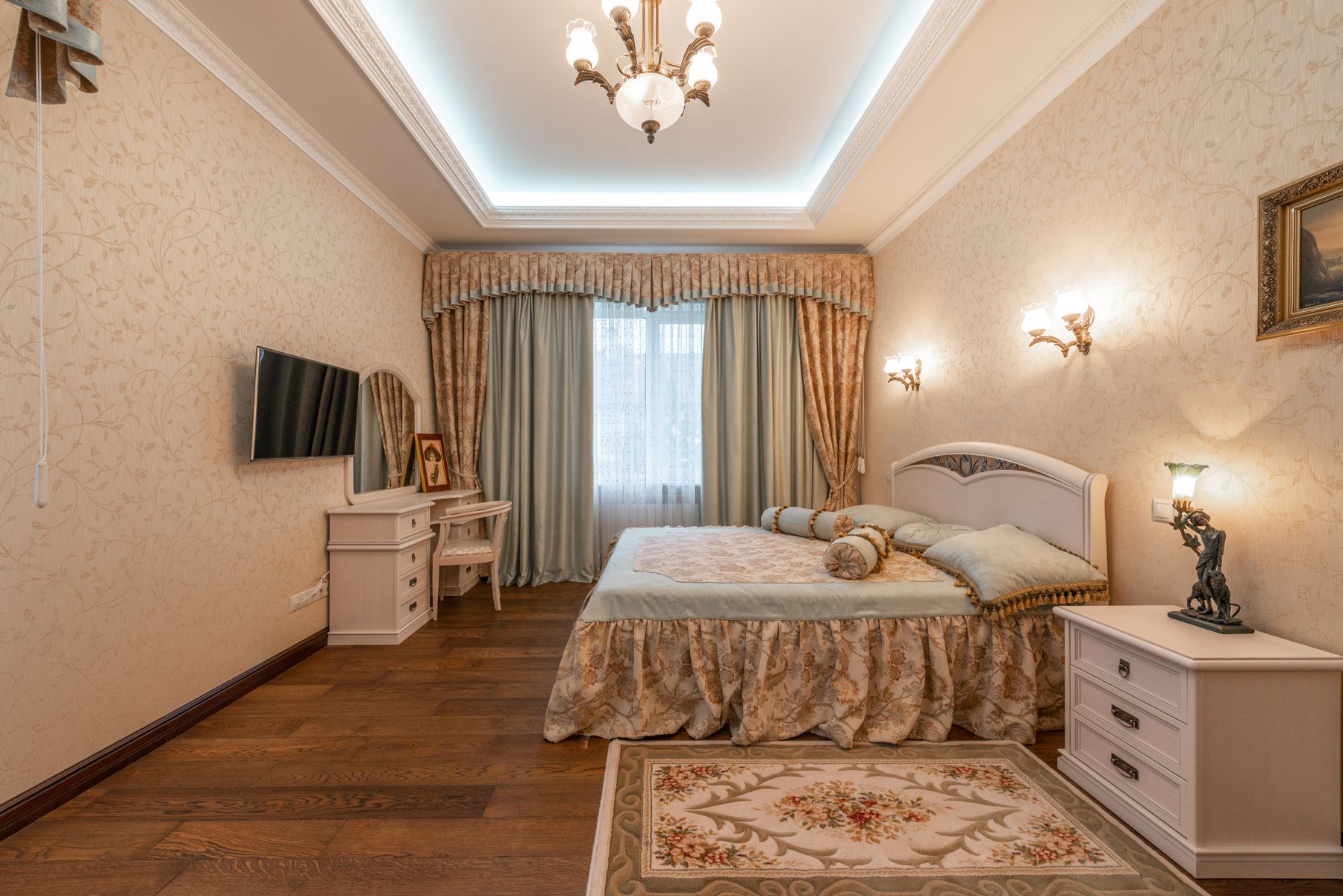
Full curtains bring softness and acoustic control, while a tailored valance can conceal hardware in a room with enough height. Before adding layers, solve blackout, privacy, window handles, radiator output and safe clearance from lamps. Washable lined panels or a blind with simple curtains often outperform a complex treatment in a small or dusty room. Heavy swags make sense only when their scale supports the opening and the owner accepts professional cleaning or careful removal.
Lighting Layers Without Imitation Candlelight
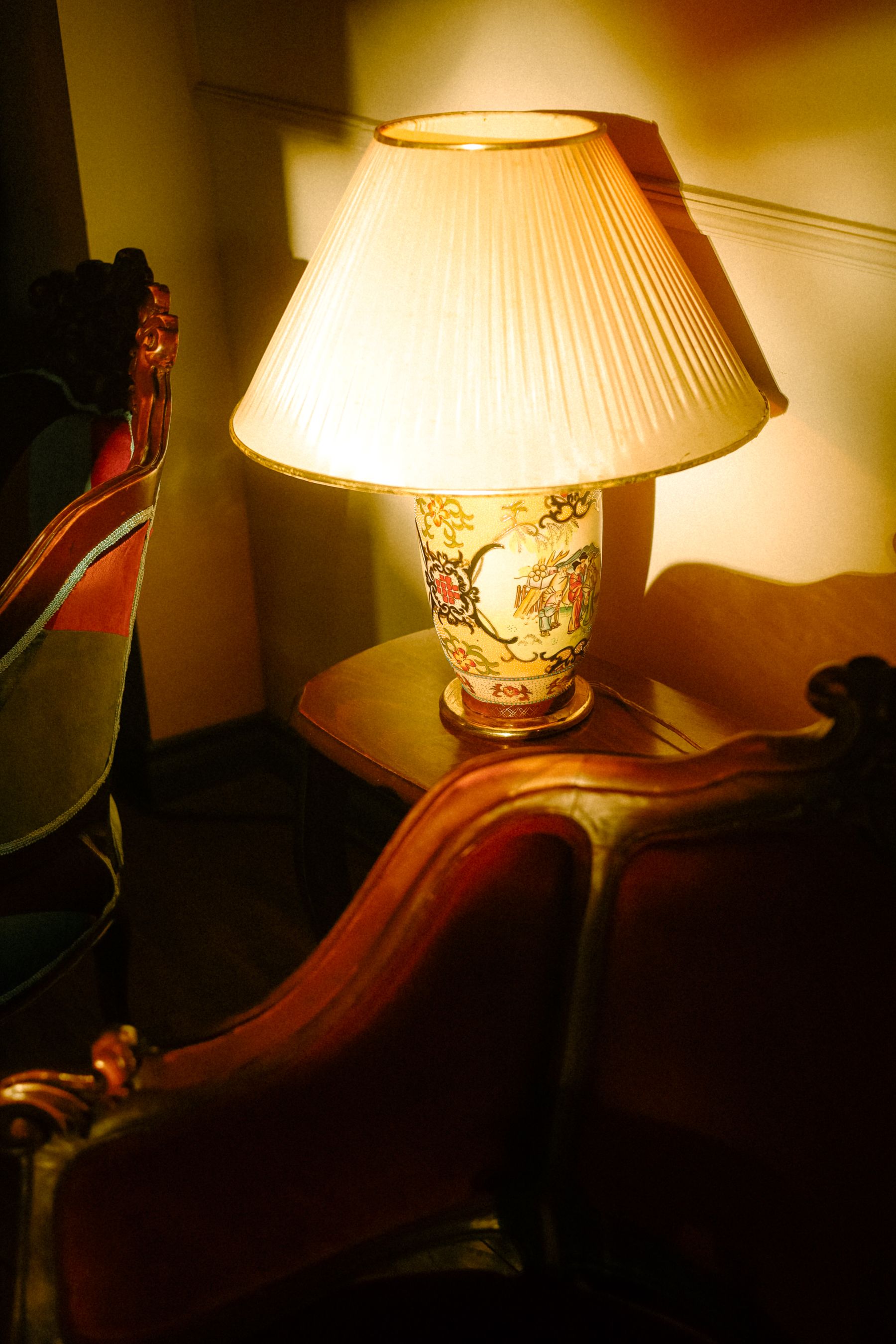
Use an overhead ambient source, bedside task lights and a lower evening layer rather than relying on a chandelier alone. Fabric shades soften glare, but the bulb must be shielded from a reclining view and bright enough to read. Rewire old lamps professionally, use compatible dimmers and keep hot bulbs away from curtains. Match color temperature closely enough that the room does not split into orange and blue pools. The transferable framework in [living-room lighting ideas](/living-room/living-room-lighting-ideas/) helps assign jobs before choosing decorative fittings.
Anchor the Bed With the Right Rug Scale
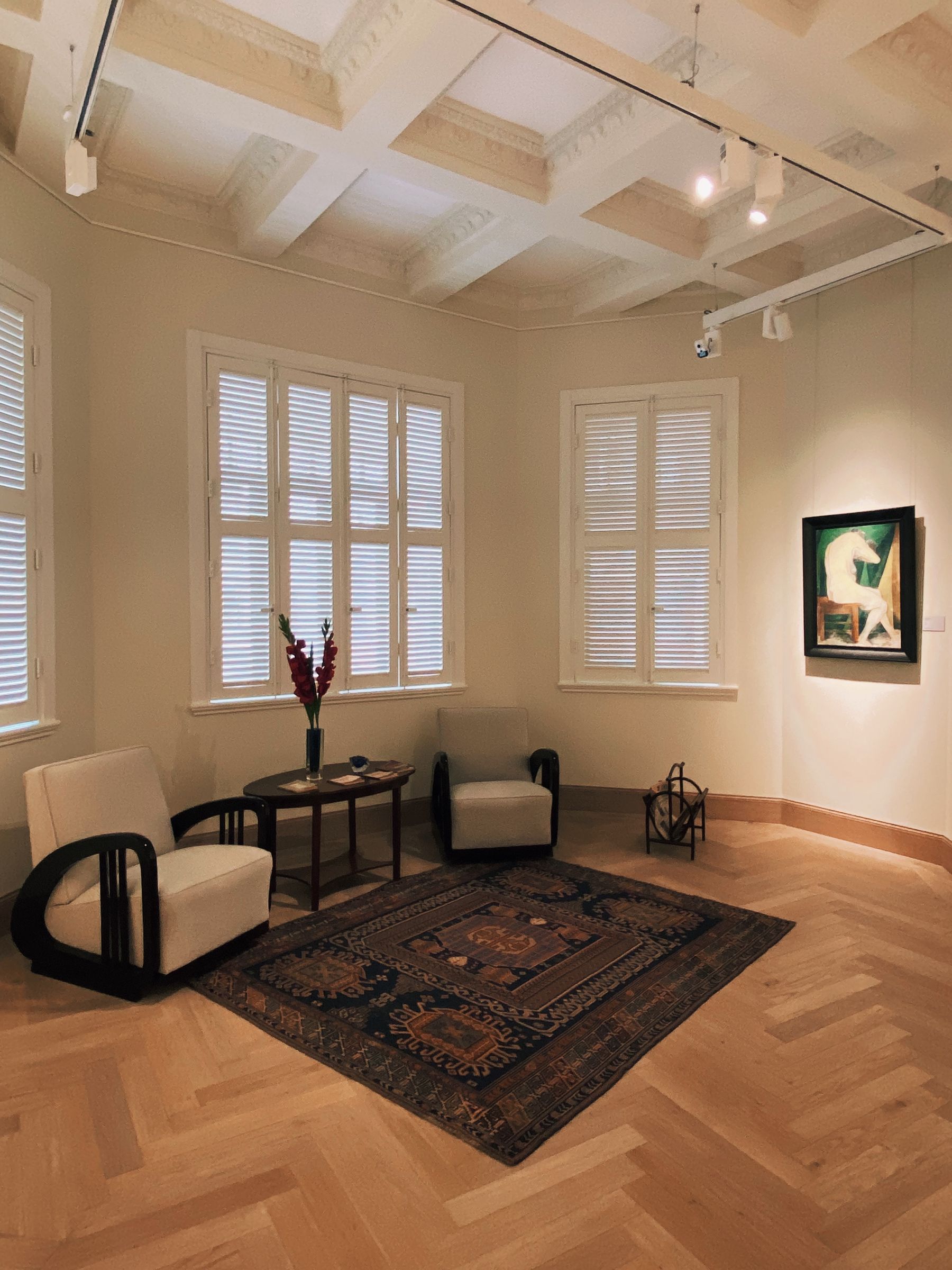
A patterned rug can connect mixed woods and pull color from curtains or bedding, but useful coverage matters more than perfect centering. Ensure warm material reaches the sides where feet land and that doors clear the pile. A narrow runner may be the safer, cleaner choice in a small room. Use a suitable underlay, secure curling edges and check whether walkers or reduced foot lift change the specification. For more sizing and fiber tests, use the [rug planning guide](/living-room/living-room-rug-ideas/).
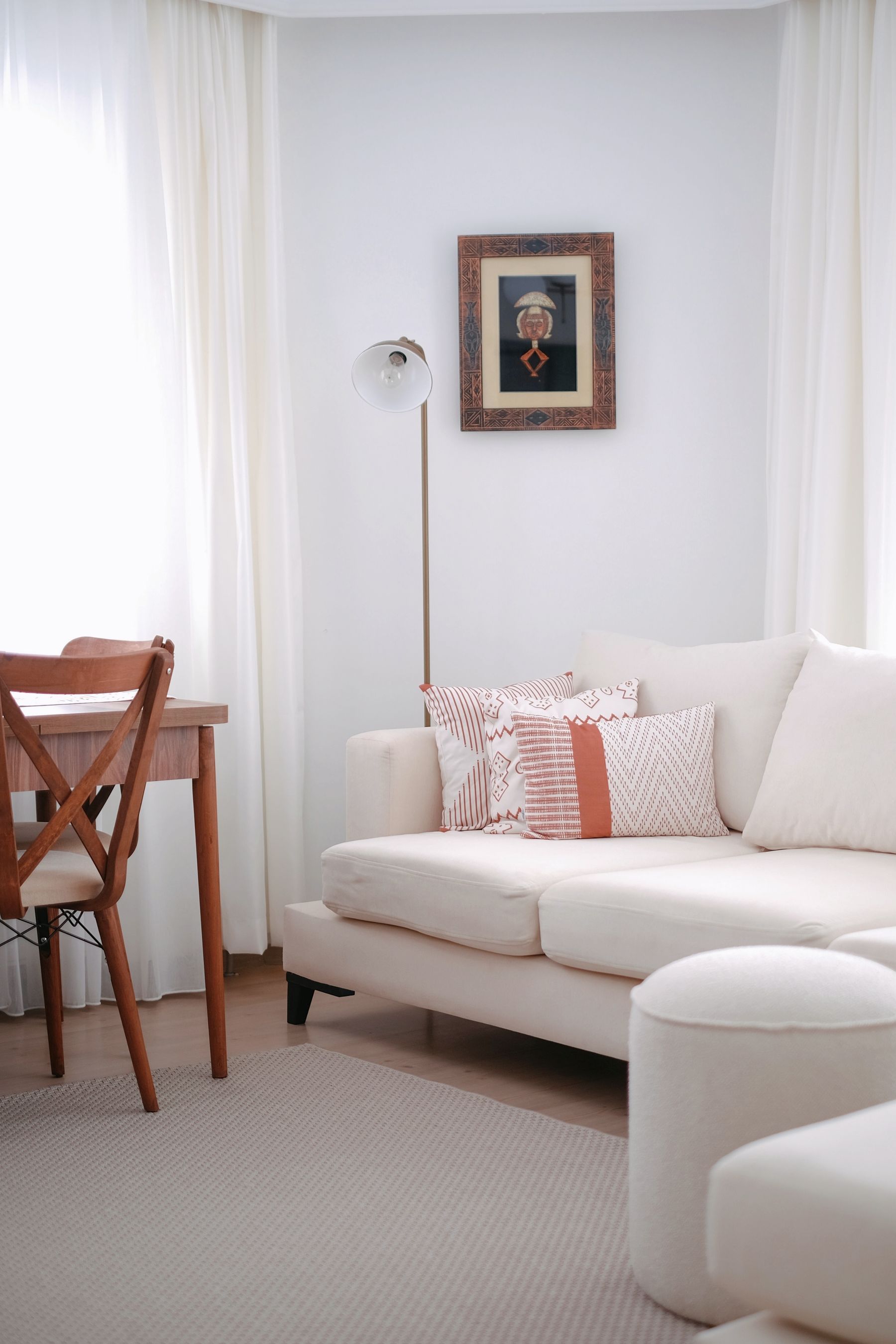
Hang Art That Supports the Room's Story
Portraits, landscapes, botanical prints and textile fragments can reinforce the traditional mood, but provenance and personal meaning are more durable than faux-antique filler. Scale art to the furniture below and use suitable fixings, especially above the bed. A single substantial frame may suit a paneled or patterned room better than another dense gallery. Avoid reflective glazing opposite strong windows and do not hang valuable work where damp, direct sun or a headboard will damage it.
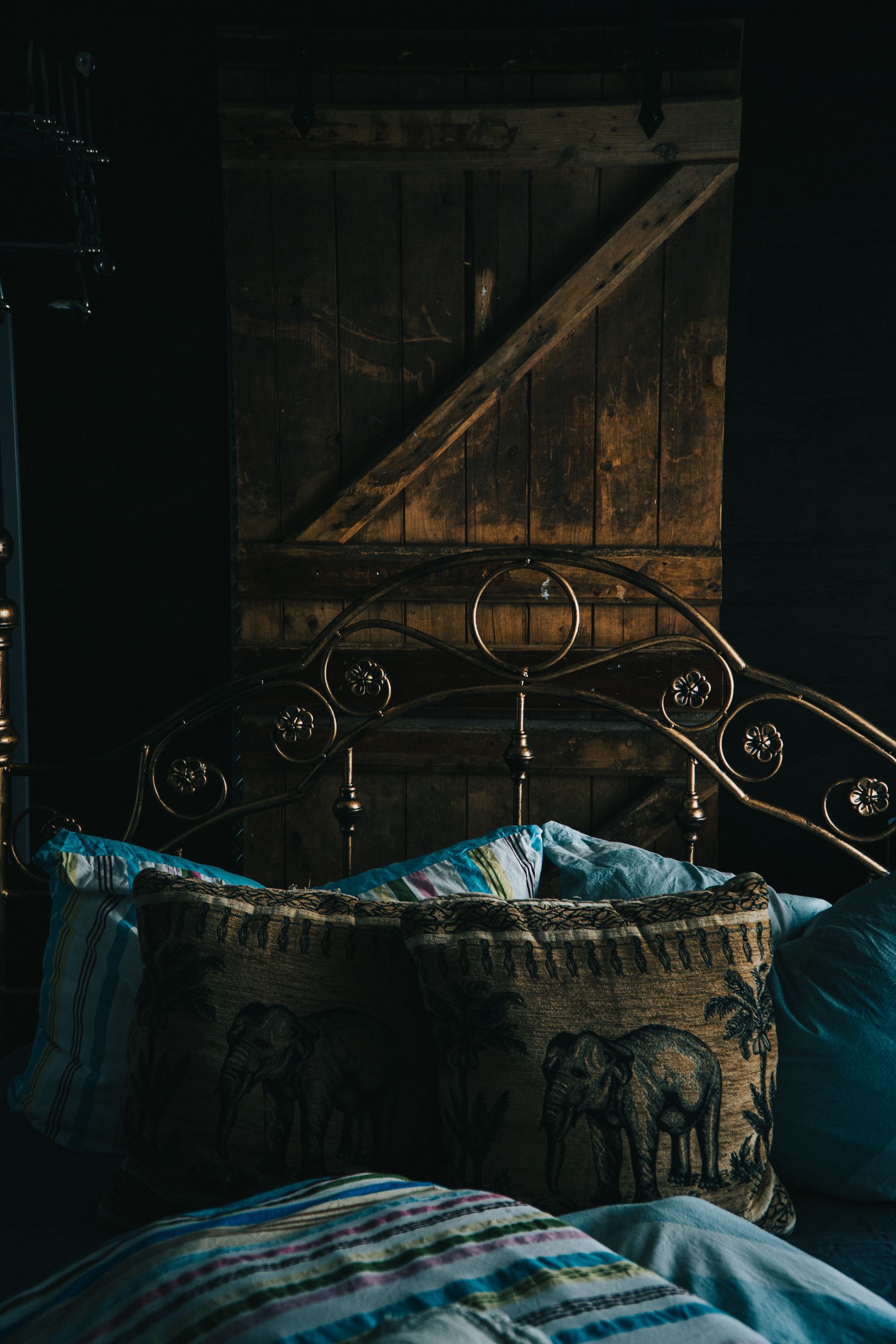
The Dressing Table as Working Equipment
A vanity is a natural traditional feature, but it should provide even facial light, knee clearance, a stable seat and storage for the user's actual routine. Place it where daylight can arrive from the side rather than directly behind the mirror. Protect the top from heat, cosmetics and water, and contain cords. In a smaller room, a shallow console with a drawer may double as a laptop surface, but only if both activities can be cleared completely.
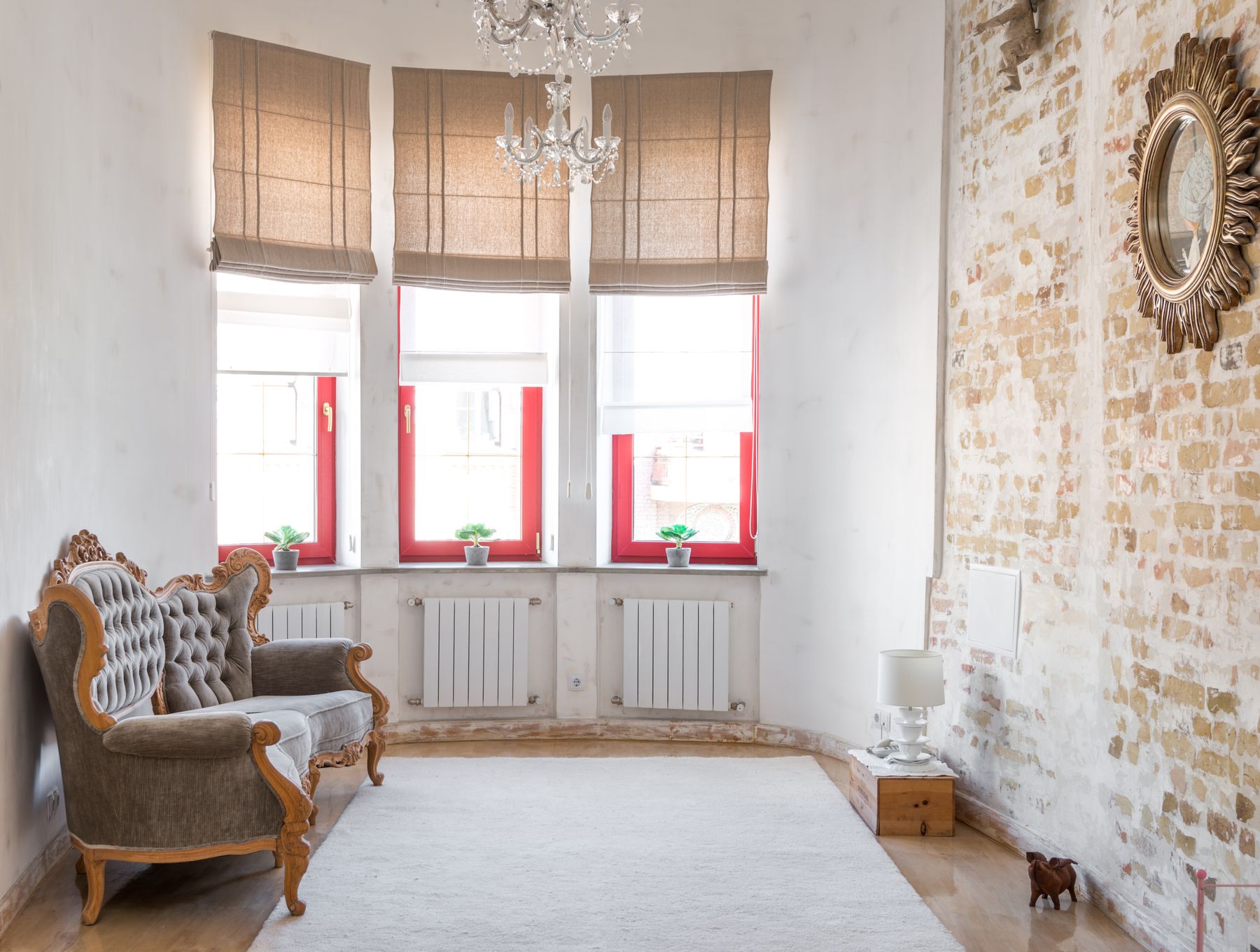
A Chair or Window Seat Only With a Job
An upholstered chair can soften a room dominated by case furniture and create a reading or dressing zone. Check seat height, arm support, approach clearance and whether the upholstery can be cleaned. A window seat needs ventilation, safe glazing, adequate depth and storage that is actually reachable. If the chair becomes a clothes pile or narrows a wardrobe route, replace it with a compact bench or remove it. Traditional fullness should come from useful layers, not furniture without purpose.
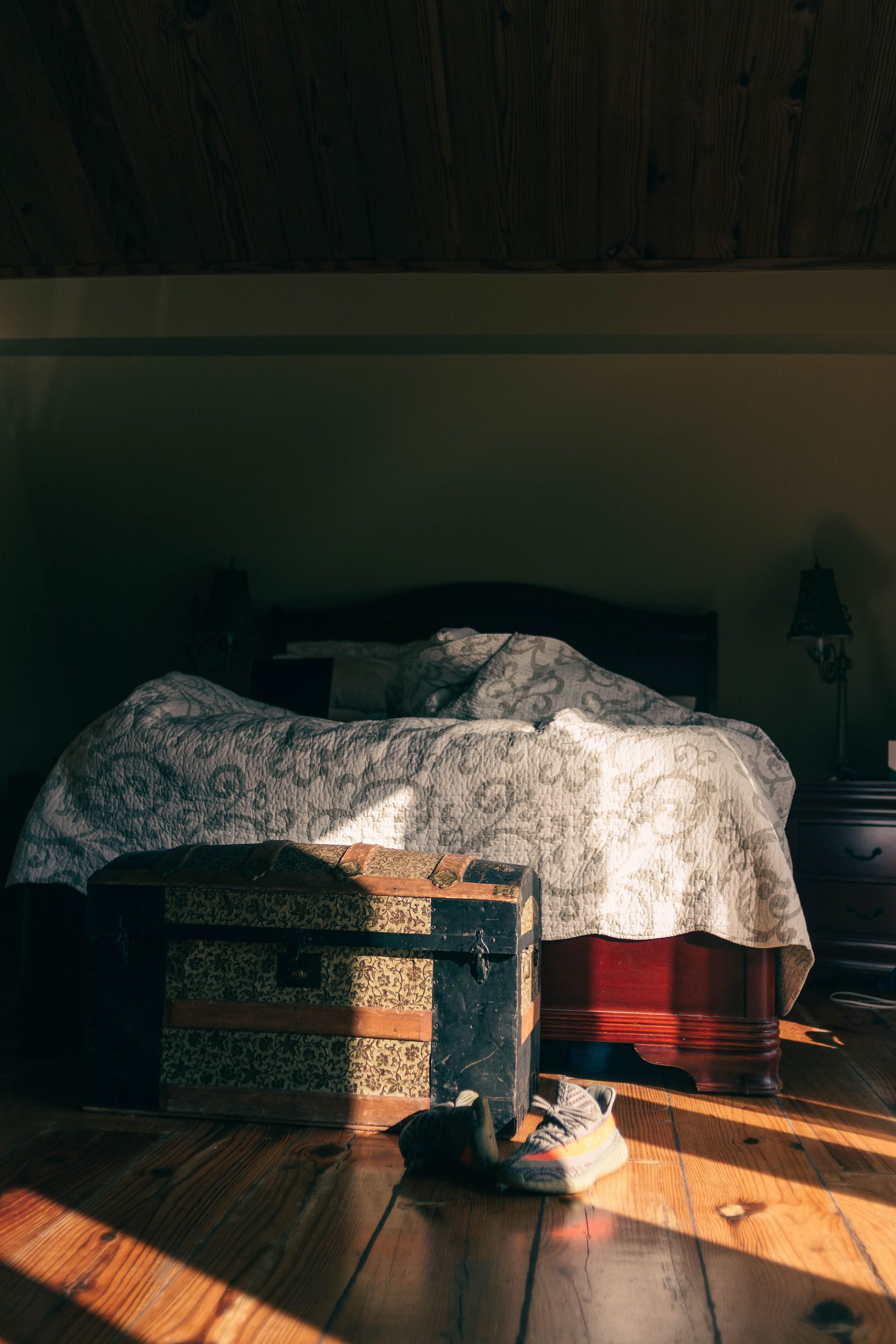
Storage by Capacity, Not Facade
Measure folded clothes, hanging lengths and seasonal overflow before choosing an armoire or chest. Deep drawers can hide small items; ornate doors can demand large swing zones; very tall cases must be safely secured where appropriate. Mix closed storage with only a little open display so dust and visual noise remain manageable. Preserve usable older pieces when their runners, joints and finish can be repaired, but do not let sentiment force unsafe, inaccessible storage into the main route.
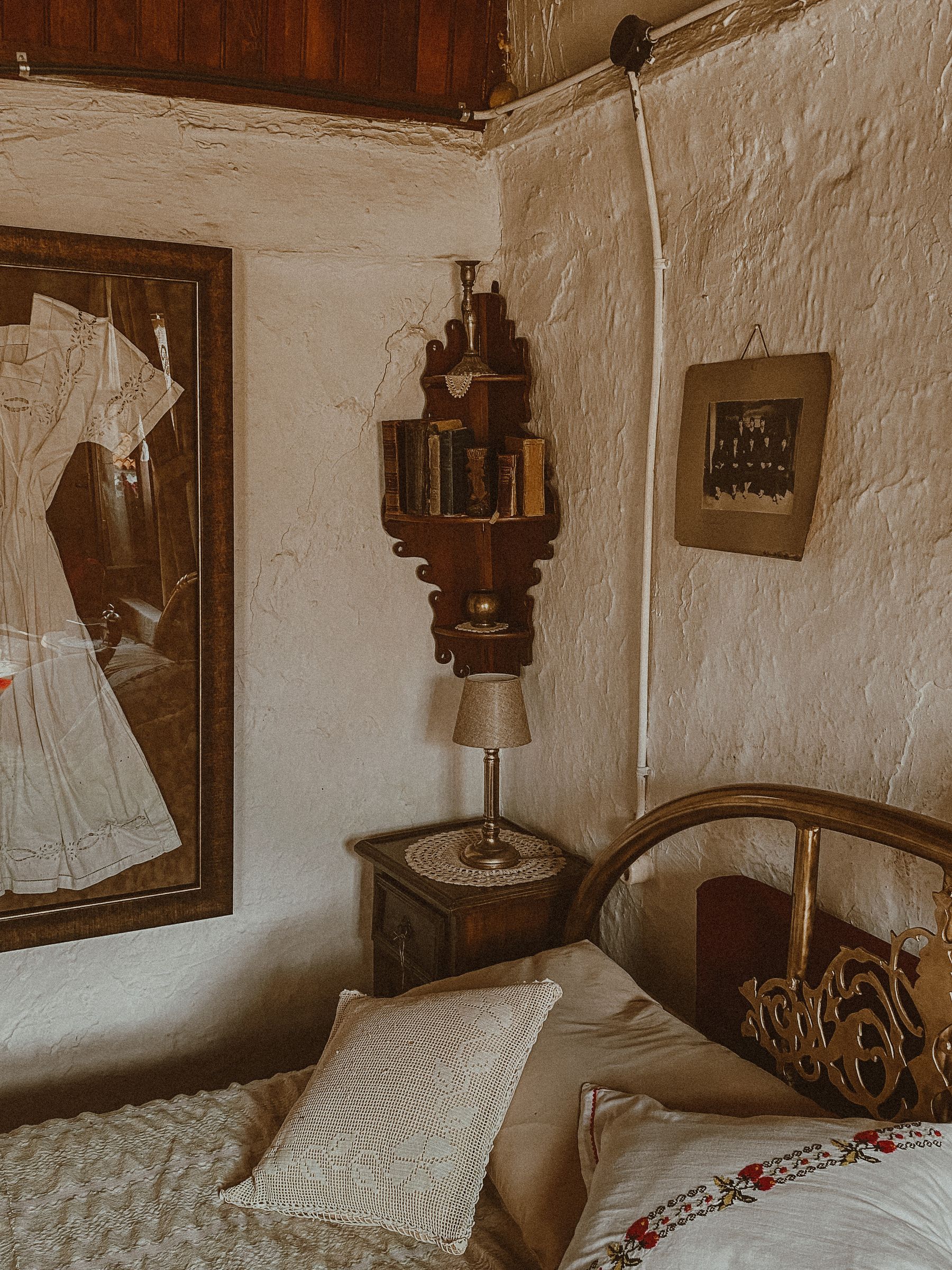
Scale Traditional Character for a Small Bedroom
A small bedroom needs fewer, better-defined cues: one expressive bed or chest, a repeated color and one pattern scale. Use shallow tables, wall-mounted reading lights and storage with measured capacity. Pattern does not physically shrink a room, but contrast on every surface can make the boundaries restless. Keep the floor route legible and repeat the wall color across larger planes. If the bedroom belongs to a compact home, [small apartment ideas](/apartment/small-apartment-ideas/) adds zoning and storage tests without changing the style.
Portable Traditional Elements for a Rental
In a rental, place the traditional identity in a bed frame, washable curtains, rug, lamps, bedding and properly secured art. Verify the lease and wall substrate before installing molding or peel-and-stick paper; removal damage can outweigh a temporary effect. Document the original condition and keep windows, sockets and ventilation accessible. Choose furniture that can adapt to another wall rather than commissioning a fragile faux built-in. One sound older piece often creates more credibility than several disposable heritage-look products.
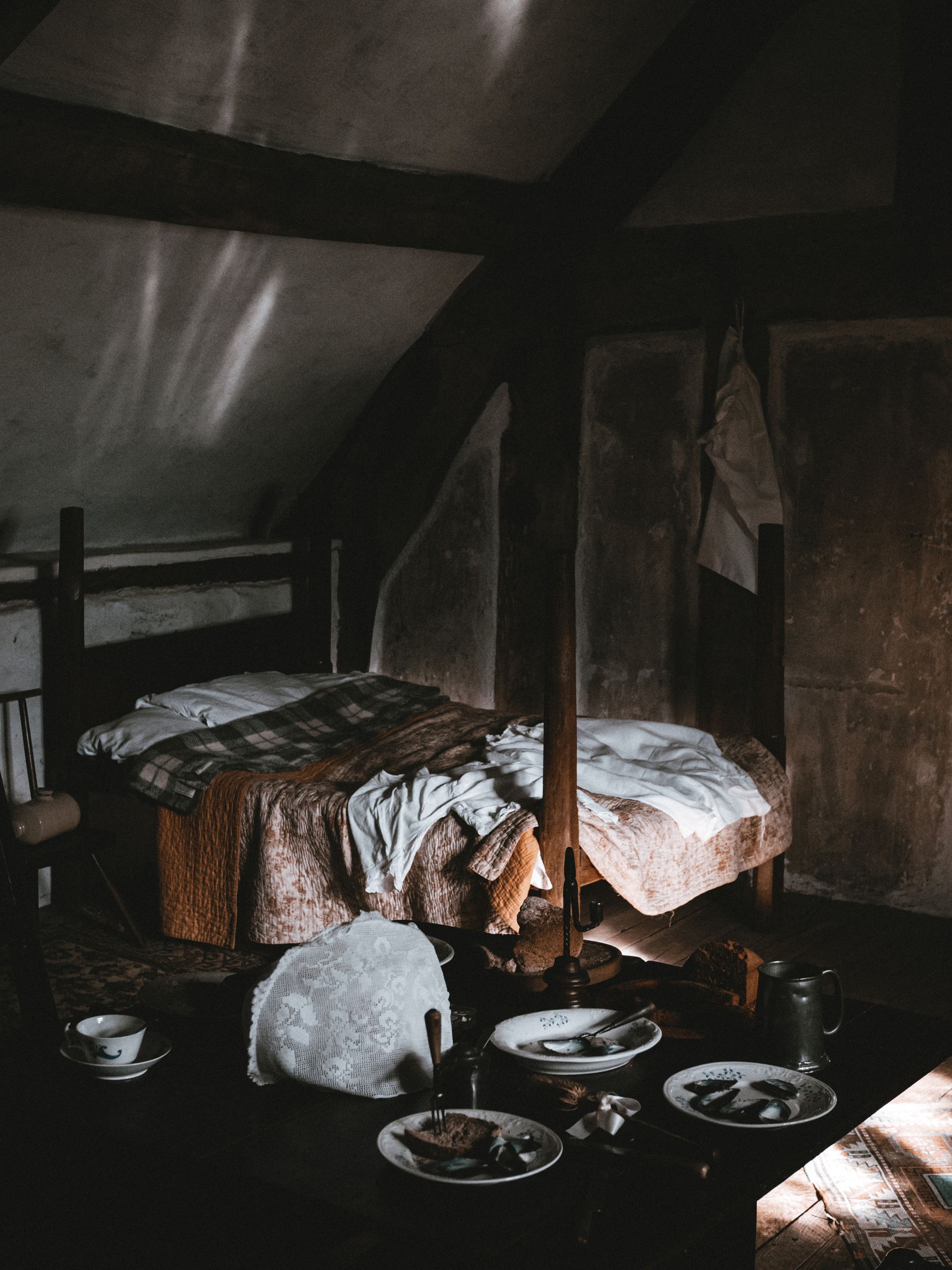
A Fair Shared Traditional Bedroom
Symmetry is helpful in a shared room because it communicates equal territory, but requirements may differ. Give both users equivalent reach, light, charging and storage while allowing different drawers, switches or reading positions. Agree on the room's lead color and which inherited items are essential before shopping. A single shared bed textile can connect different bedside furniture. When tastes diverge sharply, the mixing framework in [eclectic bedroom ideas](/bedroom/eclectic-bedroom-ideas/) can preserve both personalities without abandoning traditional order.
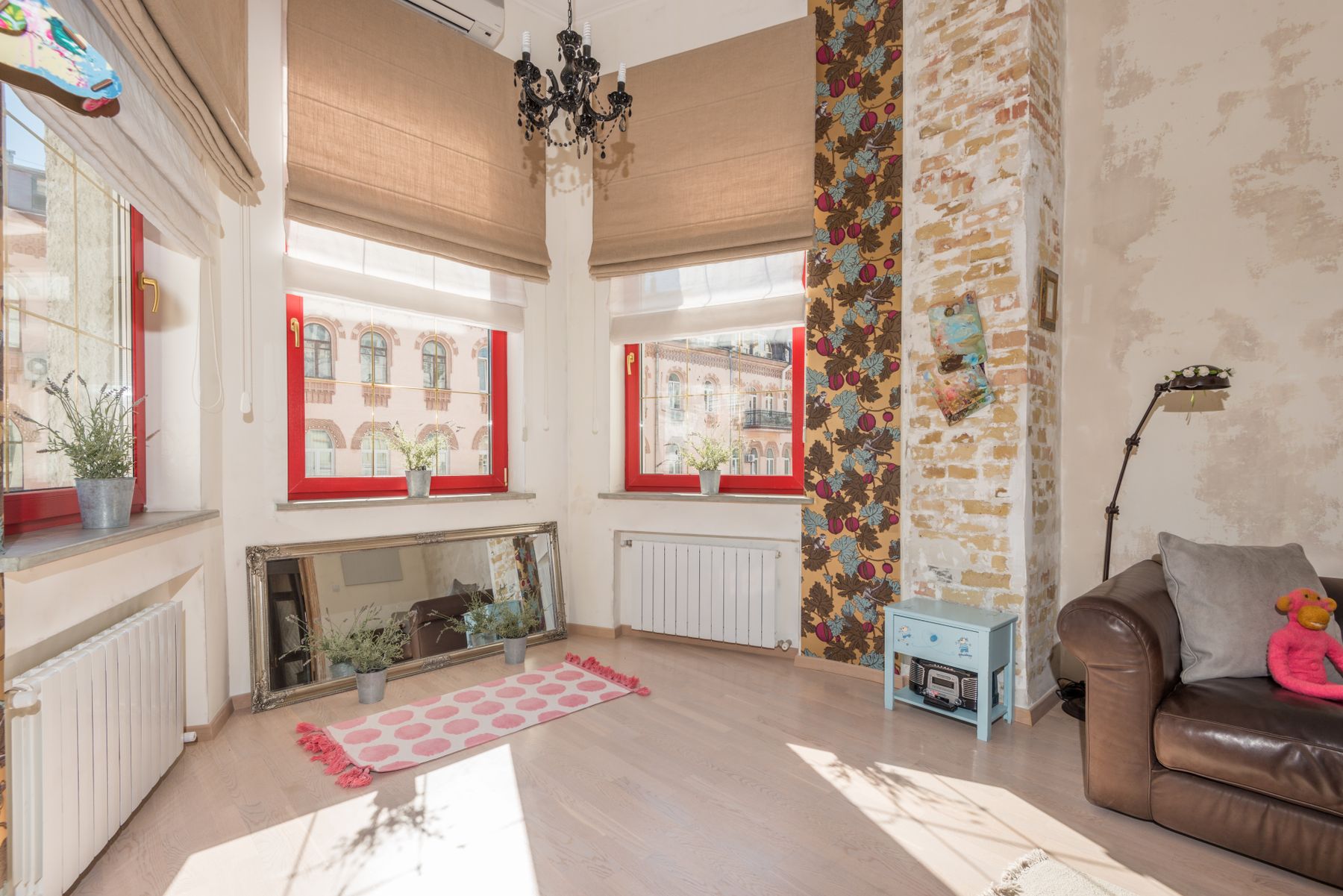
Integrate a Desk Without Losing the Bed's Priority
A bedroom desk should have correct chair height, task lighting, cable management and a shutdown routine. Use a writing-table silhouette only when it supports the monitor, knees and equipment actually required. Connect it to the bed through wood undertone or one repeated color, then keep active papers in closed storage. Screens should not dominate the pillow view. For a darker library mood, [dark academia bedroom ideas](/bedroom/dark-academia-bedroom-ideas/) is the better destination; Traditional keeps the study element subordinate to the room's balanced whole.
Design for Changing Mobility Without Losing Character
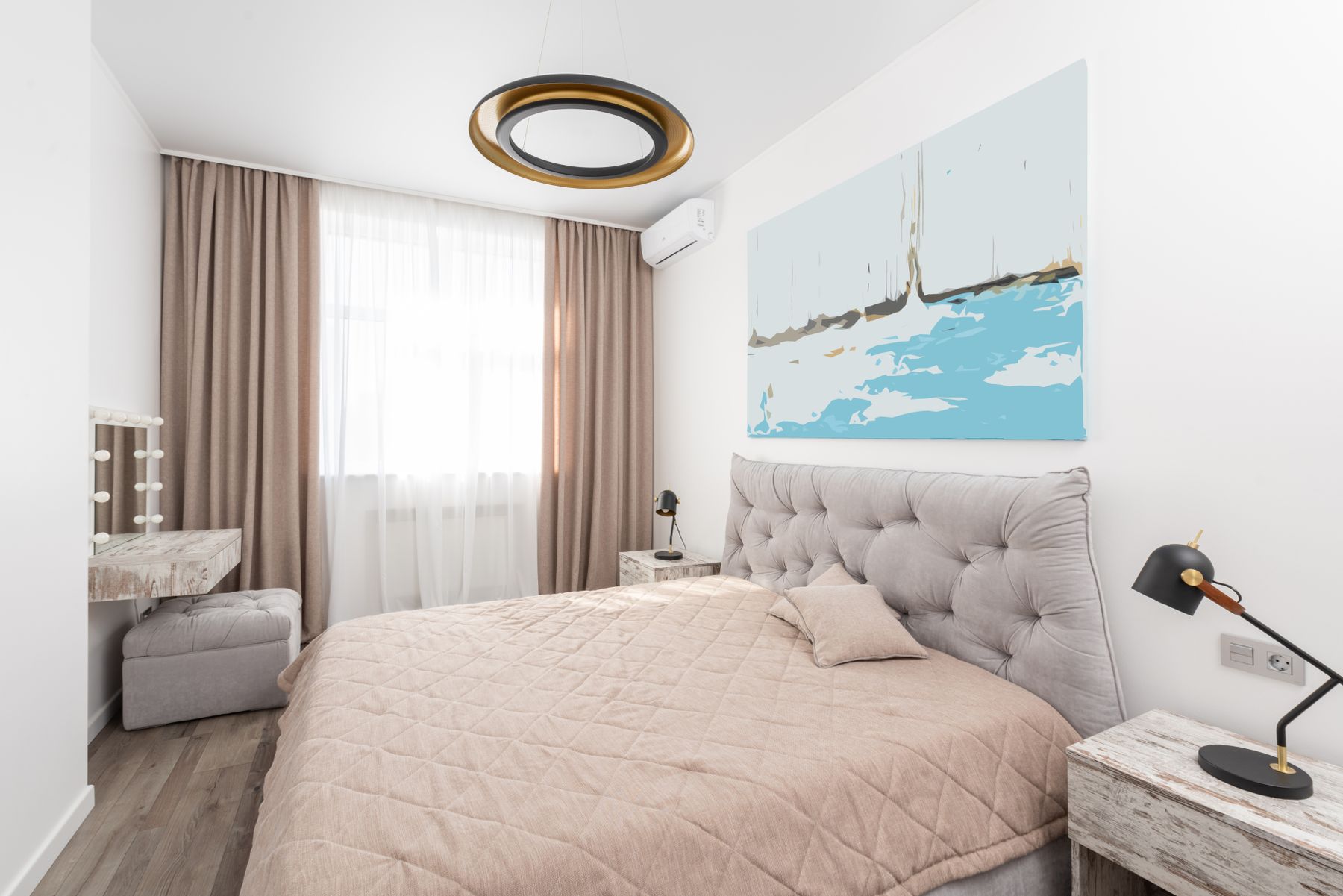
Keep the route from door to bed and bathroom stable, visible and free of low trunks or loose rug edges. Specify mattress and chair heights for the user, provide supportive seating, reachable lighting and graspable hardware, and avoid deep-pile flooring where foot lift is limited. Traditional style can remain in wood, pattern, shades and artwork while the floor plane becomes simpler. The storage discipline in [minimalist bedroom ideas](/bedroom/minimalist-bedroom-ideas/) is useful when clearer access is needed without changing the room's identity.
Create a New Traditional Edit
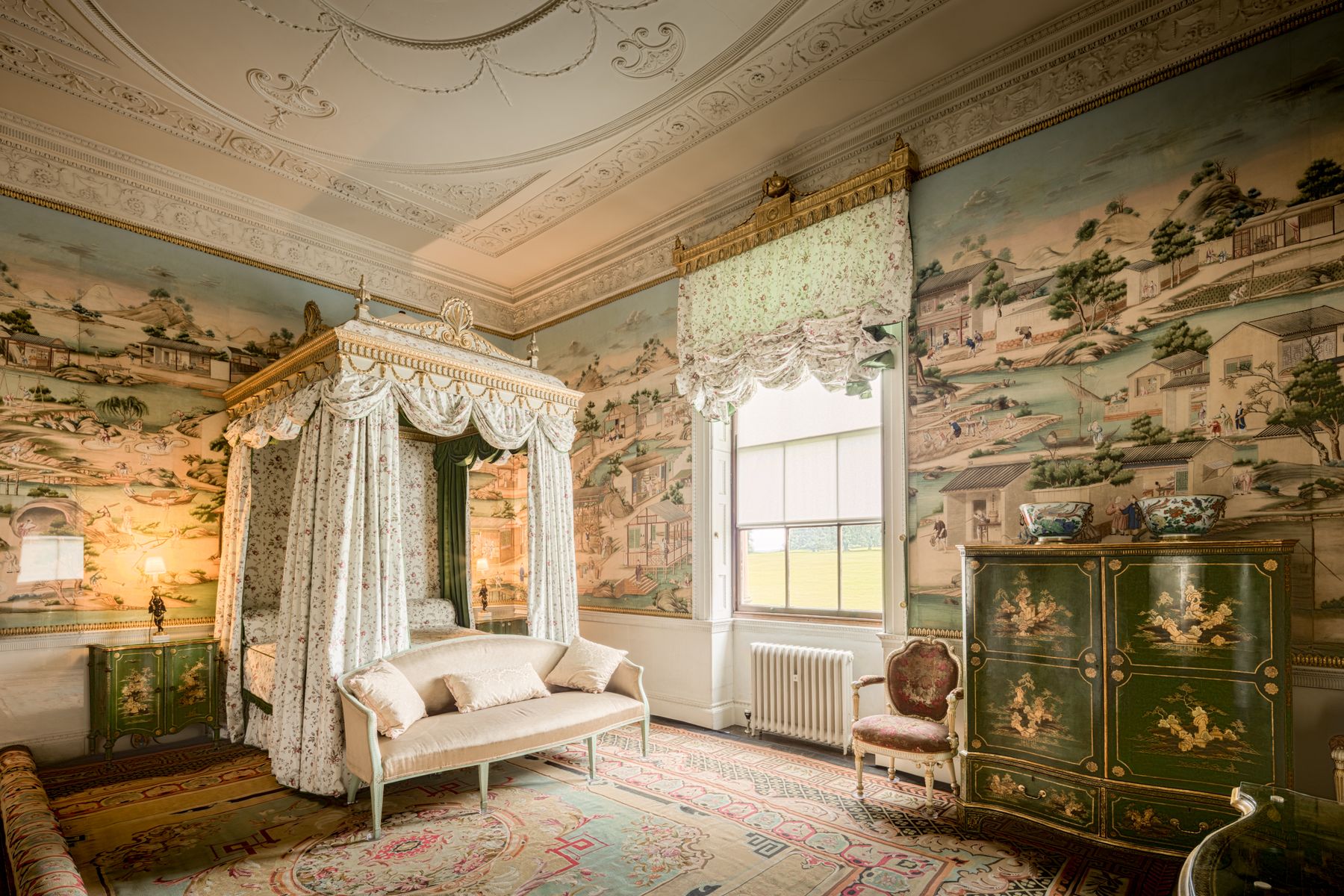
New traditionalism keeps recognizable silhouettes and craft while loosening the matching, heaviness and historical literalness. Pair an old chest with a clean upholstered bed, put contemporary art above familiar molding, or use a classic floral in an unexpected blue-green ground. The bridge must be specific: repeated curve, undertone, material or scale. This is different from Modern, which prioritizes reduced forms and function, and from Eclectic, which makes cross-style contrast more visible. For a cleaner baseline, compare [modern bedroom ideas](/bedroom/modern-bedroom-ideas/) before adding heritage detail back.
Maintain the Room as a Long-Term Interior
Dust carved profiles with a soft brush, vacuum upholstery with the correct attachment, rotate rugs and protect wood from direct heat and standing water. Identify veneer, wax, lacquer and solid timber before using polish or attempting a repair. Launder curtains and bed layers on schedules that match allergies, pets and climate, not only appearance. Photograph the whole room each season and subtract before buying; gradual accessory growth can obscure the strong proportions that made the scheme work.